
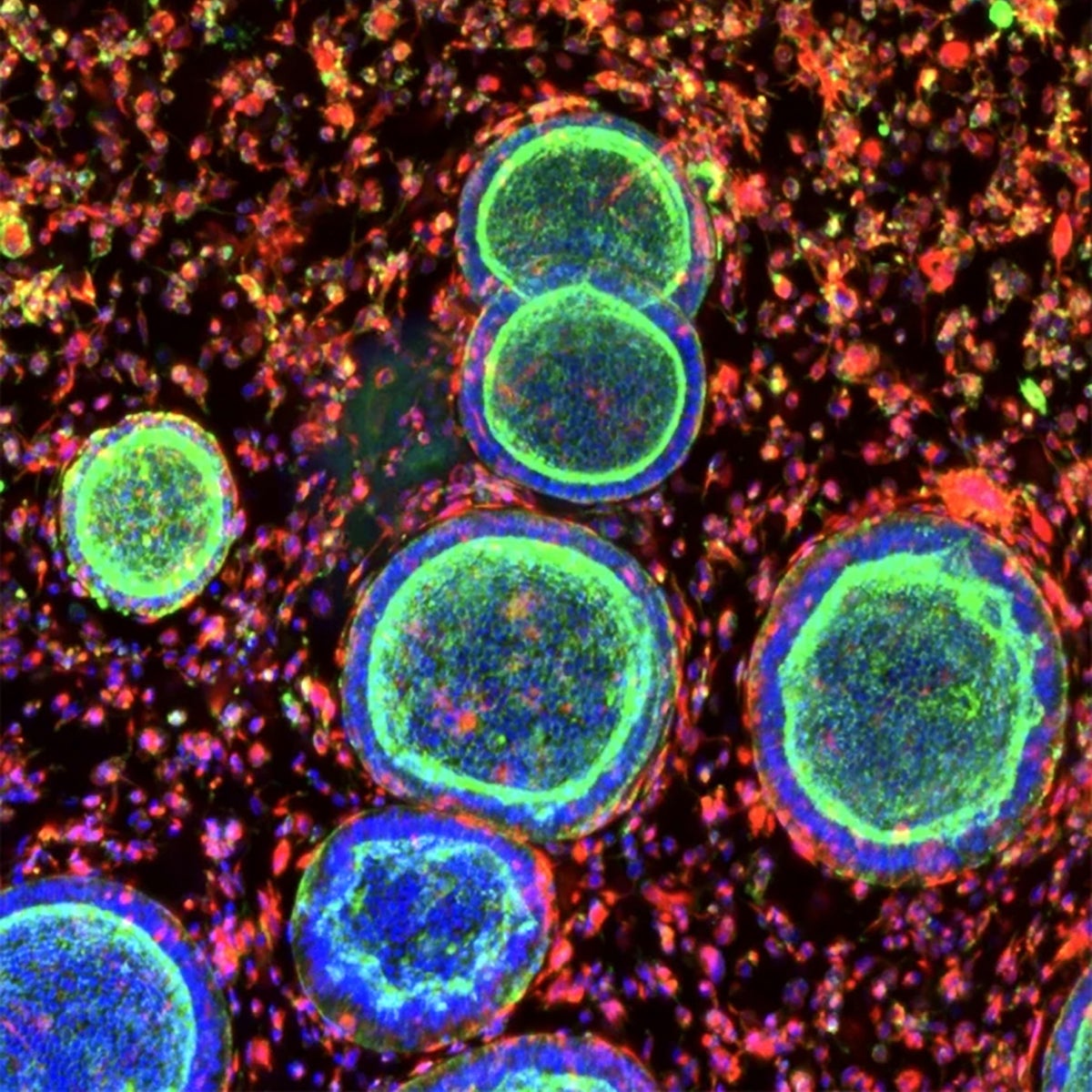
Organoids Offer New Insights into female Reproductive Health
Researchers are increasingly turning to organoids – miniature, lab-grown versions of organs – to unlock the secrets of female reproductive health, offering promising avenues for studying everything from fertility and menopause to cancer. These 3D models are proving invaluable in areas where conventional research methods fall short.
One area of focus is the vaginal microbiome and its connection to urinary tract infections.Scientists hypothesize that preventing harmful bacterial colonization within the vagina could potentially reduce the incidence of these infections.
Beyond preventative measures, organoids are also being utilized to investigate the complexities of ovarian function. Studies are underway to better understand both fertility and the transition through menopause,a period associated with increased risks of heart disease,stroke,and osteoporosis. Francesca Duncan at Northwestern University’s Feinberg School of Medicine is leading research into reproductive aging, specifically focusing on the often-overlooked inflammation and stiffening of the ovary that occurs with age. Traditionally, research centered on the follicle – the unit responsible for hormone production and egg progress. Though, Duncan’s lab discovered in mice that the ovary itself undergoes age-related changes that may impact both egg quantity and quality.
Initially skeptical, Duncan’s team embraced the organoid approach to model this aging process in vitro and test potential reversal therapies. They have successfully created ovarian organoids from mice and rhesus macaques,identifying cell stiffening as a potential driver of overall tissue stiffening with age. The next step involves developing human ovarian organoids to screen compounds aimed at mitigating or reversing this stiffening.
The submission of organoid technology extends to cancer research as well. Ovarian cancer, the fifth-leading cause of cancer deaths in women, is being studied through organoids that mimic the fallopian tube - the suspected origin of most high-grade serous ovarian cancers. Researchers are also growing organoids directly from tumor tissue taken from patients to model the disease’s progression.
Furthermore, scientists are pushing the boundaries of organoid research by combining different types - such as endometrial and placental organoids – to study complex processes like invasion. Mixing organoids with lab-created embryo models allows for investigation of implantation.
While acknowledging that organoids cannot fully replicate the complexity of living tissue, researchers like Turco emphasize their remarkable ability to reveal new insights. “I keep getting surprised,” she notes, highlighting the ongoing potential of this innovative technology to advance our understanding of female reproductive health.
(this article is based on information originally published in *Nature on September 23, 2025.)*
