
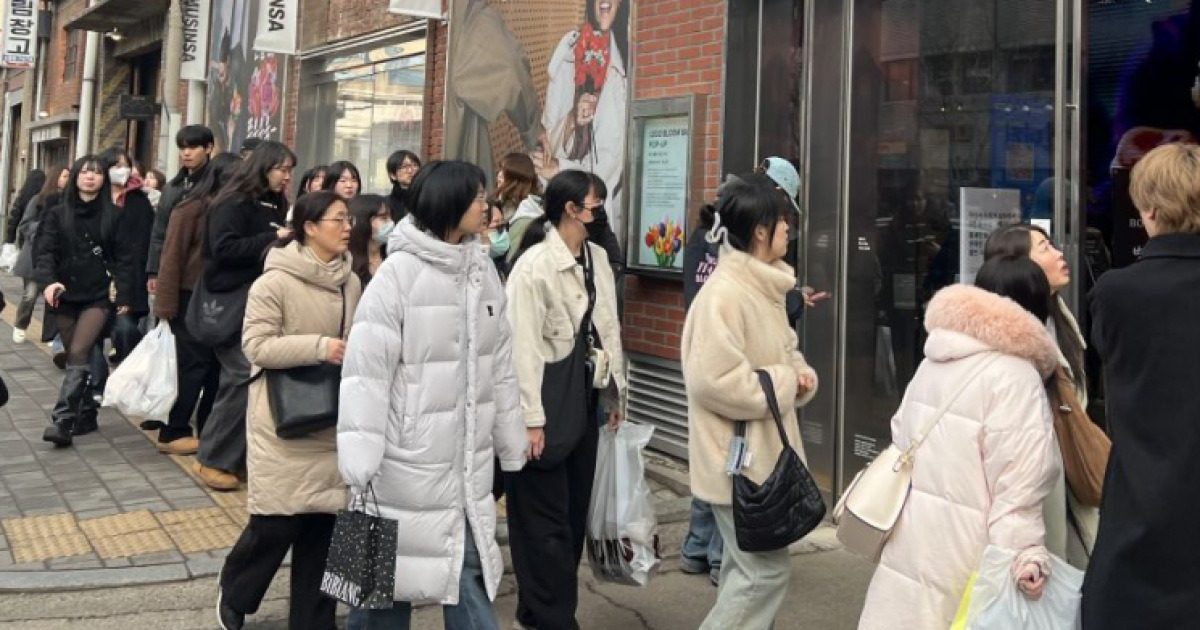
Seoul’s Seongsu-dong district is experiencing a surge in foreign tourist traffic, but not to the traditional landmarks or duty-free shops. Instead, visitors are flocking to local retailers like Olive Young, Daiso, and Musinsa, transforming the shopping habits of tourists in South Korea.
The shift marks a departure from pre-pandemic travel patterns, where package tours focused on major attractions and tax-free shopping dominated. Now, a growing number of family-sized, independent travelers are prioritizing experiences centered around K-lifestyle trends – Korean food, cosmetics, fashion, and even medical services – fueled by the global spread of K-content like K-pop, films, and dramas.
At the Musinsa Standard store in Seongsu-dong, lines stretched long as tourists waited to check out, laden with purchases. “Korean brands are appearing a lot on SNS these days, and I was surprised by how reasonable the prices are,” said Ethan Miller, a 29-year-old American tourist, clutching t-shirts, caps, and socks. “It’s more fun to attempt on and experience brands that you can only buy in Korea than to buy luxury goods.”
The change in consumer behavior is evident in shopping statistics. According to the Korea Tourism Organization, road shops are now the most popular shopping destination for foreign visitors, accounting for 49.6% of purchases. Seongsu-dong has seen a 236.8% increase in foreign visitors year-on-year, making it the fastest-growing district in Seoul.
This trend is reflected in the financial results of local businesses. Olive Young’s foreign sales increased by 53% last year and 59% in January of this year. At ‘Olive Young N Seongsu,’ a flagship store catering to tourists, foreign sales jumped 74% in January. The company attributes this growth to a desire among tourists to directly experience K-beauty trends.
Daiso, known for its affordable household goods, is also capitalizing on the trend with large-format stores in Myeongdong and Hongdae. Overseas card payments at these locations increased by 60% last year and approximately 80% in January. A Daiso representative stated that K-beauty products and food items are the most popular purchases among foreign customers. A 24-year-old Japanese tourist, Aya, commented, “There are a lot of tiny, cute items and the prices are cheap. It’s fun to browse.”
Musinsa has also seen a significant increase in foreign sales, with a rise of 85% last year. Its Seongsu and Myeongdong stores experienced growth of 113% and 90%, respectively. As of January, foreign customers accounted for approximately 50% of sales at the Musinsa Store Seongsu and 55% at the Musinsa Standard Myeongdong store. The company has implemented tourist-friendly services such as currency exchange machines, luggage storage, multilingual brochures, and instant tax refunds to enhance the shopping experience.
APR’s MediCuvé Seongsu is also emerging as a popular destination, with 60% of visitors being foreign tourists as of January. Opened in December, the store now averages 500 visitors per day. Lin Yu-ching, a 23-year-old tourist from Taiwan, said she visited after seeing it online and was there to purchase the brand’s popular booster pro. Yuka, a 37-year-old tourist from Japan, stated she had first discovered APR through Qoo10 and came to purchase the Red Mask.
The shift in spending habits isn’t just about what tourists are buying, but also how they’re spending their time. The focus has moved from maximizing purchases at duty-free shops to immersing themselves in local culture and experiences. This change reduces the likelihood of tourists dedicating significant time to duty-free shopping, instead favoring extended stays in districts like Seongsu and Myeongdong.
Some high-end brands are seeing increased traffic at department stores rather than duty-free shops, potentially due to the weakening of the Korean won. This diminishes the appeal of the price arbitrage that once drove duty-free sales. This shift has put pressure on the duty-free industry, with major players like Lotte, Shinsegae, and Hyundai implementing voluntary retirement programs and reducing store space. Some operators have even surrendered their business licenses at Incheon International Airport due to high rental costs.
Despite expectations of a boost from the resumption of visa-free entry for Chinese group tourists, the duty-free sector has not seen a significant recovery. According to the Korea Duty Free Shops Association, total duty-free sales (excluding in-flight sales) last year reached 12.534 trillion won, a decrease of 11.9% compared to the previous year – the lowest figure since 2016.
Duty-free operators launched aggressive marketing campaigns during the Lunar New Year holiday, offering large discounts and loyalty points, but these were largely defensive measures aimed at retaining existing customers rather than attracting new ones. Analysts suggest that the recovery of foreign tourist numbers is not automatically translating into increased duty-free sales, indicating a structural shift in the industry.
Industry experts believe this transformation is not temporary but represents a fundamental change in the tourism landscape. “In the past, price differences were the main competitive advantage of duty-free shops, but now foreign consumers are prioritizing content and experiences,” said one industry source. “Duty-free shops need to move beyond simple discount competition and strengthen experiential stores or curate K-brands to remain competitive.”
Another retail expert noted that the success of Olive Young and Musinsa demonstrates how global online recognition can translate into offline tourism spending. “Duty-free shops also need to transform from simple sales channels into platforms for experiencing Korean brands, or they risk losing competitiveness.”
Experts are calling for a shift in policy focus from simply increasing tourist numbers to improving the “qualitative productivity” of tourism – increasing per-capita spending, length of stay, and repeat visits. The Yanolja Research Center suggests a need for a holistic ecosystem approach that connects content, commercial districts, transportation, and payment infrastructure.
