
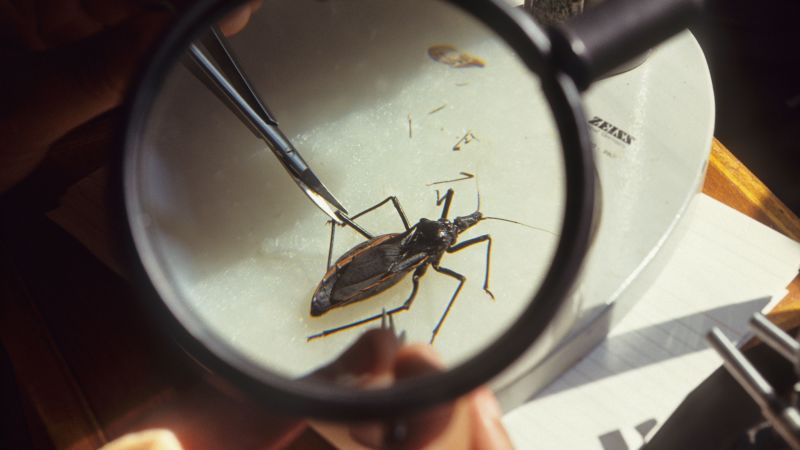
Chagas Disease, Carried by ‘Kissing Bugs,’ Now Endemic to the United States, Raising public Health Concerns
MIAMI, FL – Chagas disease, a parasitic infection historically confined to Latin America, is now considered endemic to the United States, according to a growing number of scientists and medical professionals. The disease, transmitted by “kissing bugs,” poses a silent threat to an estimated 300,000 americans, many unaware they are infected.
For decades, Chagas disease was largely associated with travel to or origin from Central and South America. However, increasing numbers of cases detected within the U.S., coupled with the established presence of the Triatoma kissing bugs across much of the southern half of the country, have led experts to declare the disease firmly rooted within the American population. The Centers for Disease Control and Prevention (CDC) estimates around 30% of kissing bugs in Florida test positive for the parasite that causes chagas disease.
Dr. Kevin Beatty,an infectious disease specialist at the University of Miami hospital,has become a local point of contact for concerned residents. “They’re scared,” Beatty saeid, noting that people frequently bring him bug photos – and even the insects themselves – for testing. He laments the lack of widespread awareness and preventative measures. “We have mosquito control programs around the country, but we’re essentially doing nothing about kissing bugs.”
Chagas disease is caused by the parasite Trypanosoma cruzi. Kissing bugs, named for their habit of biting sleeping people near the mouth, transmit the parasite through their feces. symptoms in the initial, acute phase can be mild or even absent, making early diagnosis tough. If left untreated, the infection can become chronic, leading to serious heart and digestive problems decades later.
Currently, there is no widely available spray specifically approved to target kissing bugs in the US. Beatty recommends sealing homes, using window screens, and general bug spray as preventative measures. He also expressed hope that healthcare providers will become more adept at recognizing the disease and that public health initiatives will be implemented to protect the population, mirroring efforts to control mosquito-borne illnesses.
“I’m just one person,” Beatty said, acknowledging the limited resources available to address the growing concern. “It’s a small team, and we have limited resources.” He hopes increased awareness will encourage others to step up and contribute to combating the spread of Chagas disease within the United States.
