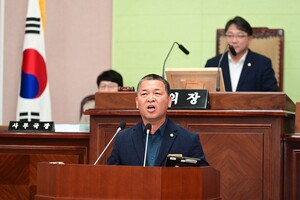
Kim Kyung-seop Demands Samsung Heavy Unpaid Labor Probe
Geoje City Council member Kim Gyeong-seop has formally requested an investigation into allegations that Samsung Heavy Industries has failed to pay workers for 47 years of pre-shift labor. In a five-minute speech delivered during the fifth plenary session of the 266th Geoje City Council on the 5th, Kim alleged that tasks including workspace preparation, morning exercises, roll calls, safety education, and pre-shift safety meetings have historically been excluded from recognized working hours.
Allegations of Unpaid Labor Hours
Kim contends that these activities, conducted under the employer’s direction and supervision, constitute official working time and should be compensated accordingly. Based on a calculation involving 25,000 employees over 47 years, with an estimated average of 45 minutes of daily unpaid labor, Kim projected the total potential liability at approximately 3.3 trillion won. He emphasized that this figure serves as an estimate based on his own assumptions, noting that the actual status and scale of any unpaid wages require a formal, independent investigation by relevant authorities.
The council member criticized the company’s labor management practices, asserting that workers’ demands for improved treatment have been consistently ignored, even following the company’s return to profitability in 2023. He stated that the company’s attitude when workers raised concerns about work practices was perceived as treating workers’ voices lightly. Kim asked whether the Ministry of Employment and Labor’s Tongyeong Office and the prosecution have properly carried out their oversight and investigations, since repeated warnings have produced no meaningful changes.
Kim Urges Geoje City to Review Support and Audit Labor Conditions
Kim proposed two primary courses of action for Geoje City. First, he urged the local government to conduct a comprehensive review of its administrative and financial support for Samsung Heavy Industries, arguing that public support lacks justification if corporate profits do not contribute to worker welfare and the revitalization of the local economy. Second, he called for the formation of a labor conditions investigation committee involving the city, the city council, the company, and labor representatives.
This proposed body would be tasked with auditing internal labor hours and wage payment practices to identify potential legal violations and recommend enforcement actions. Kim maintained that the stability of shipyard workers is essential for the growth of the shipbuilding industry and the recovery of the local economy. He argued that when workers and their families are secure, they are more likely to reside and spend within Geoje, thereby supporting local businesses.
While the proposal highlights the persistent conflict between industrial performance and worker rights, the specific claims regarding the 47-year duration and the estimated 3.3 trillion won in unpaid wages remain subject to verification. Company explanation and objective fact-finding by relevant agencies should follow regarding the long-term unpaid labor hour allegations and estimated amount.