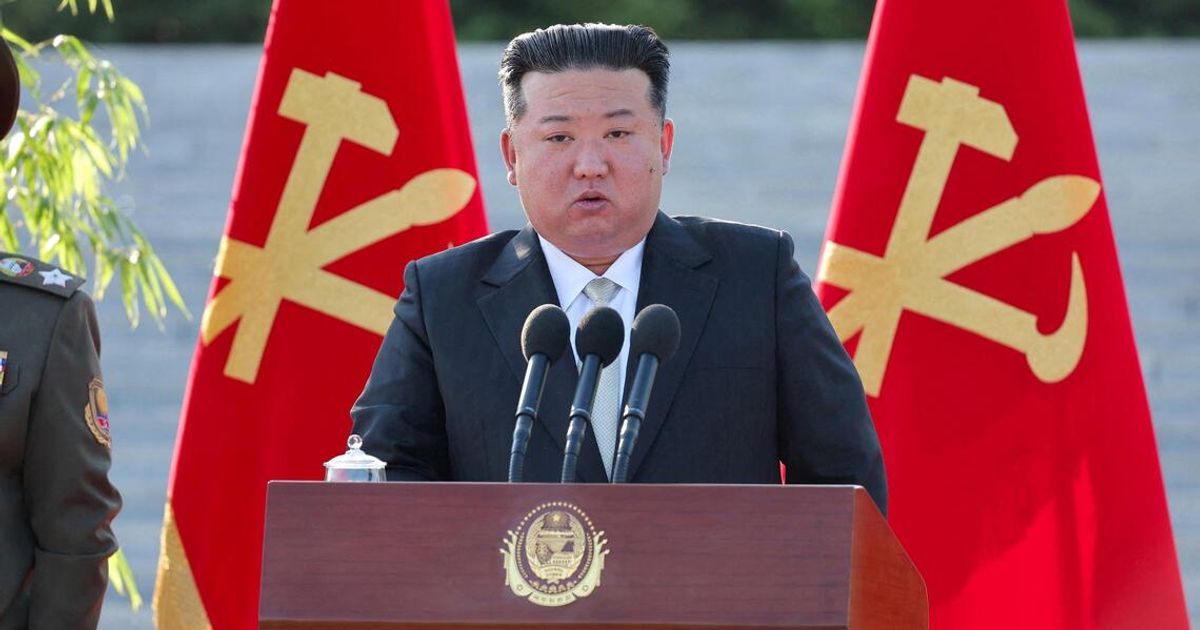
Kim Jong-un May Visit China Early Next Month, Prompting Seoul Concerns
North Korean leader Kim Jong-un may visit China early next month, prompting concerns in Seoul regarding its diplomatic influence and the security burden of a nuclear-armed North.
Speculation centers on a potential summit between Kim and Chinese President Xi Jinping, with reports indicating that travel plans to multiple Chinese cities are under review, according to Kyodo News. As of November 29, the Zhonglian Hotel in the border city of Dandong has suspended reservations, a move Yonhap News reported as a sign of high-level preparations similar to those seen during Kim’s surprise October visit.
South Korea’s intelligence agency confirmed on November 28 it is “keeping a close eye on various developments” regarding the potential trip, according to AFP. While North Korea and China have not always maintained smooth relations, Beijing remains Pyongyang’s largest trading partner and a primary source of economic and diplomatic support.
The prospect of a Kim-Xi summit creates significant anxiety for the South Korean government, which fears being marginalized in regional security discussions. Seoul Economic Daily reported that officials worry Kim could use a meeting with Xi to secure a subsequent summit with the U.S. President Donald Trump, potentially leading global powers to tacitly accept North Korea’s nuclear status.
These concerns are compounded by recent shifts in regional security.
During a trilateral summit on November 19 involving the United States, China, and Russia, President Trump did not state a position on denuclearization, calling instead for cooperation on nuclear nonproliferation, Seoul Economic Daily reported. Meanwhile, North Korea has escalated military signaling by recently unveiling three types of nuclear warheads.
President Lee Jae-myung addressed the possibility of the visit on November 29, stating, “We can calmly prepare for both the case where he goes and the case where he does not. There is no need to agonize over it.” Lee added, “It would be different if we could exert influence, but there is not much room for us to get involved,” according to Seoul Economic Daily.
The administration’s response is complicated by ongoing personnel changes within its security apparatus. President Lee recently replaced the director of the National Intelligence Service and the unification minister due to past friction with Washington, though some incoming nominees have faced criticism regarding their limited experience in foreign affairs and security, Seoul Economic Daily reported.
The South Korean presidential office stated it is “closely monitoring developments in North Korea-China relations,” according to AFP. For now, the government faces pressure to stabilize its alliance with Washington while ensuring that the pursuit of diplomatic achievements does not lead to a miscalculation regarding Pyongyang’s nuclear program.