Kansas faces shifting political alignments for 2026 Senate elections
Kansas faces shifting political alignments ahead of the 2026 Senate elections, balancing a deep-rooted rural conservative majority against a growing Democratic presence in Johnson County and the Kansas City suburbs. While statewide voter registration numbers have remained largely stable since the era of Bob Dole, decades of fierce internal factionalism within the Kansas Republican Party have created potential vulnerabilities for the GOP.
Geographic Divides Shape State Politics
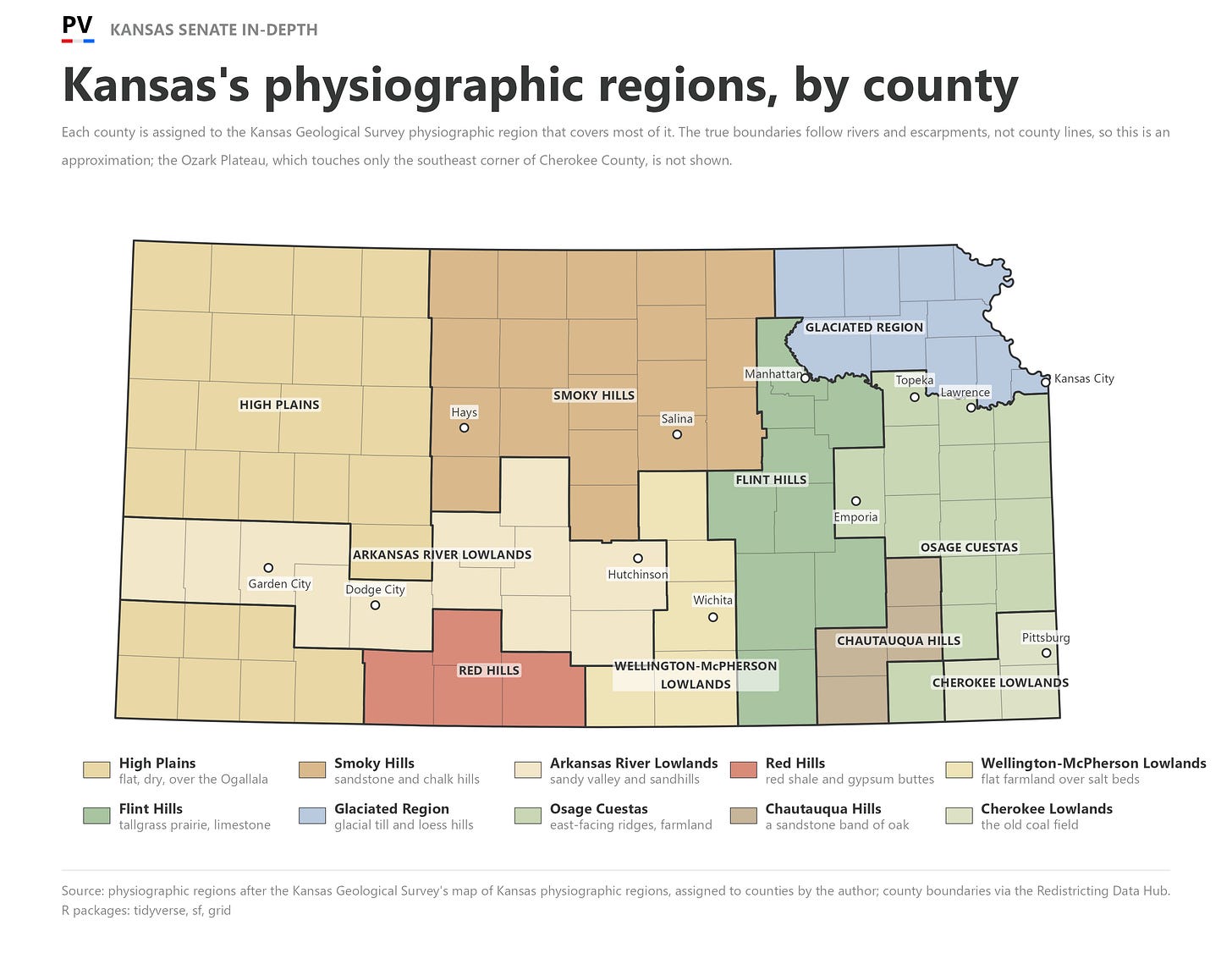
The state’s political geography reflects its varied terrain and economic history. Western Kansas, characterized by the arid High Plains, features lightly populated counties where wheat, sorghum, and corn dominate.
To the southeast, coal mining roots established the “Little Balkans” as a historic center of Kansas’ Democratic Party. Meanwhile, northeastern Kansas—anchored by deep soils, abundant rainfall, and counties like Doniphan, Brown, and Nemaha—contains the largest share of the state’s historical population.
Historical Shifts from Populism to Republican Dominance
Kansas started as an overwhelmingly Republican state following the Civil War, with Abraham Lincoln securing 82 percent of the two-party vote in 1864. Economic hardship in the 1870s and 1880s altered that trajectory. In 1892, the People’s Party carried the state by promising relief to hardscrabble farmers. By 1896, the Populists executed a hostile takeover of the Democratic Party, helping William Jennings Bryan carry Kansas.
The state leaned Democratic again in 1900 and last favored a Democratic presidential candidate in 1916 under Woodrow Wilson. Since then, the Republican tide steadily reclaimed the farm regions. The High Plains shifted right, followed by the central hill regions in the 1990s and the cuestas in the 2000s. By 2016, old coal regions lurched from R+10 to R+19.
Suburban Growth Counters Rural Redoubts
A countervailing trend emerged as the Kansas City suburbs expanded, transforming Johnson County into a primary source of Democratic strength. In 2012, only 13 percent of the two-party vote in Johnson County was cast in precincts left of the national average. By 2024, that figure surged to 75 percent, with Overland Park and Mission Hills turning mostly blue and Olathe shifting to a tossup.
Despite these urban shifts, Kansas lacks the massive metroplex dominance seen in states like Texas. The major Kansas metro area casts only about a third of the statewide vote. Consequently, statewide Republican registration numbers remain level with 2000 levels, even as Republican registration in Johnson County has cratered.
Internal GOP Warfare Sets the Stage for 2026
The primary threat to Republican dominance stems less from demographic shifts and more from internal party warfare. Kansas politics long operated with a split personality, balancing a liberal-moderate Republican wing, exemplified by figures like Nancy Landon Kassebaum and Bill Graves, against a conservative wing represented by Bob Dole and later Sam Brownback. That fragile detente fractured during the 2010s, plunging the state’s dominant party into persistent internal conflict.