
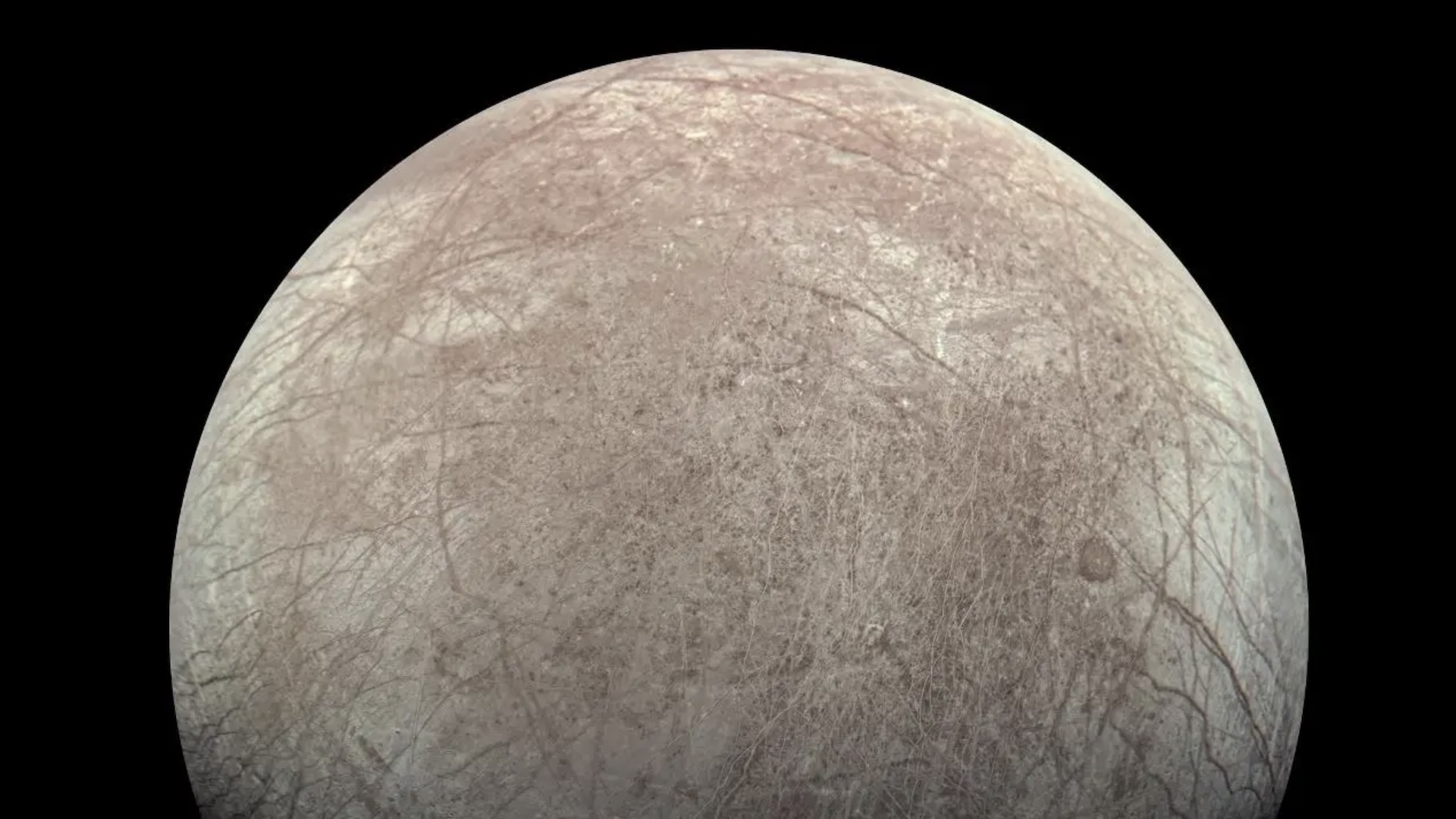
Europa’s Dynamic Surface: Webb Telescope Reveals Change
Bucharest – May 24, 2024 – The Europa moon’s surface isn’t as static as previously thought, according to recent findings. Researchers using the James Webb Space Telescope (JWST) are observing dynamic and evolving ice features, indicating important geological activity. These new insights are reshaping our understanding of Europa and will set the stage for further study.
Europa’s Dynamic Surface: James Webb Telescope Reveals Constant Change
Icy worlds, like jupiter’s moon Europa, might seem frozen in time, but planetary scientists are discovering that even these frigid landscapes are subject to ongoing change. Recent observations from the James Webb Space Telescope (JWST) are providing unprecedented insights into Europa’s surface, revealing a dynamic surroundings where ices are constantly evolving.
Dr.Ujjwal Raut, of the Southwest Research Institute (SWRI), has been studying the JWST data, focusing on the types and distribution of ice on Europa. The findings suggest the presence of both amorphous and crystalline ice, indicating an active water source, likely a subsurface ocean, and ongoing geologic processes.
Evidence of a Subsurface Ocean
The presence of crystalline ice,alongside amorphous ice,is a key indicator of activity. Crystalline ice requires a source of liquid water that can freeze and form ordered crystal structures. This points towards a subsurface ocean that interacts with the surface through geologic processes.
Our data showed strong indications that what we are seeing must be sourced from the interior, perhaps from a subsurface ocean nearly 20 miles (30 kilometers) beneath Europa’s thick icy shell.
Dr. Ujjwal raut, Southwest Research Institute
The changes observed on Europa’s surface can occur rapidly, perhaps within a couple of weeks in certain areas. This dynamism is further supported by the detection of carbon dioxide (CO2) on the surface.
This region of fractured surface materials could point to geologic processes pushing subsurface materials up from below. When we see evidence of CO2 at the surface, we think it must have come from an ocean below the surface.The evidence for a liquid ocean underneath Europa’s icy shell is mounting, which makes this so exciting as we continue to learn more.
Dr. Ujjwal Raut, Southwest Research Institute
europa’s Unique Environment
Europa’s location within Jupiter’s powerful magnetic field subjects its surface to intense radiation. As a tidally locked moon, Europa always presents the same face to Jupiter. Its internal structure consists of a rocky and metallic core, an ocean, and a relatively young icy shell, estimated to be no more than 180 million years old.
JWST’s spectral analysis reveals that ice crystallizes differently across Europa’s surface. On Earth, water ice typically forms hexagonal crystals, as seen in snow and frozen rain. Though,Earth’s atmosphere and magnetic field provide protection from radiation,allowing ice to remain crystalline for extended periods.
On Europa, charged particles disrupt the crystalline structure, transforming it into amorphous ice. The presence of crystalline ice indicates ongoing resurfacing processes that counteract the effects of radiation.
Resurfacing Mechanisms
Scientists initially believed that Europa’s surface was covered by a thin layer of amorphous ice, protecting the crystalline ice beneath. However, new evidence suggests that crystalline ice is present on the surface in various regions, notably in areas like Tara Regio.
We think that the surface is fairly porous and warm enough in some areas to allow the ice to recrystallize rapidly.Also, in this same region, generally referred to as a chaos region, we see a lot of other unusual things, including the best evidence for sodium chloride, like table salt, problably originating from its interior ocean. We also see some of the strongest evidence for CO2 and hydrogen peroxide on Europa.The chemistry in this location is really strange and exciting.
Richard Cartwright, Johns Hopkins Applied physics Laboratory
The discovery of CO2, including both common and heavier isotopes, raises questions about its origin, with evidence pointing towards an internal source.
It is hard to explain, but every road leads back to an internal origin, which is in line with other hypotheses about the origin of 12CO2 detected in Tara Regio.
Richard Cartwright, Johns Hopkins Applied Physics Laboratory
Heat Sources and Surface Features
Two primary heat sources drive Europa’s internal activity: tidal heating and radioactive decay in its core.these processes warm the subsurface ocean and facilitate the transport of water to the surface.
Chaotic terrains, characterized by cracked and jumbled surfaces, may result from diapirs, which are conduits that transport warmer water and slush from below. Upon reaching the surface, this water freezes into crystalline ice, carrying dissolved CO2 and other materials.
Other mechanisms contributing to surface resurfacing include plumes, which deposit ice grains, and impacts, which can expose fresh ice.However,the constant bombardment of charged particles quickly transforms crystalline ice into amorphous ice.
Studies suggest that this conversion can occur in as little as 15 days on Europa’s leading hemisphere, highlighting the moon’s dynamic nature.The upcoming Europa Clipper mission aims to further investigate these regions with detailed observations.
FAQ About Europa
- Q: Does Europa have an ocean?
A: Yes, scientists believe Europa has a subsurface ocean of liquid water. - Q: What is the surface of Europa made of?
A: Europa’s surface is primarily composed of water ice. - Q: Why is Europa’s surface so dynamic?
A: Europa’s surface is constantly changing due to radiation, tidal forces, and internal geological activity. - Q: What is the Europa Clipper mission?
A: The Europa Clipper is an upcoming mission to study Europa in detail, including its ocean and surface composition.
