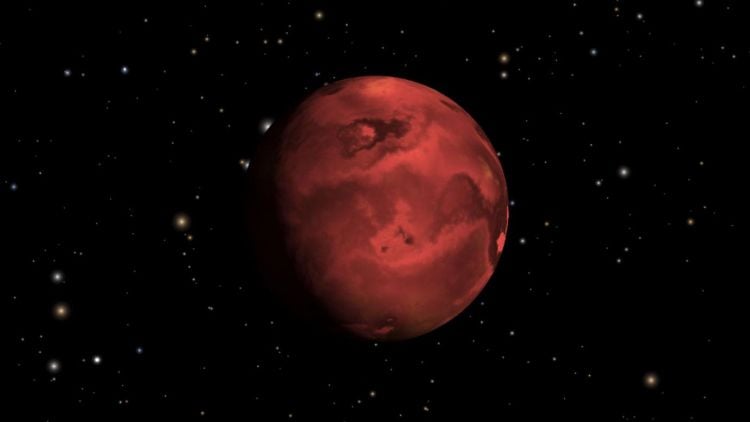
JWST finds atmosphere on coldest lava exoplanet HD 3167 b
Coldest Lava Exoplanet HD 3167 b Found to Hold an Atmosphere in Breakthrough JWST Observations
Researchers using NASA’s James Webb Space Telescope have detected an atmosphere on HD 3167 b, an Earth-sized lava world located 154 light-years away in the constellation Pisces. Published in The Astrophysical Journal Letters by a team including University of Chicago graduate student Brandon Park Coy, the finding challenges long-standing planetary models by proving that an unusually cold lava world can retain an envelope of gas despite orbiting its K-type star in just 0.96 Earth days.
Quick Technical Overview of HD 3167 b
Distance from Earth: Approximately 154 light-years in the constellation Pisces.
Planetary Metrics: Radius of ~1.6 Earth radii and mass of ~4.8 Earth masses.
Orbital Period: 0.96 Earth days around a K-type host star.
Observation Method: Secondary eclipse data captured via mid-infrared wavelengths using NASA’s James Webb Space Telescope.
Challenging Thermal Models of Terrestrial Exoplanets
Planetary formation theories have long struggled to account for how rocky bodies survive intense stellar radiation when orbiting dangerously close to their parent stars. While exoplanets with extreme temperatures naturally vaporize their surface rock to form dense gas envelopes, colder lava worlds were previously categorized as bare, stripped-down rocks devoid of gaseous layers. The discovery of an atmosphere on HD 3167 b upends that threshold. According to Edwin Kite, a University of Chicago associate professor of geophysical sciences and co-author on the study, proximity to a host star normally creates an environment hostile to atmospheric retention due to continuous bombardment by stellar wind and high-energy photons.
The research team identified the anomaly by observing the exoplanet’s secondary eclipse—the precise moment a planet passes directly behind its host star. Measuring the drop in mid-infrared light allowed engineers and astrophysicists to quantify the thermal radiation emitted by the planet itself. Instead of matching the maximum possible temperature dictated by its reflective surface and stellar proximity, HD 3167 b exhibited a dayside significantly cooler than theoretical models predicted.

Thermal Redistribution and Atmospheric Dynamics
Because exoplanets operating on sub-one-day orbits are tidally locked, one hemisphere continuously absorbs intense radiation while the other remains in permanent darkness. The suppressed dayside temperature observed by the James Webb Space Telescope indicates that thermal energy is being actively redistributed from the day side to the night side. Megan Weiner Mansfield of the University of Maryland, who leads the broader 10-target observational program, notes that this heat transfer—along with potential cloud cover reflecting incoming starlight—points directly to the presence of a circulating atmosphere.
This dynamic closely mirrors Venus, where atmospheric circulation minimizes severe temperature gradients between illuminated and dark hemispheres. For systems architects and astrophysicists analyzing thermal telemetry, uncovering this lower-temperature atmospheric threshold establishes a new baseline for how terrestrial worlds manage extreme stellar flux.
Implications for Early Earth and Terrestrial Evolution
Understanding the survival mechanisms of ultra-close exoplanets provides a direct proxy for reconstructing the conditions of our own solar system’s infancy. Brandon Park Coy points out that early Earth underwent a magma ocean stage characterized by an entirely liquid surface driven by high-energy planetesimal collisions.
While these extreme worlds remain thoroughly inhospitable to biological life, tracking their atmospheric retention gives researchers empirical data on planetary outgassing and volatile cycling.