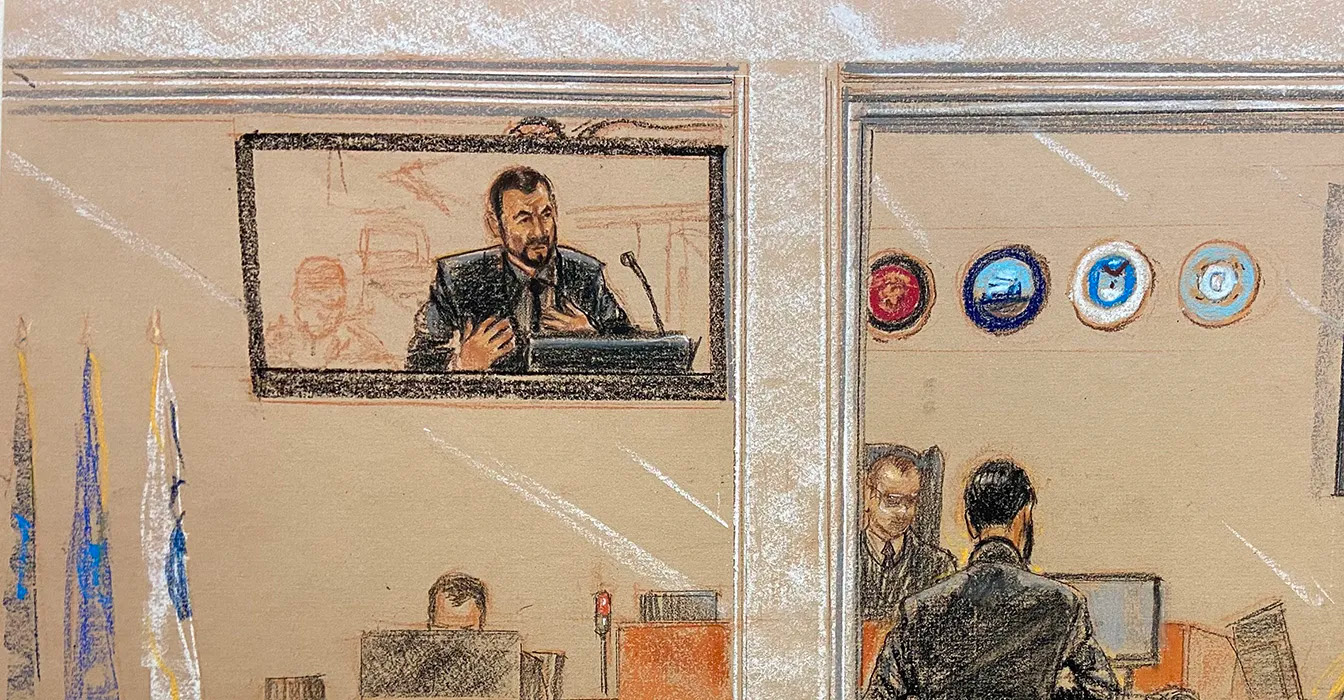
Judge Suppresses Al Hawsawi Confessions in 9/11 Military Commission
Air Force Lt. Col. Michael Schrama ruled on Friday that the government failed to establish that Mustafa al Hawsawi gave voluntary statements to the FBI in January 2007 following over three years in CIA custody, marking the third 9/11 defendant to win suppression of those confessions, lawdragon.com reported.
Schrama Rejects Prosecution Arguments on Coercion and Taint
Prosecutors argued that changed circumstances at the base, including visits by delegates from the International Committee of the Red Cross, removed the coercive impact of earlier interrogation methods. Schrama rejected that position in his ruling, writing that mere visits by the Red Cross cannot overcome years of isolation and vulnerability to captors willing to use abuse.
Schrama also determined that the prosecution carried the legal burden to prove the FBI interviews were not inherently coercive on their own terms. The judge concluded that the government failed to prove voluntariness by a preponderance of the evidence. Walter Ruiz, the lead lawyer for al Hawsawi, did not immediately provide comment on the decision.
Parallel Rulings and Judicial Precedents in Military Commission
The October decision follows two similar suppression orders in the same military commission case. Schrama previously suppressed the statements of accused 9/11 plot mastermind Khalid Shaikh Mohammad on August 28, citing extraordinary physical and mental abuse by the CIA. Last year, Schrama’s predecessor on the case, Air Force Col. Matthew McCall, suppressed statements given to the FBI by Mohammad’s nephew, Ammar al Baluchi.
Prosecutors appealed McCall’s April 2025 order regarding al Baluchi to the U.S. Court of Military Commission Review, which has not yet issued a decision. However, government lawyers chose not to appeal Schrama’s ruling regarding Mohammad, which arrived just days after the judge established a June 2028 trial date. Navy Rear Adm. Aaron Rugh, the chief prosecutor, did not immediately comment on whether his office would appeal the latest ruling concerning al Hawsawi.
Details of Custody and Interrogation History
Al Hawsawi was captured in March 2003 and spent several months at a CIA black site known as Location 2, or Cobalt, where he faced enhanced interrogation techniques. Ruiz argued in court that al Hawsawi’s treatment included sodomy and rape via an unnecessary rectal exam that left him with permanent physical damage. The CIA subsequently transferred al Hawsawi to a part of the Guantanamo Bay detention facility used as a black site between 2003 and 2004, which is the exact location where the FBI conducted its January 2007 reinterrogations.
During closing arguments in May defending the admissibility of the statements, Army Col. Joshua Bearden told Schrama that none of the enhanced measures were used on al Hawsawi during his initial stay at Guantanamo. Another original defendant in the case, Ramzi bin al Shibh, was also held at the Guantanamo CIA black site but has since been severed from the prosecution after a finding that he lacks the mental competency to stand trial.
Next Pretrial Hearings Scheduled for December
Schrama is expected to issue a ruling on the confessions of the fourth remaining defendant, Walid bin Attash, in the coming weeks. The next pretrial session in the military commission is scheduled to last for two weeks beginning December 7.