
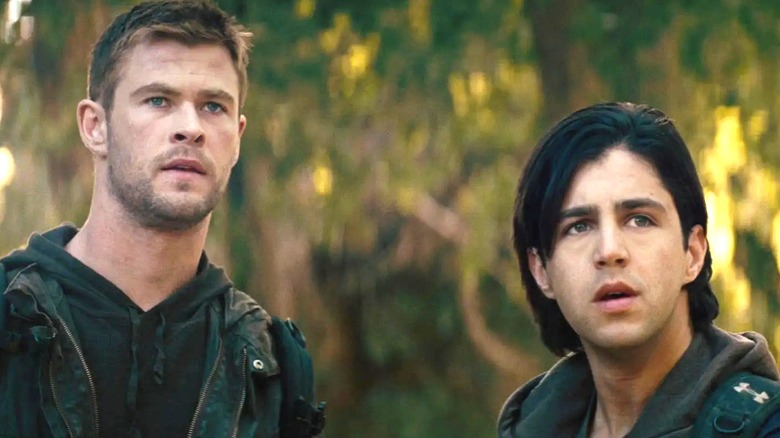
The 2012 remake of “Red Dawn,” starring Chris Hemsworth, remains a largely forgettable entry in action cinema. Often described as insubstantial, the film failed to resonate with critics or audiences, earning a meager 15% approval rating on Rotten Tomatoes and grossing just over $51 million against a $65 million budget. Beyond its lackluster reception, the remake is perhaps most remembered for a meaningful behind-the-scenes alteration: the changing of its invading force from chinese to North korean soldiers.
The plot centers around a community in Spokane, Washington, facing an unexpected invasion by North Korean forces.Jed (chris hemsworth), a returning soldier, leads a group of civilians in a desperate fight for survival. However, the film’s origins were markedly different. Initially, the invaders were conceived as Chinese, but a late-stage decision by MGM led to extensive and costly visual effects work to digitally alter the antagonists to North Koreans, reportedly to avoid jeopardizing the studio’s relationship with the Chinese market. This last-minute change highlights the complex interplay between creative vision and commercial considerations in Hollywood filmmaking.
Unsurprisingly, John Milius, the director of the original 1984 “Red Dawn,” was highly critical of the remake.Even before seeing the finished product,Milius expressed his disdain after reading the script,calling the project “a stupid thing to do” in a 2010 interview with the Los Angeles times.He lamented the lack of a compelling story and the focus on superficial action sequences, arguing that the remake lacked the thematic depth and political undercurrents of his original film.
The original “Red Dawn” and its Cultural Context
Released in 1984, the original “Red dawn” arrived during a period of heightened Cold War tensions and a resurgence of American patriotism under the Reagan governance. As the first film to receive a PG-13 rating, it pushed the boundaries of on-screen violence while simultaneously tapping into anxieties about a potential Soviet invasion of the United States. The film’s setting in Calumet, Colorado, and its focus on a group of high school students forming a guerilla resistance force, resonated with audiences and became a cultural touchstone of the era.
Unlike the remake, Milius’s “Red Dawn” was deeply rooted in the political climate of the time, portraying a clear-cut battle between American freedom and communist aggression. While its jingoistic themes have been subject to criticism in retrospect,the original film undeniably captured the spirit of the 1980s and offered a potent,if simplistic,vision of American resilience. The remake, in contrast, lacked this ideological grounding, prioritizing action over substance and ultimately failing to capture the same cultural impact.
Milius’s critique of the remake underscores a fundamental difference in approach. He believed the remake prioritized “neat action scenes” over a compelling story, a sentiment that reflects a broader concern about the direction of action filmmaking in the 21st century. The alteration of the antagonists, driven by commercial concerns, further diluted any potential political message, leaving a film that felt hollow and uninspired.
