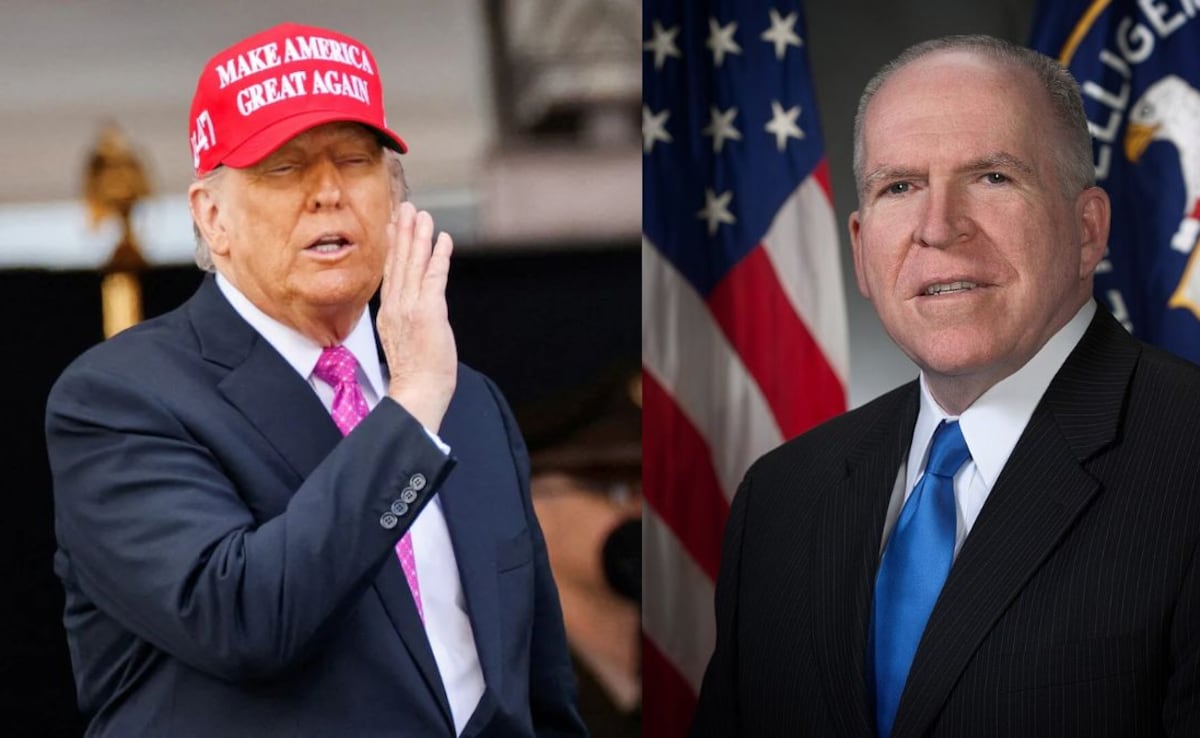
John Brennan Invokes 25th Amendment: Understanding US Presidential Succession
Former CIA Director John Brennan has sparked a constitutional firestorm by claiming the 25th Amendment—specifically the 1967 mechanism to remove a disabled president—was designed to address the exact “unhinged” instability currently exhibited by Donald Trump, triggering an urgent debate over presidential fitness and executive succession in Washington, D.C.
This isn’t just a political spat; it is a fundamental collision between psychology and law. When the highest levels of the intelligence community suggest that the Commander-in-Chief is a liability to national security, the problem shifts from a policy disagreement to a systemic crisis. The instability creates a vacuum of leadership that ripples far beyond the Oval Office, affecting everything from international treaty adherence to the stability of the U.S. Dollar.
The 25th Amendment was ratified to ensure the government doesn’t freeze if a president is incapacitated. But “incapacitated” is a nebulous term. Does it mean a coma? Or does it mean a cognitive break from reality that endangers the state?
The 1967 Precedent and the Architecture of Removal
To understand the gravity of Brennan’s assertion, we have to look at the historical intent of the U.S. Constitution’s 25th Amendment. Ratified in 1967, the amendment was largely a response to the assassination of John F. Kennedy and the terrifying prospect of a presidential vacancy or a president who was physically present but mentally absent.
Section 4 of the amendment is the “nuclear option.” It allows the Vice President and a majority of the Cabinet to declare the president “unable to discharge the powers and duties of his office.” This is the specific mechanism Brennan is highlighting. The argument is that “inability” should not be limited to a medical diagnosis, but extended to behavioral volatility that renders a leader unfit for the duties of the presidency.
This creates a legal paradox. If a president is deemed “unhinged,” who decides? The Cabinet members are often appointed by the very person they would be removing. This inherent conflict of interest often leads to a stalemate, leaving the country in a state of precarious uncertainty.
“The 25th Amendment was never intended to be a tool for political disagreement, but it was absolutely designed as a safety valve for the Republic. When the gap between a leader’s perception of reality and actual reality becomes a threat to the state, the law must provide a way out.” — Dr. Elena Vance, Constitutional Scholar at the Georgetown University Law Center.
For those caught in the crossfire of these executive shifts, the legal fallout is immense. Corporations and government contractors often locate themselves navigating contradictory orders from a volatile executive branch. In such volatile climates, businesses are increasingly relying on specialized constitutional law firms to interpret the legality of executive orders and protect their operational interests.
Regional Ripples: From D.C. To the Global Market
While the drama unfolds in the capital, the economic impact is felt globally. Markets hate uncertainty. When the stability of the U.S. Presidency is questioned, the volatility index (VIX) typically spikes. We spot this specifically in the financial hubs of New York and London, where hedge funds hedge against “political risk.”
The instability too manifests at the municipal level. Federal grants for infrastructure and city planning are often tied to the whims of the executive branch. When a president is perceived as unstable, the predictability of federal funding for cities like Chicago or Los Angeles vanishes. Local governments are forced to seek alternative funding or consult with public policy consultants to diversify their revenue streams and insulate themselves from federal volatility.
Consider the impact on diplomacy. A “volatile” president can dismantle decades of diplomatic groundwork in a single social media post. This forces allies in NATO and the EU to reconsider their reliance on U.S. Security guarantees.
The Mechanism of the 25th Amendment
- Section 1: Establishes the line of succession (VP, then Speaker of the House).
- Section 2: Fills a vacancy in the Vice Presidency.
- Section 3: Allows the President to voluntarily transfer power temporarily.
- Section 4: The involuntary removal process initiated by the VP and Cabinet.
The friction lies in the “majority of the Cabinet” requirement. In a loyalist-driven administration, the 25th Amendment becomes a dormant tool, regardless of the president’s mental state.

The Intelligence Community’s Moral Dilemma
Brennan’s public stance represents a breach of the traditional “silent” role of the intelligence community. Usually, former CIA directors operate in the shadows or provide nuanced briefings. By explicitly using the word “unhinged,” Brennan is signaling that the risk has surpassed the threshold of professional discretion.
This creates a dangerous precedent. If the intelligence community begins to openly litigate the mental fitness of a president, it risks the complete politicization of the Central Intelligence Agency. We are seeing a shift where the “Deep State”—a term often used pejoratively—is actually attempting to act as a constitutional guardrail.
“We are witnessing the weaponization of psychiatric terminology in a legal framework. The question is no longer just ‘is he fit,’ but ‘who has the authority to define fitness?'” — Marcus Thorne, Senior Fellow at the Council on Foreign Relations.
This instability doesn’t just affect the halls of power; it affects the average citizen’s trust in the rule of law. As the definition of “fitness” becomes a political battleground, many individuals and modest business owners are seeking guidance from civil rights attorneys to ensure their protections remain intact regardless of who occupies the Oval Office.
The 25th Amendment was designed to be a shield, protecting the United States from the chaos of an incapacitated leader. Still, as John Brennan’s warnings suggest, the shield only works if those holding it have the courage to use it. If the mechanism for removal is paralyzed by loyalty, the law becomes a mere suggestion.
The long-term danger is not just the personality of one man, but the fragility of a system that relies on the “honor” of a Cabinet to act against its own boss. As we move further into this era of political volatility, the necessitate for verified, objective expertise has never been higher. Whether you are a business owner shielding assets or a citizen seeking clarity, the only defense against systemic instability is a network of trusted, vetted professionals. You can find the specialists equipped to navigate these constitutional crises through the World Today News Directory.