
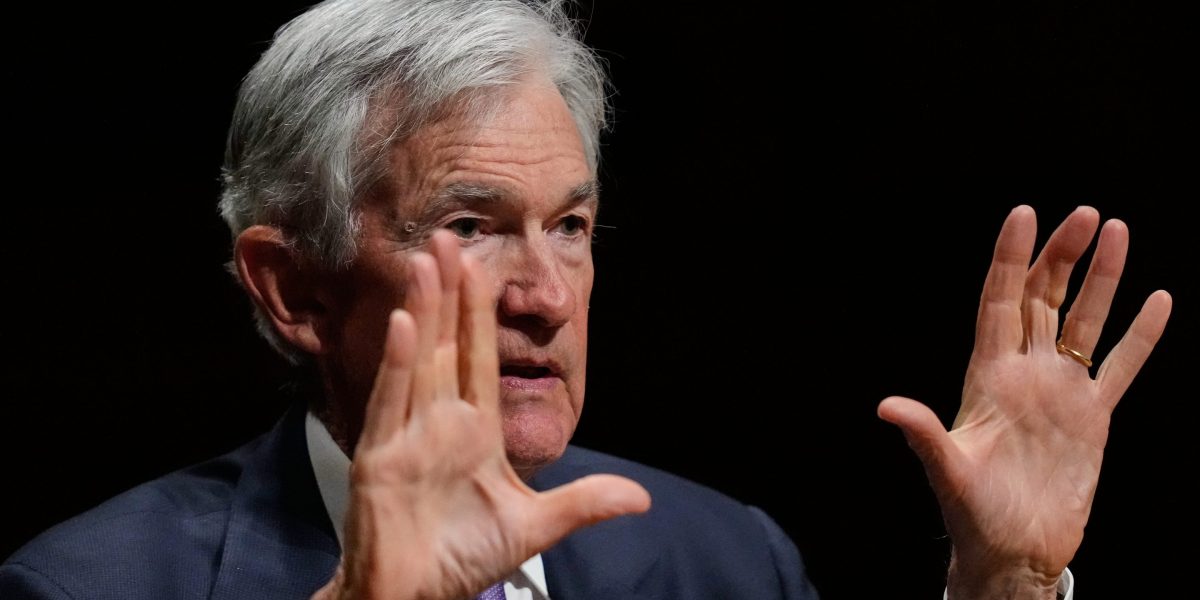
Jerome Powell says $39 trillion national debt is ‘not unsustainable,’ but it ‘will not end well’
Federal Reserve Chair Jerome Powell warned Harvard students on Monday that while the U.S. $39 trillion debt stock remains manageable, the fiscal trajectory is unsustainable. Interest payments now exceed defense spending, forcing corporations to hedge against potential sovereign credit constraints. This shift demands immediate recalibration of corporate treasury strategies and risk management protocols.
Wall Street hears a different signal when the Fed Chair speaks to academics rather than the Federal Open Market Committee. Powell’s distinction between debt stock and debt trajectory creates a specific liability for corporate balance sheets. Companies holding significant long-dated Treasuries face mark-to-market volatility as the yield curve steepens under fiscal pressure. This isn’t just macroeconomic theory; it is a working capital constraint. CFOs must now treat sovereign risk as a counterparty exposure. Navigating this landscape requires specialized treasury management services capable of stress-testing portfolios against fiscal dominance scenarios.
The Fiscal Dominance Trap
Net interest payments on the national debt are projected to exceed $1 trillion in fiscal year 2026. This figure nearly triples the $345 billion paid in 2020. In the first three months of the current fiscal year alone, interest payments reached $270 billion. Those numbers crowd out discretionary spending, but they also tighten liquidity conditions for the private sector. The U.S. Department of the Treasury data confirms that debt held by the public is projected to surge from 101% of GDP today to 120% of GDP by 2036. Such density alters the cost of capital across all asset classes.
Institutional investors are already adjusting exposure. The March 2026 Analyst Connect report from Seeking Alpha highlights how geopolitical friction, including the Iran conflict, compounds these fiscal risks. Market strategists note that political instability often accelerates capital flight from long-duration bonds. One senior portfolio manager at a major asset firm noted in recent guidance:
“We are seeing a decoupling of traditional safe-haven flows. When fiscal trajectories diverge this sharply from growth metrics, sovereign debt ceases to be a risk-free asset in practical portfolio construction.”
This sentiment echoes the JPMorgan 2026 outlook, which warned of a less straightforward path to reducing the government’s debt load. The interplay between Fed policy and Treasury financing needs creates a feedback loop. Quantitative tightening becomes harder when the Treasury needs to auction more debt at higher yields. Corporate borrowers feel this pinch first. Credit spreads widen even for investment-grade issuers. Companies relying on rolling short-term debt face refinancing risk. Engaging with corporate finance advisory firms becomes critical to restructure maturity profiles before liquidity conditions tighten further.
Three Structural Shifts for Industry
The divergence between debt growth and economic growth forces operational changes. We are moving from a low-cost capital environment to one where fiscal sustainability dictates monetary policy limits. This transition impacts procurement, hiring and M&A activity. The following shifts define the new operating environment for the upcoming fiscal quarters:
- Capital Allocation Discipline: Free cash flow must prioritize deleveraging over expansion. Companies with high leverage ratios will face punitive borrowing costs as basis points expand on corporate bonds.
- Supply Chain Hedging: Geopolitical instability combined with fiscal strain increases input cost volatility. Firms need risk management consulting to hedge against currency fluctuations driven by debt monetization fears.
- Regulatory Compliance: As the government seeks revenue, tax enforcement intensifies. Corporate law firms are seeing increased demand for structures that optimize liability without triggering audit flags.
Powell acknowledged that no one knows exactly where the breaking point lies, pointing to Japan as a country carrying a far higher debt-to-GDP ratio. However, the U.S. Lacks Japan’s domestic savings buffer. The direction of travel is unambiguous. Debt is growing substantially faster than the economy. In the long run, that is the definition of unsustainable. Primary balance remains the goal, yet achieving it requires cutting spending in politically explosive areas like Medicare and Social Security or banking on optimistic growth rates. Neither outcome guarantees stability.
The Boardroom Imperative
Former Fed Chair Janet Yellen struck a similar tone in January, warning that ballooning debt could reduce the Fed’s ability to address unemployment and inflation. The chorus of credible voices is real. So is the risk of that chorus becoming cover for cuts that disproportionately hurt consumers, reducing aggregate demand. Powell’s term expires in May 2026. His fiscal warning, offered to a room of Harvard students, may prove to be among the clearest statements of his tenure. The debt level is survivable, but only if the trajectory changes.
Corporations cannot wait for Washington to find political will. The window for proactive adjustment is narrowing. Business leaders must treat fiscal sustainability as a supply chain issue. Just as a bottleneck in semiconductors halts production, a bottleneck in sovereign liquidity halts investment. The market does not reward inertia. It penalizes exposure to unresolved systemic risk. Companies that secure expert guidance now will navigate the contraction better than those hoping for a soft landing.
Volatility is not a temporary condition; it is the new baseline. The path forward requires rigorous stress testing and diversified funding sources. World Today News Directory maintains a vetted list of partners who specialize in navigating these exact fiscal headwinds. From forensic accounting to sovereign risk hedging, the right partners turn uncertainty into a manageable variable. The debt will not end well if we don’t do something fairly soon. For the private sector, doing something means securing the balance sheet before the public sector breaks.