Japan Earthquake Sparks Misinformation, Tourism Concerns, and Safety Assessments Across Asia
On April 20, 2025, a 7.7-magnitude earthquake struck off the coast of Japan’s Tohoku region, triggering widespread shaking across northern Honshu and prompting immediate emergency responses. The quake, centered approximately 100 kilometers east of Miyako in Iwate Prefecture at a depth of 50 kilometers, was felt as far south as Tokyo and as far north as Hokkaido, according to the Japan Meteorological Agency. While no tsunami warning was issued for the Pacific coast, authorities activated disaster protocols and urged residents in coastal areas to remain vigilant for aftershocks.
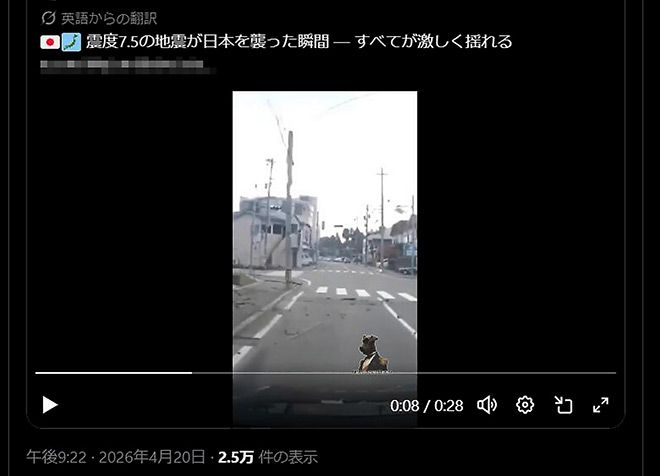
In the hours following the tremor, false claims began circulating rapidly on social media platforms across Southeast Asia and Indonesia. Posts falsely asserting that Indonesian nationals had been injured or killed in the quake gained traction on X, Facebook, and TikTok, often accompanied by manipulated images or misattributed videos from past disasters. One widely shared post claimed that over 50 Indonesian workers had been trapped in a collapsed factory in Sendai, while another falsely asserted that a Jakarta-based NGO had confirmed multiple fatalities among Indonesian citizens in Japan.
The Indonesian Embassy in Tokyo issued an official advisory on April 21 through its official channels, directly refuting the rumors. “As of this moment, We find no confirmed reports of Indonesian nationals injured, missing, or deceased as a result of the April 20 earthquake in Japan,” the embassy stated. The advisory urged Indonesian citizens in Japan to rely only on information from official sources, including the embassy’s website and local Japanese authorities, and warned against sharing unverified content that could incite unnecessary panic.
This position was echoed by the Jakarta Globe, which reported on April 22 that Indonesian consular officials in Osaka and Tokyo had conducted direct checks with local disaster management centers, hospitals, and evacuation shelters. “We have coordinated with Fukushima, Miyagi, and Iwate prefectural offices,” said a consular officer speaking on condition of anonymity. “No Indonesian nationals appear in any casualty lists, shelter registries, or medical admission records related to the quake.” The report noted that approximately 18,000 Indonesian citizens reside in Japan, primarily concentrated in urban centers such as Tokyo, Yokohama, and Nagoya, with smaller communities in industrial hubs along the Pacific coast.
Concerns extended beyond human casualties to infrastructure and environmental risks, particularly in regions popular with international tourism. The Bali Sun reported on April 23 that seismologists from Indonesia’s Meteorological, Climatological, and Geophysical Agency (BMKG) had issued internal alerts regarding potential seismic triggers in the Sunda Megathrust zone following the Japanese quake. While emphasizing that no direct tectonic link had been established between the Tohoku event and increased activity near Bali, the agency noted heightened monitoring of subduction zone stress transfer patterns. “We are observing the situation closely,” said Dr. Rina Suryadi, a BMKG seismologist. “Large quakes elsewhere can sometimes influence regional stress fields, but there is currently no evidence of elevated tsunami or megathrust risk to Bali’s southern coast.” The report clarified that Bali’s tourism resorts in Kuta, Seminyak, and Nusa Dua remained operational, with no evacuation orders or travel advisories issued by local authorities.
On the nuclear safety front, the International Atomic Energy Agency (IAEA) issued a statement on April 22 confirming that all nuclear facilities in Japan, including the Fukushima Daiichi and Daini plants, remained stable following the earthquake. “No abnormalities have been detected in reactor cooling systems, containment structures, or radiation monitoring networks,” the IAEA said. The agency added that it had been in continuous contact with Japan’s Nuclear Regulation Authority (NRA) and Tokyo Electric Power Company (TEPCO), both of which reported that backup power systems and emergency protocols functioned as designed during the seismic event. The IAEA reiterated its offer of technical assistance should Japan request it, though no such request had been made as of April 23.
As of April 24, Japanese authorities continued to assess structural damage in rural coastal communities, particularly in Iwate and Aomori prefectures, where landslides disrupted local roads and damaged fishing infrastructure. The National Police Agency reported over 200 minor injuries, primarily from falls or falling debris, but confirmed no fatalities directly attributable to the quake. Emergency shelters remained open in three municipalities, housing fewer than 50 displaced residents, with plans to begin phased closures pending further safety inspections.
The Indonesian Embassy in Tokyo has not announced any plans to repatriate citizens or alter its current advisory stance. Consular officials stated they would maintain daily coordination with Japanese disaster management agencies through the end of the week, with a follow-up public update scheduled only if new developments arise. No official request for international assistance has been received from Japanese authorities, and Indonesia’s Ministry of Foreign Affairs has not issued any bilateral statement regarding the event.