
potential Planet Detected Around Alpha Centauri B, Then Vanishes
Table of Contents
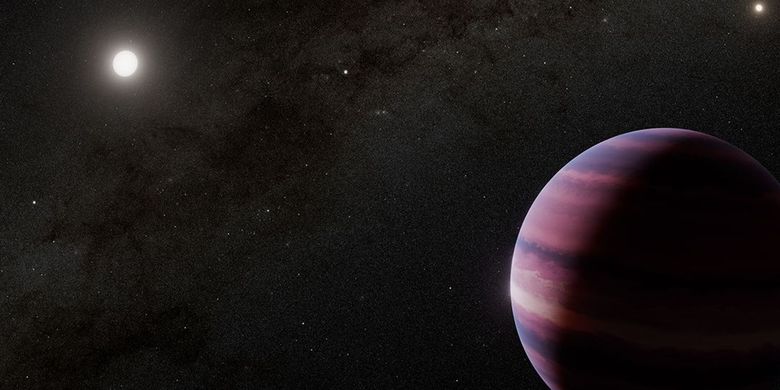
Pasadena, California – June 10, 2025 – Astronomers using the James Webb Space Telescope (JWST) have announced the potential detection of a gas giant planet orbiting Alpha Centauri B, one of the stars in the closest star system to our own. The finding, made in August 2024, is particularly meaningful as the planet appears to reside within the habitable zone of the star. However, subsequent observations in February and April 2025 failed to re-detect the object, leaving its existence uncertain.
Discovery Details
The initial detection was achieved using JWST’s Mid-Infrared instrument (MIRI) with a coronagraphic mask. This technology blocks the intense light from Alpha Centauri A, enabling the observation of fainter objects in the system. The planet candidate was found approximately twice the distance of the Earth from the Sun, and is estimated to be 10,000 times dimmer than Alpha Centauri B. Analysis suggests a mass comparable to that of a giant planet.
The challenge of this observation lies in the brightness of Alpha Centauri B and the complex light patterns created by the telescope’s optics.Scientists employed specialized algorithms to reduce glare and visual distortions, revealing the potential planet. The team was led by researchers at the Jet Propulsion Laboratory (JPL) and Caltech.
Habitable Zone and Planet Characteristics
If confirmed, this would be the closest known planet in the habitable zone of a Sun-like star. However, due to its estimated size and composition, the object is believed to be a gas giant, making it unlikely to harbor life as we know it. Charles Beichman of JPL emphasized the collaborative effort required to design the observation sequence for this challenging target.
The Disappearing Act
Despite the initial promising detection, follow-up observations using discretionary time allocated by the Webb Telescope’s Director were unsuccessful in locating the planet candidate. Aniket Sanghi, a PhD student at Caltech, explained that computer simulations of potential orbits suggest the planet may periodically move too close to the stars to be visible. These simulations indicate a roughly 50% probability of the planet being obscured at certain points in its orbit.
The Alpha Centauri system is located approximately 4.37 light-years from Earth. Alpha Centauri A is very similar to our Sun, while alpha Centauri B is slightly smaller and cooler. The system also includes a red dwarf star, Proxima Centauri, which is known to host at least one planet, Proxima Centauri b.
Future Observations
Further observations are planned to attempt to re-detect the planet candidate and confirm its existence. The team hopes that continued monitoring will reveal the planet’s orbital path and provide a clearer understanding of its characteristics. The ongoing search for planets around Alpha Centauri remains a high priority for astronomers seeking to understand the potential for life beyond Earth.
