
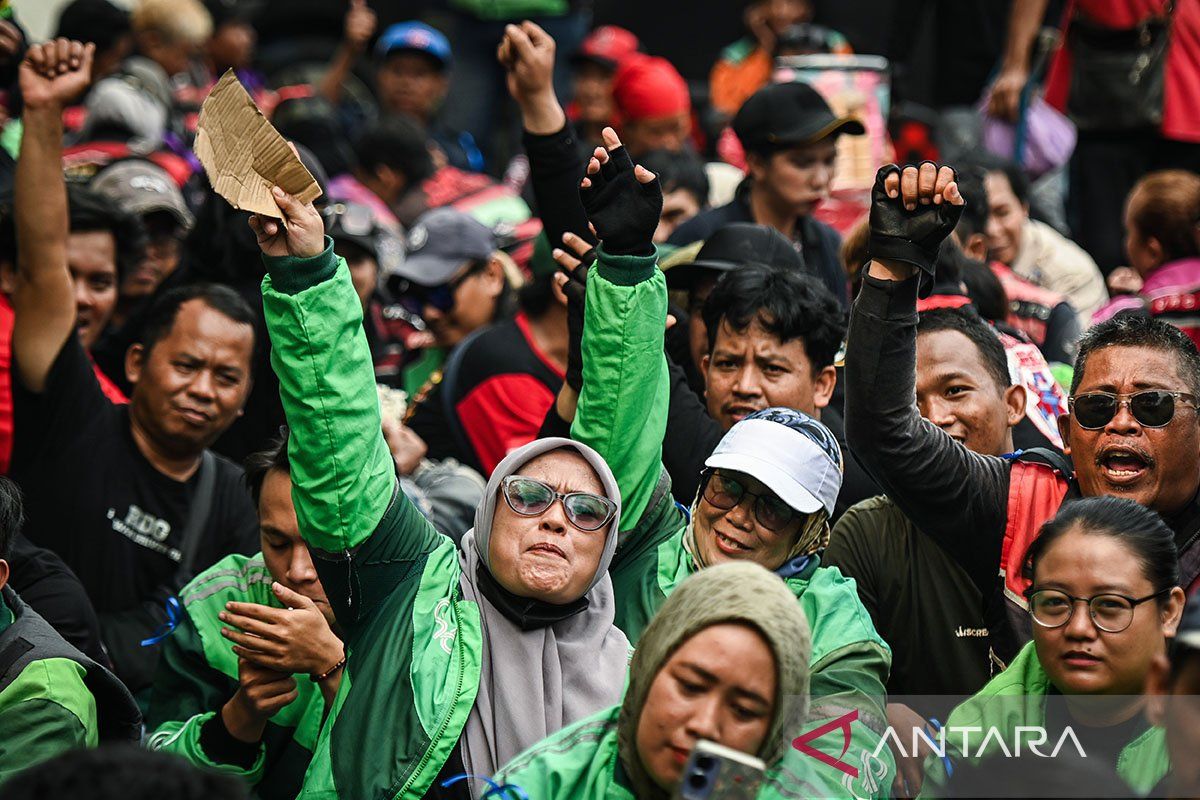
Ojol Drivers Protest Platform Policies in Jakarta
Commission Cuts and Rights Protection Demands Spark Demonstration
Hundreds of ride-hailing motorcycle taxi drivers, known locally as “ojol,” converged near Jakarta’s National Monument (Monas) on Thursday. They voiced strong opposition to a 10 percent commission reduction imposed by ride-hailing platforms and called for enhanced regulatory protections for their livelihoods.
Drivers Rally for Fairer Treatment
The protest, which began around 1:15 p.m. local time, saw drivers from Jakarta and surrounding regions assemble with flags and banners. The demonstration proceeded without significant traffic disruption, as police permitted vehicles to pass by the designated protest area.
Organizers urged participants to refrain from confrontational tactics, specifically discouraging the practice of “sweeps” against fellow drivers who continued to work. This internal directive aimed to maintain order and focus on the core grievances.
Police Ensure Security Amidst Protest
The Jakarta Metropolitan Police had strategically deployed 1,437 officers to manage the gathering safely. Central Jakarta Police Chief Senior Commissioner Susatyo Purnomo Condro emphasized the police’s role in safeguarding the demonstration.
“We urge the demonstrators to follow the rules and comply with instructions from security personnel on the ground,”
—Susatyo Purnomo Condro, Central Jakarta Police Chief
Condro further stressed that law enforcement would conduct their duties in a humane and professional manner. He also appealed to speakers to maintain a calm atmosphere and avoid any incitement to anarchy.
The drivers’ protest highlights ongoing tensions between ride-hailing platforms and their drivers regarding operational policies. Similar demonstrations have occurred previously, with drivers advocating for a more equitable distribution of earnings. For instance, in Indonesia, online taxi driver earnings can vary significantly, with some reports indicating that drivers often take home less than 60% of the fare after platform fees and other deductions, making commission changes particularly impactful (International Labour Organization).
Calls for Regulatory Action
The drivers’ demands extend beyond commission rates, encompassing a broader call for regulations that better safeguard their rights and working conditions. This reflects a growing movement among gig economy workers globally seeking greater security and fair treatment from platform companies.
Previous discussions have touched upon potential fare adjustments, with the Ministry weighing an 8-15% increase in online taxi fares, indicating a governmental awareness of the economic pressures faced by drivers (ANTARA News).
