
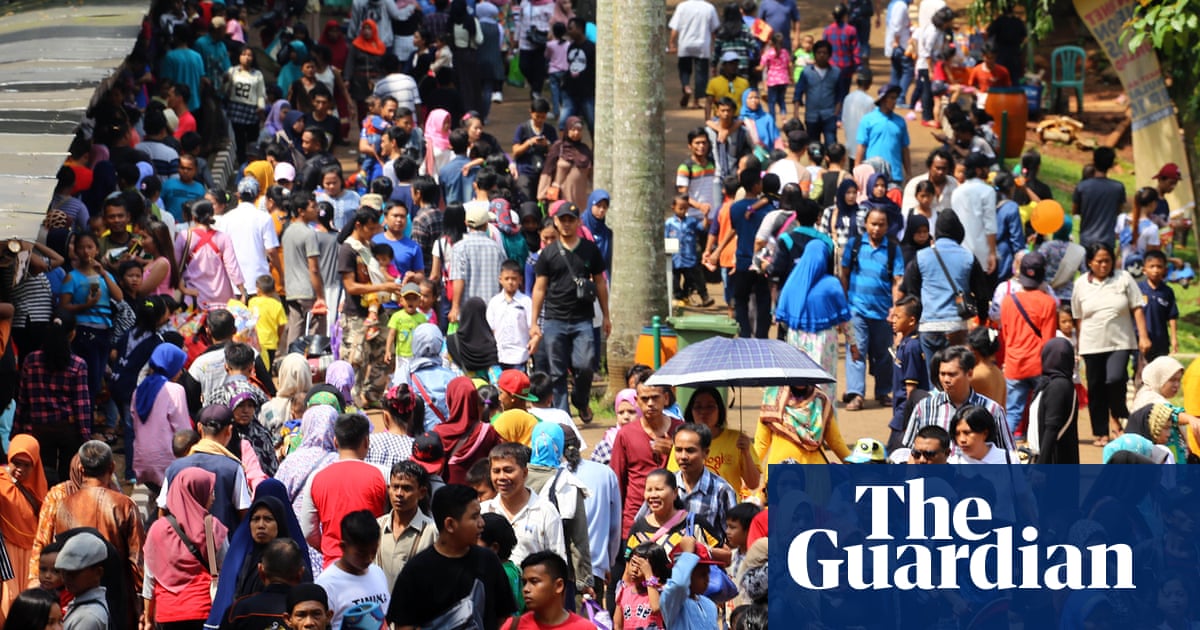
Jakarta Now World’s Most Populous City, UN Report Finds
Jakarta, Indonesia – Jakarta has surpassed Tokyo as the world’s most populous city, according to a new assessment by the United Nations Department of Economic and Social Affairs. The findings, released today, reflect a shift in global demographics and a revised methodology for defining urban extent.
The UN report indicates Jakarta’s population exceeds 33 million people, edging out the Tokyo metropolitan area.Previous assessments, utilizing varying definitions of urban areas, often ranked Tokyo as the largest city. “The new assessment … provides a more internationally comparable delimitation of the urban extent based on similar population and geospatial criteria,” explained Patrick Gerland, head of the UN department’s population estimates and projection section.
Globally,the number of people living in cities has more than doubled since 1950,rising from 20% of a 2.5 billion world population to nearly half of the current 8.2 billion. the report projects that by 2050, two-thirds of global population growth will occur in cities, with the remaining third in towns.
The number of megacities – those with at least 10 million inhabitants – has quadrupled since 1975, increasing from eight to 33 in 2025. Asia dominates the list of most populated cities, with nine of the top ten located on the continent: Jakarta, Dhaka, Tokyo, New Delhi, Shanghai, Guangzhou, Cairo, Manila, Kolkata and Seoul.
“Urbanisation is a defining force of our time,” stated Li junhia, the UN undersecretary-general for economic and social affairs. “When managed inclusively and strategically, it can unlock transformative pathways for climate action, economic growth, and social equity.”
While the broader Tokyo region has experienced population decline mirroring trends across Japan, the city itself-comprising the 23 special wards and 26 smaller cities-is seeing growth. The population of “Tokyo proper” currently stands at just over 14 million,up from 13.2 million a decade ago, driven by an influx of young people seeking opportunities. Net migration to the capital slowed during the Covid-19 pandemic but has as rebounded.
