
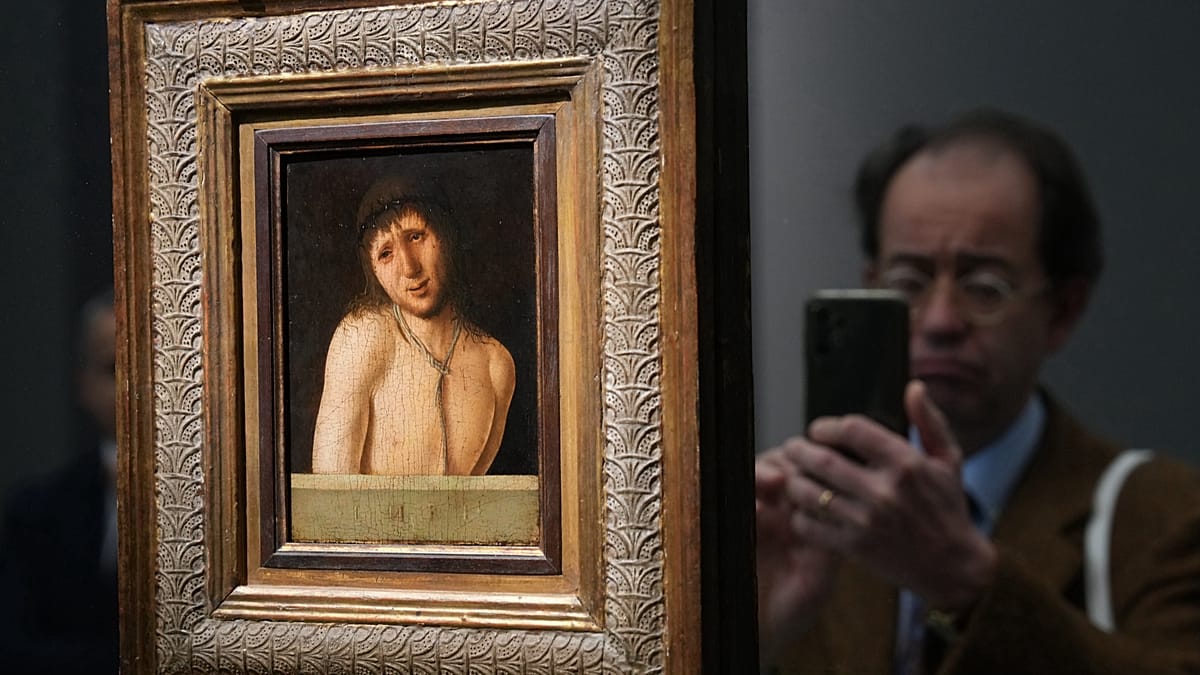
Italy Buys Renaissance ‘Ecce Homo’ Painting for €12.6 Million
Italy’s Cultural Repatriation: A €42.6 Million Investment in Renaissance Heritage
Italy is aggressively reclaiming its artistic legacy, spending a combined €42.6 million in recent weeks to purchase two significant works – a Baroque painting by Caravaggio for €30 million and now a devotional panel by Antonello da Messina for €12.6 million – both previously held in private collections and slated for international auction. This proactive acquisition strategy, driven by the Ministry of Culture, underscores a national commitment to preserving and showcasing Italy’s unparalleled art patrimony, even as it raises questions about the escalating costs of cultural repatriation and the logistical challenges of managing a growing national collection.

The “Ecce Homo” and the Price of Devotion
The newly acquired Antonello da Messina painting, titled “Ecce Homo” and dating back to around 1470, depicts a poignant scene from the Passion of Christ – the moment Pontius Pilate presents Jesus to the crowd. Measuring just 20.3 cm by 14.9 cm, the small wooden panel holds a surprisingly powerful emotional resonance. What’s particularly striking is the painting’s history of intimate devotion. the previous owner reportedly carried it in a leather bag for years, using it for personal prayer. This devotion, however, came at a cost to the artwork itself. Federica Zalabra, director of the National Museum of Abruzzo, noted that the face of Saint Jerome, depicted on the reverse side, has been “completely rubbed off” from years of being kissed by the owner. This physical manifestation of faith highlights the complex relationship between art, religion, and preservation.
A Broader Trend: Italy’s Assertive Cultural Policy
This acquisition isn’t an isolated incident. It follows closely on the heels of the €30 million purchase of a Caravaggio portrait, Maffeo Barberini, who would later become Pope Urban VIII. Massimo Osanna, director general of Italy’s museums, emphasized the Ministry of Culture’s concerted effort to “expand the nation’s art patrimony” and bring “unique pieces” back to Italy. This aggressive approach signals a shift in Italy’s cultural policy, moving beyond passive preservation to active repatriation. The question, however, remains: is this sustainable? The combined expenditure of €42.6 million represents a significant investment, and critics are already questioning whether the funds could be better allocated to restoring existing collections or supporting contemporary artists.
The Legal and Financial Complexities of Art Repatriation
The act of acquiring artworks on the verge of international sale often involves complex negotiations and potential legal challenges. While Italy’s Minister of Culture, Alessandro Giuli, claims they secured a “convenient price” for the Messina panel, the reality is likely far more nuanced. These acquisitions frequently trigger scrutiny from international art market regulators and can raise questions about the legality of export restrictions. The escalating prices at auction similarly create a competitive environment, potentially driving up the cost of future acquisitions. For institutions navigating these turbulent waters, expert art law and intellectual property firms are essential to ensure compliance and mitigate risk. The potential for disputes over provenance and ownership further complicates matters, necessitating thorough due diligence and robust legal counsel.
The Impact on Tourism and Regional Economies
Beyond the cultural significance, these acquisitions have a tangible economic impact. The Ministry plans to initially display the Messina panel at the National Museum of Abruzzo in L’Aquila, before circulating it to other locations throughout Italy. This strategy is designed to maximize public access and stimulate tourism in regions that may not typically attract large numbers of art enthusiasts. L’Aquila, still recovering from the devastating 2009 earthquake, stands to benefit significantly from the increased visitor traffic. However, successfully managing this influx requires careful planning and coordination. Local event management and tourism agencies will play a crucial role in ensuring a positive visitor experience and maximizing the economic benefits for the region. The logistical challenges of transporting and securing these valuable artworks also demand specialized expertise.
The Future of Italy’s Cultural Acquisitions
Minister Giuli has hinted at further acquisitions and international operations in the near future, suggesting that Italy’s assertive cultural policy is here to stay. This raises several key questions. Will Italy continue to prioritize the repatriation of Renaissance and Baroque masterpieces? Will the government explore alternative funding models, such as public-private partnerships, to finance these acquisitions? And how will Italy balance the need to preserve its artistic heritage with the demands of a globalized art market?
“The art market is increasingly driven by private wealth and speculation. Italy’s intervention is a bold statement about the importance of public ownership and access to cultural heritage. However, it’s a delicate balancing act. They need to ensure that these acquisitions are sustainable and that they don’t inadvertently fuel further inflation in the art market.”
– Dr. Eleanor Vance, Art Market Analyst, Vance & Associates
The ongoing debate surrounding Italy’s cultural acquisitions underscores the broader challenges facing nations seeking to protect and promote their artistic heritage in the 21st century. The intersection of art, law, finance, and tourism creates a complex landscape that demands strategic planning, expert legal counsel, and a long-term vision. As Italy continues to assert its claim on its artistic legacy, it will undoubtedly serve as a case study for other countries grappling with similar issues. For organizations seeking to navigate this complex terrain, access to vetted professionals in art law, crisis communications, and event management is paramount. The World Today News Directory provides a comprehensive resource for connecting with leading experts in these fields.
Disclaimer: The views and cultural analyses presented in this article are for informational and entertainment purposes only. Information regarding legal disputes or financial data is based on available public records.