
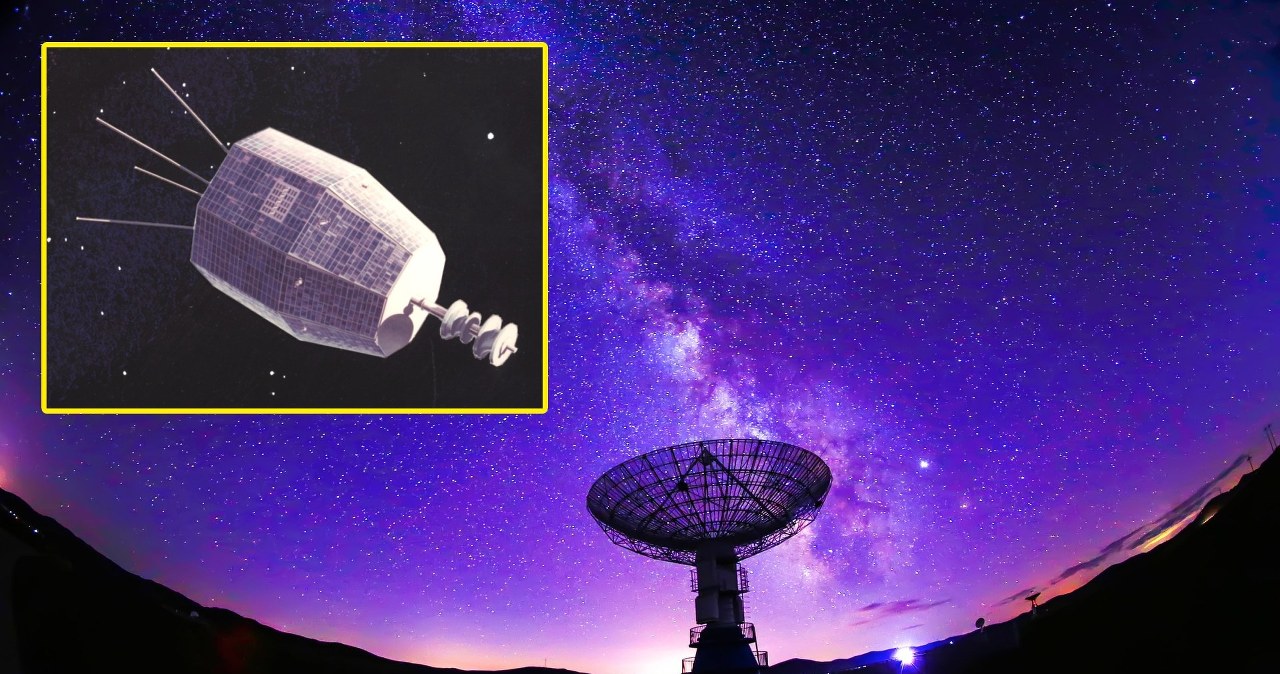
Defunct NASA Satellite Sends Mystery Signal After Decades
Unexpected Radio Burst Baffles Scientists
Astronomers are puzzled by a sudden radio signal detected from a satellite that ceased operations nearly sixty years ago. The event has ignited speculation among scientists as to the signal’s origins, which originated from the defunct Relay 2 satellite.
The Unexpected Signal
In 1964, **Relay 2** was launched into orbit by NASA, predominantly for telecommunications. It was also involved in research, including experiments in particle physics. The satellite went offline in 1967, after its transponders failed. It was then assumed lost.
On June 13, 2024, the Australian Square Kilometer Array Pathfinder (ASKAP) detected a peculiar signal. The radiotelescopes recorded an intense radio wave flash within the 695.5 MHz to 1031.5 MHz band. The flash lasted less than thirty nanoseconds.
A nanosecond-duration radio pulse originating from the defunct Relay 2 satellite. https://t.co/q1H2U0aFwD
— ArXiv (@arxiv_org) June 24, 2024
The signal’s intensity was strong, overpowering all other space signals. Initial assumptions suggested a far-off source, possibly a fast radio burst (FRB). Yet, the source originated in our galaxy.
Closer Examination Reveals Source
Detailed analysis of the signal showed it originated less than 20,000 kilometers from Earth. The orbital data pointed toward **Relay 2** as the source. The team was shocked.
Possible Explanations
Since 1967, the satellite has been non-operational. Therefore, why was this signal sent in 2024? Scientists believe the signal was not a deliberate broadcast.
“We are considering electrostatic discharge (ESD) or discharging the plasma after hitting the micrometeorite as a probable explanation of this flash,”
—Astronomers
Space debris is a growing concern, with more than 27,000 pieces of space junk currently tracked (ESA, 2024). Such discharges can be a serious threat to spacecraft and interfere with astronomical readings.
Conclusion
Further research is now planned to understand these unusual signals. This could lead to protecting spacecraft from future unexpected radio bursts, and also improve radioastronomic readings.
