ISS Brain Organoid Research Paves Way for New Neurological Treatments
Brain organoid research aboard the International Space Station (ISS) is moving closer to identifying actionable pathways for complex neurological conditions, aligning with ground-based computational breakthroughs published in Nature Neuroscience. As one in three Americans is likely to be affected by a brain disorder in their lifetime according to UCLA Medical School, investigators are racing to decode the cellular mechanics governing neural development and disease pathogenesis.
Key Clinical Takeaways:
- Researchers have unified millions of cells into adult and developing brain meta-atlases to map genetic networks associated with neurological conditions.
- Scientists are utilizing stem cell-derived 3D brain organoids to test hypotheses about human brain development that diverge from murine models.
- Space-based investigations on the ISS leverage microgravity to enhance the structural growth and physiological relevance of three-dimensional neural models.
Unifying Biological Complexity Through the Brain Meta-Atlas
To overcome the limitations of isolated datasets, a research team led by senior author Aparna Bhaduri, PhD, assistant professor of biological chemistry at the David Geffen School of Medicine at UCLA and member of the Eli and Edythe Broad Center of Regenerative Medicine and Stem Cell Research at UCLA, developed a computational pipeline to construct two comprehensive meta-atlases. Funded by the National Institutes of Health (NIH) BRAIN Initiative, the study integrates existing maps to create a unified view of human brain development across regions and time points.
The adult brain meta-atlas compiles 16 separate atlases profiling 2.6 million cells across 274 individuals. Concurrently, the developing brain meta-atlas aggregates seven atlases encompassing nearly 600,000 cells from 96 individuals. First author Patricia Nano, a postdoctoral scholar in the Bhaduri lab, utilized this crowdsourced computational framework to pinpoint more than 500 gene networks driving the formation of distinct brain cell types.
These computational insights establish a robust reference standard that helps researchers identify specific molecular cues guiding neural architecture.
Validating Neural Hypotheses Using Stem Cell-Derived Organoids
Generating descriptive cell atlases represents only the initial phase of modern neurobiology. To test hypotheses derived from their computational pipeline, the UCLA investigators deployed brain organoid models—three-dimensional neural tissues grown from human stem cells that mimic early developmental stages. These models exposed differences in the developmental machinery of human cells compared to mouse models, underscoring the necessity of human-specific testing platforms.
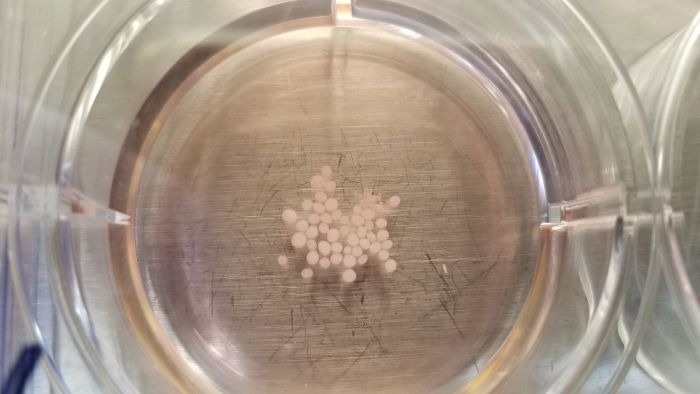
Concurrently, studies examining brain organoids on the ISS exploit unique environmental conditions, such as microgravity, to facilitate more complex tissue self-organization and three-dimensional cellular interactions. By reducing mechanical constraints inherent to terrestrial laboratory settings, space-based research allows neural spheroids to exhibit architectural features that closely approximate native human tissue.
Translating Orbital Research into Clinical Solutions
*Disclaimer: The information provided in this article is for educational and scientific communication purposes only and does not constitute medical advice. Always consult with a qualified healthcare provider regarding any medical condition, diagnosis, or treatment plan.*
