Israel’s Strategic Discourse: Analyzing the Expanding Geography of Threats from Iran to Türkiye
Israeli strategic discourse is currently shifting toward an expansive “Greater Israel” ideology, redefining regional threats from Iran to Türkiye. This geopolitical pivot, intensifying as of April 13, 2026, risks destabilizing Levant diplomacy by replacing objective security mapping with ideological territorial ambitions, fundamentally altering international relations across the Middle East.
The problem here isn’t just a matter of maps; it is a matter of systemic instability. When a state’s strategic vision shifts from “defensible borders” to “ideological expansion,” the immediate casualty is predictable diplomacy. For businesses and residents in the region, this creates a vacuum of legal certainty. We are seeing a transition from tactical security operations to a broader, more volatile strategic doctrine that views neighboring sovereign territories not as partners or rivals, but as potential extensions of a national project.
It is a dangerous game of geopolitical chess where the board itself is being redrawn.
The Ideological Architecture of Expansion
To understand the “Greater Israel” delusion, one must look beyond current headlines. The concept is rooted in a blend of biblical interpretation and modern revisionist Zionism, asserting that the historical and spiritual boundaries of the Jewish people extend far beyond the 1967 lines. While once confined to the fringes of the religious right, these ideas have migrated into the heart of the Israeli security establishment. This is no longer just about settlements in the West Bank; it is about a conceptual framework that views the Levant as a zone of influence.
This shift creates a profound “Information Gap” in how the West perceives the conflict. Most analysts focus on the Palestinian-Israeli axis, but the current discourse is expanding. By framing Türkiye and Iran not merely as adversarial regimes but as “threats to the expanded geography,” the state justifies a permanent state of mobilization. This creates a permanent economic strain on the region, depressing foreign direct investment and increasing the cost of insurance for maritime trade in the Eastern Mediterranean.
“The transition from a security-based doctrine to an ideological-territorial one represents a fundamental break in Israeli statecraft. We are no longer discussing the management of a conflict, but the pursuit of a regional hegemony that the current international legal framework cannot sustain.”
This quote, provided by Dr. Arnon Miller, a senior fellow at the Institute for Middle East Studies, highlights the friction between national ambition and international law. When borders become fluid in the mind of a military leadership, the risk of “accidental” escalation increases exponentially. For those operating in the region, So that traditional risk assessments are now obsolete.
Regional Friction Points and Economic Fallout
The ripple effects of this ideology are most visible in the corridors of power in Ankara and Tehran. By articulating a geography of threat that encompasses Türkiye, Israel is effectively alienating a key NATO ally. This isn’t just a diplomatic spat; it affects everything from customs agreements to joint energy ventures in the Mediterranean.

In the short term, this instability manifests as a legal nightmare for international corporations. Contracts signed under the assumption of regional stability are being rendered void by “force majeure” clauses as the threat of conflict expands. Companies are now scrambling to find international arbitration lawyers who specialize in Middle Eastern sovereign disputes to protect their assets from sudden seizures or geopolitical freezes.
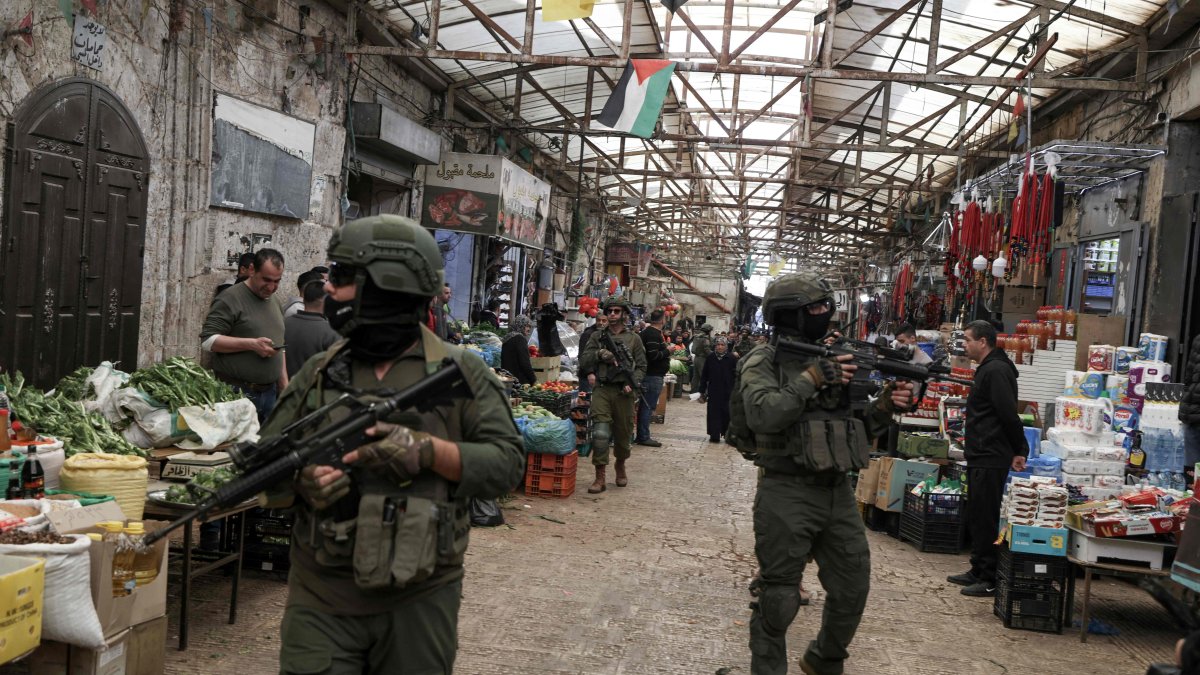
Consider the impact on local infrastructure. In the disputed territories and border zones, the “Greater Israel” mindset leads to the prioritization of military corridors over civilian utilities. This leaves thousands of residents in a state of municipal limbo, where neither the occupying force nor the local government takes responsibility for water and electricity.
- Maritime Trade: Increased naval presence in the Mediterranean to “secure” expanded interests is slowing down commercial shipping lanes.
- Energy Sector: Gas pipelines and exploration rights in the Levant Basin are now subject to ideological claims rather than bilateral treaties.
- Urban Planning: In cities like Jerusalem and Hebron, zoning laws are being rewritten to favor ideological expansion, erasing existing property deeds.
The volatility is palpable. For those caught in the crossfire of these shifting borders, the need for human rights advocacy groups has never been more urgent to ensure that basic legal protections are not swept away by the tide of nationalism.
The Macro-Economic Cost of Delusion
Maintaining a “Greater Israel” vision requires an unsustainable level of military spending. When a state defines its security perimeter as extending potentially to the borders of Türkiye, the budget for defense begins to cannibalize the budget for education, healthcare, and technology. This is the “security trap”: the pursuit of absolute security through expansion actually creates the very instability that makes the state insecure.

One can see this reflected in the current market volatility. Investors are increasingly wary of the “security premium” associated with Israeli bonds. The world is watching to see if the state will prioritize a theoretical map over a functional economy. To navigate this, institutional investors are turning to global risk management firms to hedge against a sudden regional conflagration that could trigger a wider Mediterranean crisis.
For a deeper dive into the legalities of these territorial claims, one can reference the United Nations Charter regarding sovereign integrity or the detailed reports provided by AP News on the ground in the West Bank. The International Court of Justice continues to be the primary venue for challenging these expansive interpretations of territorial rights.
The reality is that an ideology based on the “delusion” of expansion cannot be reconciled with the reality of 21st-century sovereign borders. The more the discourse pushes toward a “Greater Israel,” the more it isolates the state from the very international community it needs for legitimacy.
As the map of the Levant is redrawn in the minds of strategists, the people living within those lines are left to navigate a world where the law is secondary to the dream. The tragedy of this ideological pivot is that it replaces the possibility of a negotiated peace with the certainty of a managed conflict. For those seeking to survive and operate within this volatility, finding verified, expert guidance is no longer a luxury—it is a necessity. Whether it is securing legal protections or finding humanitarian support, the World Today News Directory remains the essential bridge to the professionals capable of navigating this unfolding crisis.