
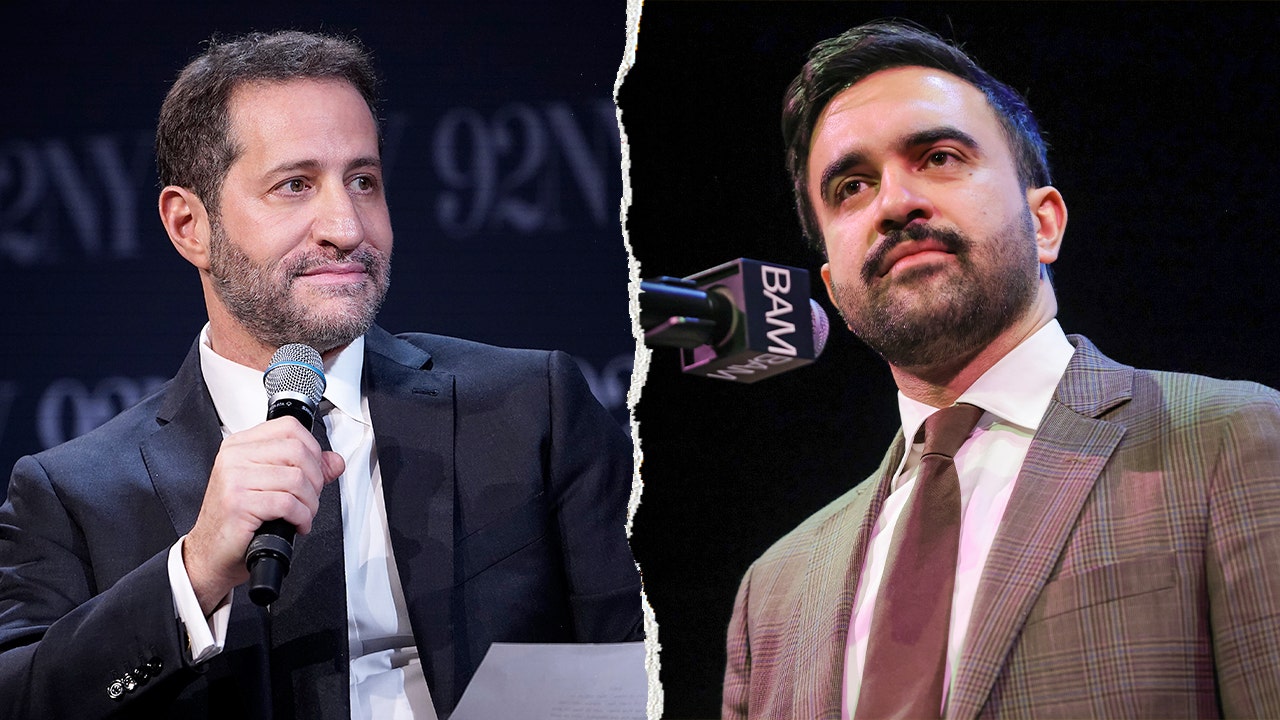
Israeli-American comedian skips Passover event that Zohran Mamdani attended
Israeli-American comedian Modi Rosenfeld withdrew from the 33rd annual Downtown Seder at Manhattan’s City Winery on Monday after learning New York City Mayor Zohran Mamdani would attend. Rosenfeld’s team cited a lack of prior notification regarding the Mayor’s presence, sparking a debate on talent vetting and political optics in high-profile cultural gatherings.
The marquee lights of City Winery usually signal a night of celebration, but Monday’s 33rd annual Downtown Seder illuminated a fracture line running straight through the heart of New York’s cultural diplomacy. When entrepreneur Michael Dorf curated this event three decades ago, the goal was simple: bring people together over matzah and memory. In 2026, though, the guest list has become a high-stakes ledger of brand equity and political alignment. The absence of headliner Modi Rosenfeld, who pulled out hours before curtain time, wasn’t just a scheduling conflict; it was a calculated risk mitigation strategy in an era where sharing a stage can be interpreted as endorsing a platform.
Rosenfeld’s exit highlights a growing friction in the entertainment ecosystem: the collision between artistic expression and political liability. According to the official statement released by Rosenfeld’s representation, the comedian was unaware of Mayor Mamdani’s participation until the day of the event. In the high-velocity world of talent booking, this represents a significant failure in talent agency clearance protocols. When a performer of Rosenfeld’s caliber—known for his sharp, often polarizing observational humor—steps into a venue, their brand is inextricably linked to the room’s energy. By withdrawing, Rosenfeld avoided the reputational hazard of being photographed alongside a political figure whose recent rhetoric has alienated a significant portion of the Jewish community.
The controversy centers on Mayor Mamdani’s recent public statements, specifically his characterization of the conflict in Gaza. During a St. Patrick’s Day address earlier this month, Mamdani accused Israel of committing “genocide,” a term that the American Jewish Committee immediately flagged as dangerous and distortionary. Lingering social media controversies regarding the First Lady’s engagement with content celebrating the October 7 attacks have kept the Mayor’s office under a microscope. For a comedian whose audience relies on a shared cultural baseline, appearing at an event with Mamdani could have been interpreted as an implicit endorsement of those views. This is where the business of entertainment intersects with the necessity of crisis communication firms. A standard press release isn’t enough when the optics suggest a betrayal of community values; the narrative must be managed with surgical precision to protect the artist’s long-term marketability.
Michael Dorf, the host, attempted to frame the evening through the lens of diplomacy. In a post on his Substack, he argued that the Seder’s purpose is to “sit down and truly listen to the other side,” lamenting the pressure that led to Rosenfeld’s departure. “I wish his audience hadn’t pressured him with calls to ‘boycott or else,'” Dorf wrote. Although noble in theory, the execution reveals a logistical blind spot. In the modern event landscape, the intersection of politics and culture requires rigorous event security and logistical vetting. We see not merely about physical safety; it is about information security. Knowing who is in the room—and who they represent—is as critical as the sound check.
The tension was palpable even before Rosenfeld’s announcement. Fellow comedian Elon Gold publicly urged both Rosenfeld and musician David Broza to cancel, labeling their potential participation a “betrayal.” Gold’s intervention underscores the power of peer pressure in the industry, where social capital is currency. When a peer calls out a potential alignment, it forces a rapid reassessment of the cost-benefit analysis of attendance. Rosenfeld chose to preserve his standing with his core demographic rather than risk the ambiguity of a shared platform.
“In 2026, talent clearance isn’t just about checking for criminal records or NDAs. It’s a full-spectrum reputational audit. If a client walks into a room with a political figure who is currently trending for controversy, the agency has failed its fiduciary duty to protect that client’s brand equity.”
This incident serves as a case study for the broader industry. As we move further into an election cycle where local politics are increasingly nationalized, the “neutral ground” of cultural events is vanishing. Venues like City Winery, which thrive on the convergence of music, comedy, and dining, must now operate with the diligence of a political campaign. The risk of a “walk-out” or a last-minute cancellation damages the venue’s relationships with future talent. To mitigate this, event producers are increasingly turning to specialized entertainment legal counsel to draft appearance agreements that include morality clauses and specific disclosure requirements regarding other attendees.
David Broza, the Israeli musician who did attend, performed “If I Had a Hammer,” a song of unity that perhaps rang differently in a room divided by the very issues the Seder seeks to transcend. His presence, contrasted with Rosenfeld’s absence, illustrates the spectrum of risk tolerance within the industry. Some artists view engagement as a duty; others view it as a liability. There is no single right answer, but there is a clear business imperative: transparency. Had the Mayor’s attendance been disclosed during the booking phase, Rosenfeld’s team could have made a strategic decision weeks ago, rather than a reactive one on the night of the event.
The fallout extends beyond the immediate headlines. For Mayor Mamdani, the optics of a comedian refusing to share his stage reinforces the narrative of his strained relationship with parts of the Jewish community. For Rosenfeld, it solidifies his brand as an artist who prioritizes his principles over a paycheck. For Michael Dorf, it is a reminder that in 2026, diplomacy is not just about invitation lists; it is about managing the complex web of public sentiment that surrounds every name on the roster.
As the industry looks toward the summer festival circuit and the fall gala season, the lessons from the Downtown Seder are clear. The era of the “apolitical” cultural event is over. Every gathering is now a potential flashpoint. Success will depend on the ability of producers and talent representatives to navigate these waters with foresight. Whether through advanced reputation management strategies or rigorous event planning and security, the goal is to ensure that the only thing broken at the Seder is the matzah, not the relationships between the artists, the hosts, and the public.
Disclaimer: The views and cultural analyses presented in this article are for informational and entertainment purposes only. Information regarding legal disputes or financial data is based on available public records.