
Israel Shuts Gaza Crossings, Deepening Humanitarian Crisis
Aid routes into northern Gaza are blocked by Israel, exacerbating the risk of famine for hundreds of thousands. The move intensifies pressure on Israel as the world’s attention refocuses on the ongoing violence and dire humanitarian situation in the Palestinian territory.
Humanitarian Impact Intensifies
With crossings closed on Thursday, the most direct route for aid delivery to northern Gaza is now cut off. During the recent conflict with Iran, over 800 Palestinians died in Gaza. Many were killed as they sought food or during the persistent airstrikes and shelling.
…original tweet embed code…
Spain’s prime minister, Pedro Sánchez, described the situation in Gaza as “genocide.” He mentioned an EU report highlighting “indications” that Israel breached human rights obligations, citing the blockade of humanitarian aid, high civilian casualties, and attacks on journalists. The World Health Organization (WHO) said on Thursday that it had delivered its first medical shipment into Gaza since 2 March, adding however that the nine truckloads were “a drop in the ocean”.
Aid Distribution Complicated
The spokesperson for Gaza’s civil defense agency, Mahmud Bassal, reported that Israeli forces killed 56 people on Thursday. This figure includes six who were waiting for food in two separate locations. Medical records from field hospitals reveal hundreds of injuries from bullets among civilians seeking aid in the last two weeks. Witnesses also described lethal fire from Israeli troops.
Since the partial lifting of the blockade last month, the UN has struggled to deliver aid. The Zikim crossing, which had facilitated the direct transport of wheat and other essentials, was closed on Thursday. Aid officials described this as “very problematic” and said it would directly impact aid distribution.
New food distribution points, established by the Gaza Humanitarian Foundation, are located in central and south Gaza. However, these locations are inaccessible to most of the million people estimated to be in the north. On Monday, 79 trucks from aid organizations and the international community containing food for children, medical supplies and medications were transferred into Gaza after undergoing thorough security inspections, Israeli authorities said. On Tuesday, the total was 71.
Challenges in Reporting
Coverage of the war in Gaza is constrained by Israeli attacks on Palestinian journalists and a bar on international reporters entering the Gaza Strip. Since October 7, 2023, foreign reporters have not been allowed to enter Gaza unless accompanied by the Israeli military.
The overall death toll in Gaza in the 20-month conflict has now reached 56,259, mostly civilians. The number of journalists killed since the conflict began is 180.
Diplomatic and Political Reactions
Benjamin Netanyahu, Israel’s prime minister, faces growing calls from opposition politicians and the public to end the fighting. Hamas and Israeli officials suggest that a new ceasefire agreement is not close, despite hopes raised by US president, Donald Trump.
Taher al-Nunu, a Hamas official, stated that talks with mediators have “intensified,” yet the group has “not yet received any new proposals.” Seven Israeli soldiers died in a single attack in southern Gaza on Tuesday, the military’s deadliest day since the ceasefire with Hamas in March.
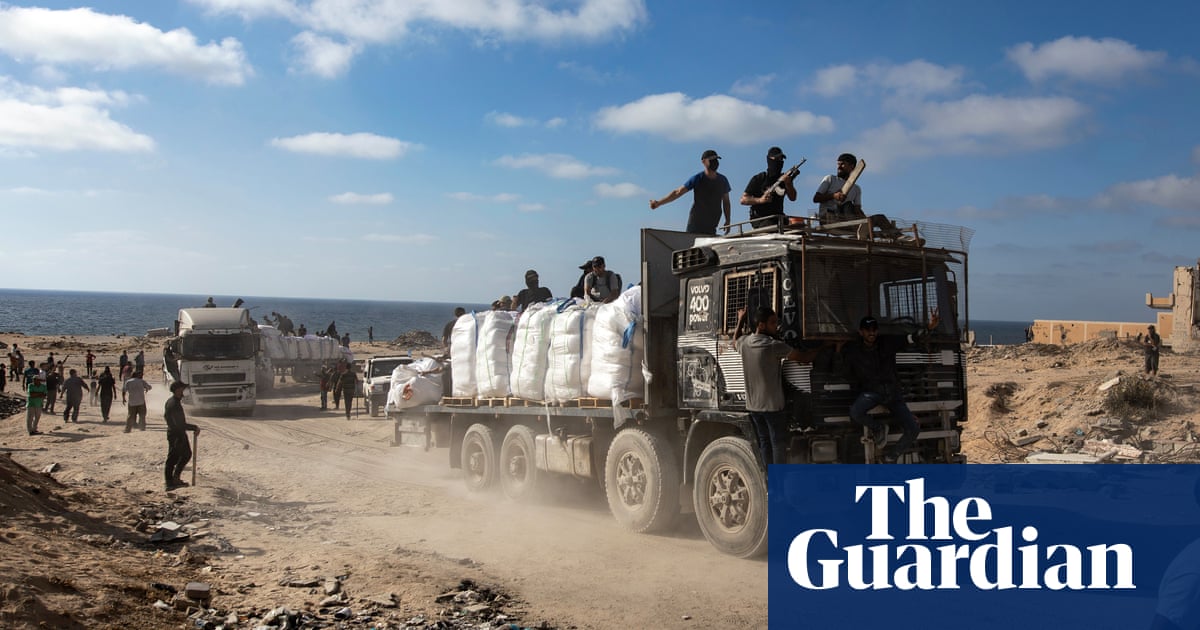
The Israeli military said soldiers had “fired warning shots” in order to prevent “suspects from approaching them” near the Netzarim corridor in central Gaza. Aid workers have stated that the guards were loyal to a council of local community leaders, who had organized protection for a convoy of much-needed supplies.
Ongoing Conflict
The conflict began after Hamas’s 7 October 2023 attack on southern Israel, in which militants killed about 1,200 people and took 251 hostages. The militants still hold 49 hostages, fewer than half of them alive.
The Higher Commission for Tribal Affairs, which represents influential clans in the territory, said the guards had been organized “solely through tribal efforts.” Abu Salman Al Moghani, a representative of the Commission, said, “The clans came … to form a stance to prevent the aggressors and the thieves from stealing the food that belongs to our people.”
