Is the US Dollar Still Dominant Amid Trump’s War with Iran?
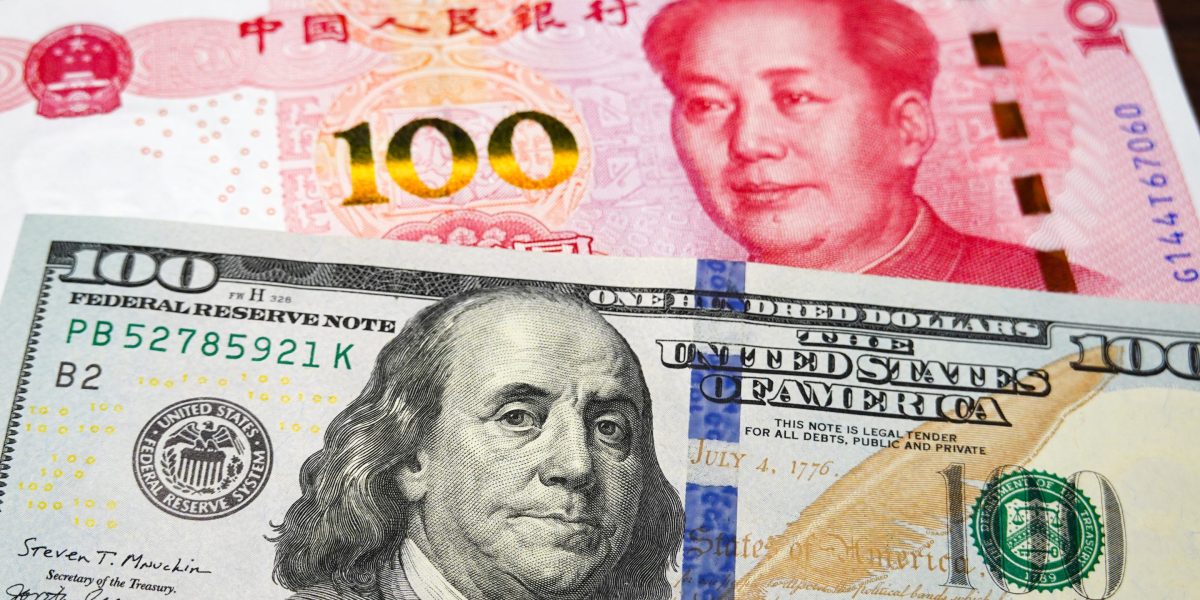
The U.S. Dollar’s hegemony remains intact despite Iran’s control of the Strait of Hormuz and the emergence of yuan-denominated “tolls.” While geopolitical volatility increases risk to the petrodollar, analysts argue that the depth of U.S. Capital markets and GCC strategic alignment prevent a viable “petroyuan” transition in the near term.
The friction isn’t just about who controls a narrow waterway; it is about the plumbing of global trade. When Tehran demands payment in yuan or crypto for passage, it creates a localized liquidity bottleneck. For the C-suite, this isn’t a theoretical debate on superpower status—it is a direct hit to operational margins. Companies facing these “toll” disruptions are increasingly turning to specialized maritime logistics consultants to navigate the legal and financial minefields of sanctioned zones.
The Liquidity Moat: Why the Yuan Can’t Scale
The narrative of “de-dollarization” often ignores the brutal reality of the balance sheet. For a currency to replace the dollar in oil trade, it requires more than just a political agreement; it requires a deep, transparent, and liquid bond market where central banks can park trillions without triggering a price collapse. The U.S. Treasury market provides this. The Chinese onshore bond market does not.

Looking at the IMF’s COFER (Currency Composition of Official Foreign Exchange Reserves) data, the U.S. Dollar consistently commands over 58% of global reserves. What we have is not a legacy accident; it is a network effect. If a Saudi oil minister sells a tanker of Brent, they want an asset they can liquidate instantly into any other global currency. The yuan, hampered by capital controls and a lack of convertibility, remains a regional tool, not a global reserve asset.
The current crisis in the Strait of Hormuz is a tactical annoyance, not a systemic failure. Even the “crypto-tolls” mentioned by Iran are, in reality, dollar-proxies. Most stablecoins used in these shadow trades are pegged 1:1 to the greenback. Iran isn’t killing the dollar; it’s using a digital version of it to bypass sanctions.
“The market confuses geopolitical volatility with structural decay. The dollar’s dominance isn’t based on the benevolence of the U.S. Government, but on the unparalleled liquidity of the U.S. Treasury market. Until there is a transparent alternative with similar depth, the ‘petroyuan’ is a political slogan, not a financial reality.” — Marcus Thorne, Managing Director of Global Macro Strategy at an institutional hedge fund.
The Macro Explainer: Three Pillars of Dollar Resilience
- The Security-Currency Nexus: The Gulf Cooperation Council (GCC) relies on the U.S. Security umbrella. Beijing provides infrastructure and trade, but it does not provide a carrier strike group to protect oil tankers from regional aggression. This security dependency anchors the GCC’s preference for dollar-denominated assets.
- Institutional Depth: According to the Federal Reserve’s latest monetary policy reports, the ability to move massive volumes of capital with minimal slippage is the dollar’s primary edge. A shift to the yuan would require a total overhaul of global clearing systems, a risk most CFOs are unwilling to take.
- The Failure of Alternatives: Neither the Euro nor the Yuan possesses the combination of political stability and market openness required to absorb the world’s excess liquidity. The “petroeuro” failed to gain traction because the Eurozone lacks a unified fiscal authority capable of backing a global oil standard.
This volatility creates a specific B2B vacuum. As firms scramble to hedge against currency fluctuations and potential “toll” costs, they are engaging corporate treasury management firms to optimize their hedging strategies and minimize exposure to non-convertible currencies.
Evaluating the “Suez Moment” Fallacy
Strategists like Dan Alamariu correctly dismiss the comparison to the 1956 Suez Crisis. The UK and France were bankrupt, their empires crumbling, and their credit ratings in tatters. The U.S. In 2026, while politically divided, still controls the world’s primary reserve currency and the most advanced financial technology stack on the planet.
The real risk is not a sudden collapse, but a slow fragmentation. We are seeing the rise of “bilateralism,” where trade is settled in local currencies for specific corridors. This doesn’t kill the petrodollar; it just creates a multi-polar trade environment. For the enterprise, this means managing a more complex portfolio of currency risks. This is where international tax and compliance law firms develop into indispensable, as they navigate the diverging regulatory requirements of the U.S. And the BRICS+ bloc.
The “superpower” debate is often a distraction from the actual fiscal metrics. The U.S. Deficit is a concern, but as long as the world has nowhere else to put its money, the Treasury can continue to issue debt. This is the “exorbitant privilege” that continues to fund American dominance.
“We aren’t seeing the end of the dollar; we are seeing the end of the dollar’s monopoly. That is a highly different thing. The transition to a fragmented system will be messy, but the dollar will remain the ‘least bad’ option for the foreseeable future.” — Elena Rossi, Chief Investment Officer at a European Sovereign Wealth Fund.
The Forward Outlook: Q3 and Beyond
As we move into the next fiscal quarters, the focus will shift from the “threat” of the petroyuan to the reality of supply chain resilience. The U.S. Navy’s efforts to clear mines in the Strait of Hormuz are not just military operations—they are attempts to maintain the “free navigation” that underpins the dollar’s value. If the U.S. Can maintain the flow of oil, the petrodollar remains the gold standard.
Investors should stop looking for a “black swan” event that kills the dollar and start looking at the “grey rhinos”—the predictable, slow-moving shifts in trade patterns. The winners of the next decade will be the firms that can operate across multiple currency regimes without losing their margins to volatility.
Navigating this fragmented landscape requires more than just a news feed; it requires a vetted network of partners. Whether you are hedging currency risk or restructuring your global supply chain, the World Today News Directory connects you with the top-tier B2B service providers capable of turning geopolitical chaos into a competitive advantage.