
Interstellar Comet 3I/ATLAS Displays unexpected Green Glow After Closest Approach to the Sun
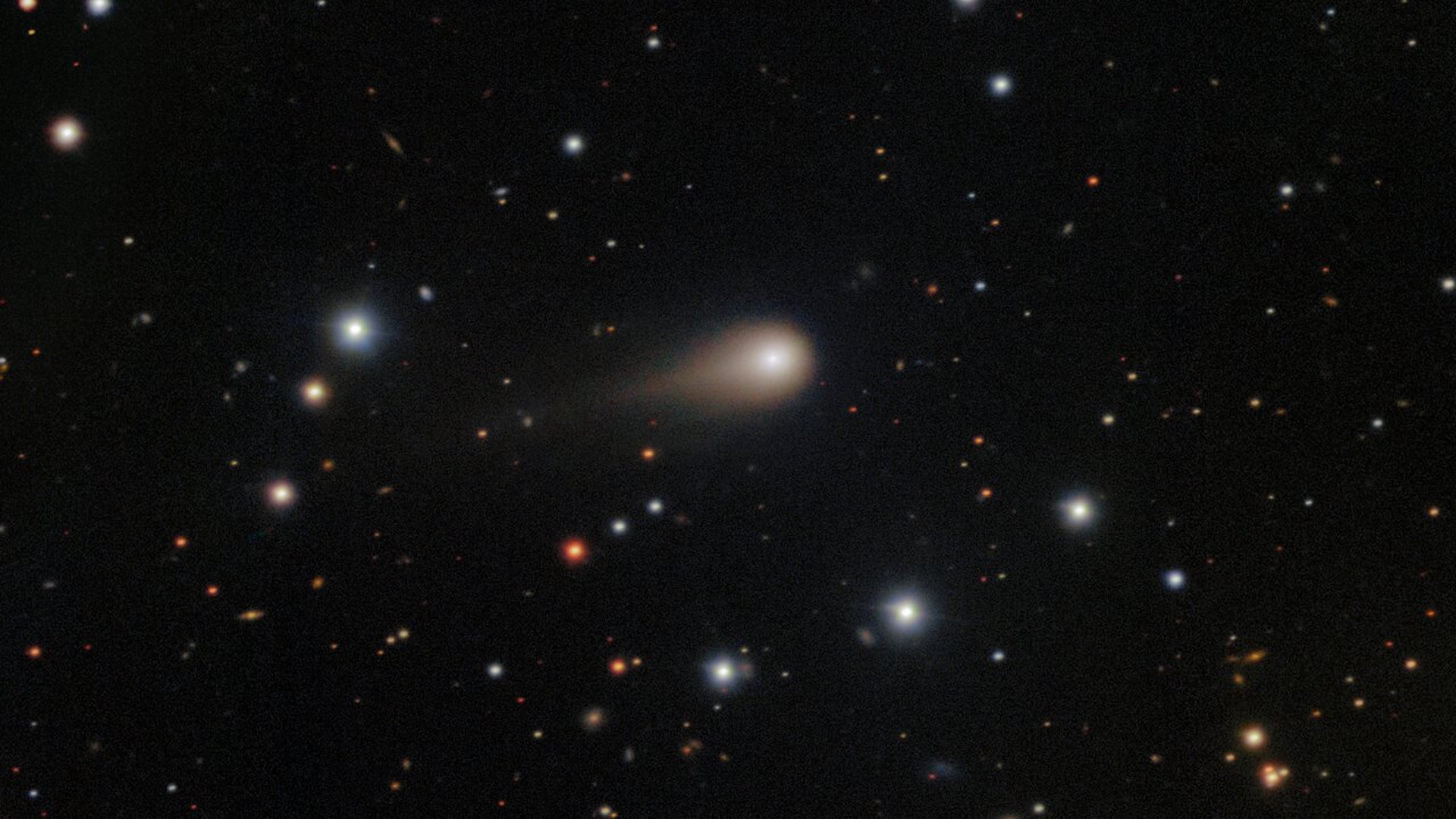
Flagstaff, Arizona - In a surprising post-perihelion observation, comet 3I/ATLAS is exhibiting a distinct green hue, captured by the Lowell Discovery Telescope on Halloween, October 31. This new image, obtained during morning twilight, offers one of the first optical views of the interstellar comet after its closest approach to the sun.
Comet 3I/ATLAS, an interstellar visitor, recently underwent rapid brightening as it rounded the sun – a phenomenon observed and detailed in a study posted to arXiv on October 28 by researchers including Qicheng Zhang. That study also noted the comet was distinctly bluer than the sun prior to perihelion. While the current green appearance doesn’t necessarily indicate a color change after perihelion, it may reflect previous shifts in the comet’s composition.
Zhang, who first shared the diatomic carbon image on his Cometary blog, explained that in astronomical terms, color refers to wavelengths of light. The Lowell Discovery telescope’s observation reveals the comet is significantly brighter when viewed through bluer filters – a mix of green and blue wavelengths – than through redder filters.
“It’s brightest in the bluest filter that we have,” Zhang said.
The Lowell Discovery Telescope’s low-horizon capabilities were crucial for this immediate post-perihelion observation, though the comet is now positioned high enough for a wider range of telescopes, including those with 6-inch (15 centimeters) lenses, to observe it. Astronomers anticipate further discoveries about this unique interstellar object in the coming months.
