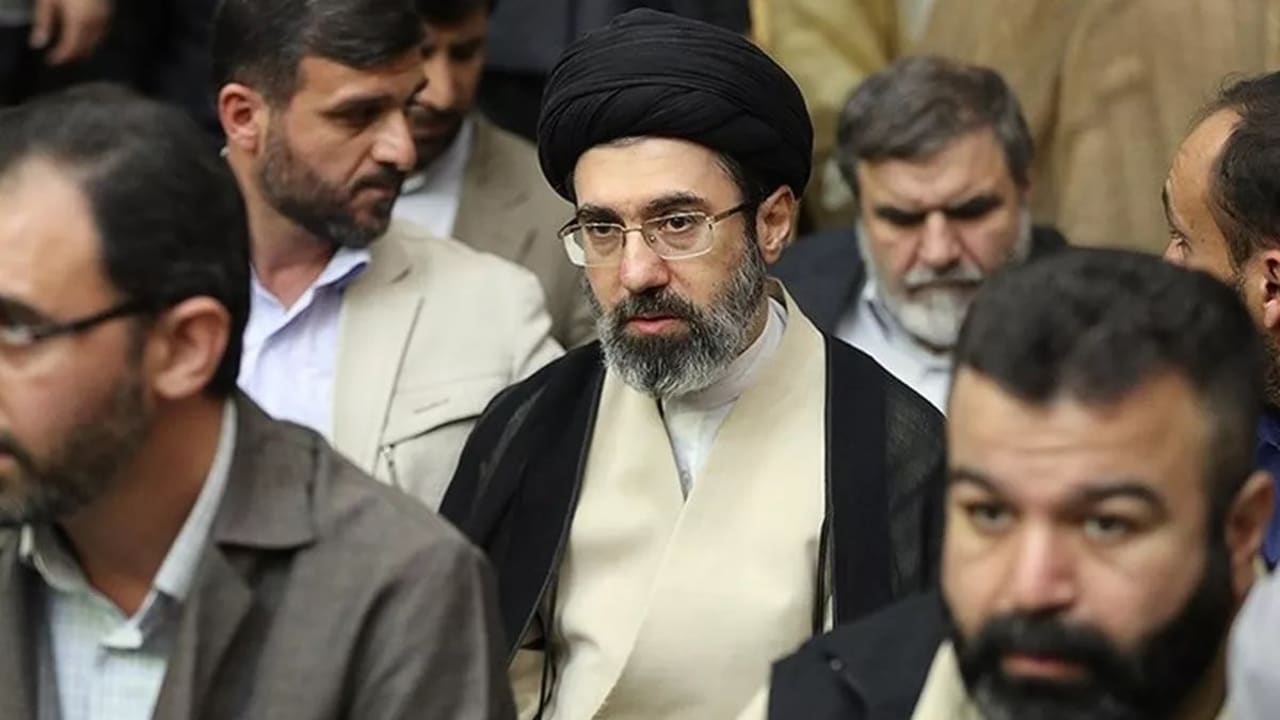
Iran’s Supreme Leadership in Question: Mojtaba Khamenei’s Health and IRGC’s Growing Role in Power Struggle
On April 23, 2026, reports confirmed that Ayatollah Ali Khamenei’s son, Mojtaba Khamenei, remains medically incapacitated following a 2024 stroke, leaving real power in Iran firmly in the hands of Islamic Revolutionary Guard Corps (IRGC) commanders who now direct both domestic repression and foreign policy without meaningful civilian oversight—a shift that has intensified regional instability, disrupted global energy markets and created urgent compliance challenges for multinational corporations operating in or with ties to Iran.
The IRGC’s Silent Takeover: How Military Rule Replaced Clerical Authority
Despite Mojtaba Khamenei’s public appearance in limited capacity earlier this year, multiple intelligence assessments confirm he lacks the cognitive and physical capacity to fulfill the role of successor to his father, Ayatollah Ali Khamenei. The IRGC, long a power broker behind the scenes, has now formalized control through the Supreme National Security Council and the Expediency Discernment Council, bypassing traditional clerical institutions like the Assembly of Experts. This transition did not occur overnight—it began after the 2022 Mahsa Amini protests, when the IRGC crushed dissent with lethal force and began positioning itself as the regime’s ultimate arbiter of survival. By 2025, IRGC generals held de facto veto power over all presidential candidates, and following the Supreme Leader’s declining health, they began issuing direct orders to ministries without clerical countersignature. Today, Iran’s foreign policy—including its support for proxy groups in Yemen, Syria, and Iraq—is drafted not in Qom but in the IRGC’s headquarters in Tehran, where commanders like Brigadier General Esmail Qaani and Rear Admiral Alireza Tangsiri dictate strategy.


This militarization of governance has had measurable economic consequences. According to the World Bank’s Iran Economic Monitor (April 2026), foreign direct investment fell to $1.2 billion in 2025—a 78% drop from 2021 levels—as European firms exited over fears of secondary sanctions and reputational risk. The IRGC’s expansion into civilian sectors now controls an estimated 60% of Iran’s GDP through subsidiaries like Khatam al-Anbia Construction Headquarters, which manages infrastructure projects, energy pipelines, and port operations. In Bandar Abbas, Iran’s largest port city, IRGC-linked firms now oversee 80% of container traffic, raising concerns among global shipping firms about cargo security and sanction evasion tactics. Meanwhile, in Ahvaz, water shortages exacerbated by IRGC-controlled dam projects on the Karun River have triggered protests that were met with live fire in March 2026, according to human rights groups monitoring Khuzestan Province.
“When the IRGC runs the ports, the power grid, and the oil fields, sanctions don’t just target the state—they disrupt global supply chains. Companies need legal clarity now, not after their assets are frozen.”
— Dr. Layla Karim, Professor of International Trade Law, Sharif University of Technology, Tehran
The Compliance Crisis: Why Global Firms Are Reassessing Iran Exposure
For multinational corporations, the IRGC’s consolidated power creates a labyrinth of risk. Under U.S. Executive Order 13876 and the EU’s Blocking Statute, any entity deemed to be owned or controlled by the IRGC is subject to secondary sanctions—even if the transaction occurs through third countries. Yet the IRGC’s employ of front companies, layered ownership structures, and informal economic networks makes due diligence nearly impossible without specialized expertise. In Dubai, a hub for Iran-adjacent trade, legal firms report a 200% increase in requests for sanctions compliance audits from European and Asian clients seeking to unwind hidden exposure. Similarly, in Singapore, maritime lawyers note a surge in inquiries about vessel flagging and insurance coverage for ships calling at Iranian ports, where IRGC agents routinely inspect cargo for contraband.
The problem extends beyond finance. In Istanbul, Turkish construction firms working on IRGC-backed housing projects in western Iran face sudden contract cancellations when U.S. Treasury adds modern entities to the SDN List—often with no prior notice. In Johannesburg, South African mining companies exporting platinum to IRGC-linked traders have had shipments seized at Rotterdam port due to alleged sanctions violations, despite having conducted standard KYC checks. These cascading effects reveal a critical gap: most corporate risk teams lack real-time visibility into who truly controls Iranian enterprises.
“We’ve seen clients lose millions since they trusted a company’s registration documents—only to discover months later that 75% of its shares were held through IRGC-affiliated trusts. The structure is deliberately opaque.”
— Omar Hassan, Senior Partner, Al-Mahdi & Associates, Dubai Legal Compliance Group
Directory Bridge: Where Expertise Meets Uncertainty
In this environment of obscured authority and shifting risk, verified professionals are not just helpful—they are essential. Multinational energy traders navigating Iranian oil contracts now rely on international sanctions lawyers who can trace beneficial ownership through layers of shell companies registered in Bahrain, Cyprus, and the Cayman Islands. Logistics firms rerouting shipments to avoid IRGC-controlled ports consult specialized freight forwarders with deep knowledge of alternative routes through Armenia and Azerbaijan, where monitoring is stricter and exposure lower. Meanwhile, humanitarian NGOs operating in Iran’s disaster zones—such as those responding to the 2025 flash floods in Lorestan—must partner with local civil society organizations vetted for independence from IRGC oversight to ensure aid reaches civilians, not militias.
The IRGC’s dominance is not a temporary anomaly—it is a structural transformation of the Iranian state. As clerical legitimacy erodes and military rule solidifies, the international community must adapt its tools of engagement, pressure, and diplomacy. For businesses, investors, and civil society actors, the path forward requires more than good intentions: it demands access to verified, on-the-ground expertise capable of cutting through the fog of war, wealth, and power now centered in Tehran’s military barracks.
In an era where the loudest voices in Iran no longer come from mosques or parliament but from command bunkers and intelligence centers, the World Today News Directory remains committed to connecting decision-makers with the professionals who understand not just what is happening—but how to act.