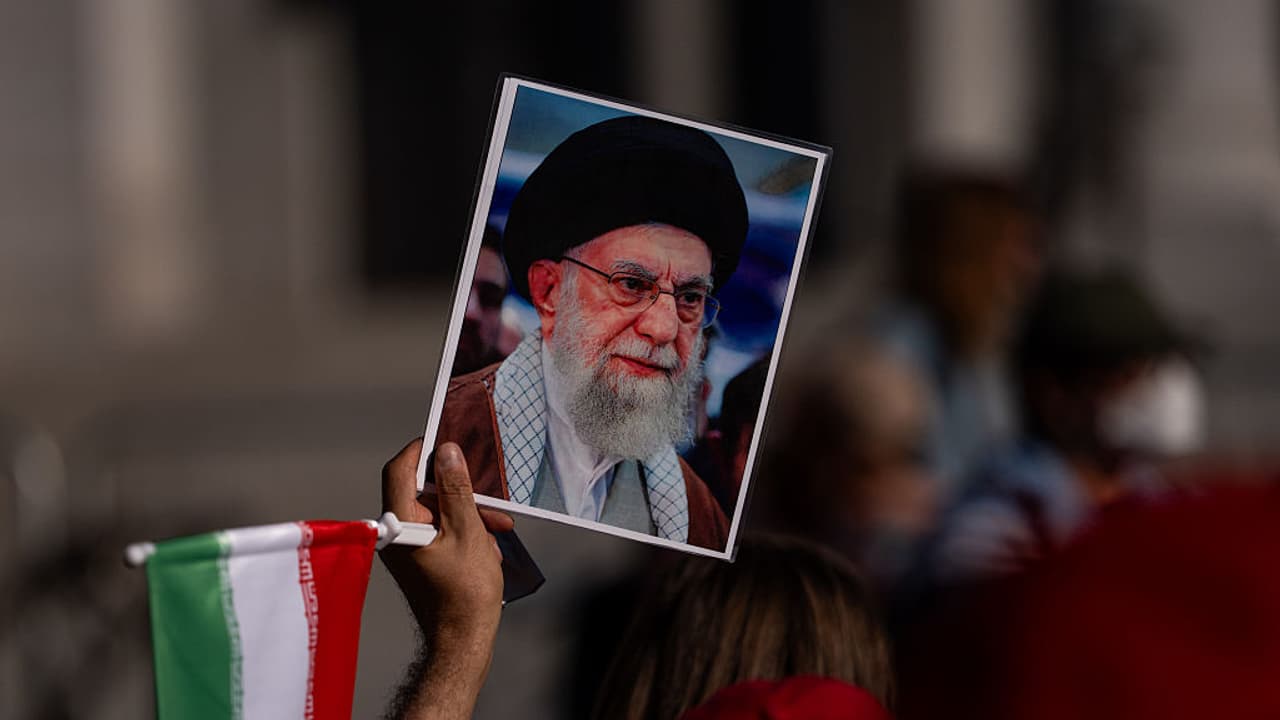
Iran Prepares for Massive Funeral Procession of Ayatollah Ali Khamenei
Iran has announced a three-day funeral ceremony for the late Supreme Leader, Ayatollah Ali Khamenei, following his death in a strike at the start of the ongoing US and Israeli military campaign. As Tehran prepares for the high-profile procession, the nation faces escalating regional conflict and a critical leadership vacuum.
The death of Ayatollah Ali Khamenei marks the end of a three-decade tenure that fundamentally reshaped the Islamic Republic’s role in the Middle East. With the clerical establishment now scrambling to finalize a succession plan, the geopolitical landscape of the Gulf faces unprecedented volatility. For global stakeholders, this is not merely a domestic transition; This proves a systemic shock to regional security architectures and energy supply chains.
The Succession Vacuum and Regional Instability
The Assembly of Experts has signaled it is nearing a decision on a successor, yet the delay in the funeral proceedings—initially scheduled to begin Wednesday night—highlights the logistical and political fragility currently gripping Tehran. Reports confirm that authorities have postponed the ceremonies to accommodate massive crowds and prepare infrastructure at the Tehran prayer complex where the leader will lie in state.
The conflict has already transcended Iranian borders. The recent sinking of an Iranian navy frigate in the Indian Ocean by US forces, as confirmed by US Secretary of Defence Pete Hegseth, serves as a stark indicator of the current state of maritime security in the region. When regional power balances shift this rapidly, the ripple effects are immediate for international trade.
The loss of centralized command in Tehran does not necessarily signal a cooling of tensions. In many instances, the period of transition within a revolutionary state leads to more aggressive posturing by hardline factions seeking to cement their legitimacy.
For multinational corporations operating in or near the Gulf, the current environment necessitates a total re-evaluation of risk. Navigating this requires more than standard insurance; it demands specialized intelligence. Firms are increasingly turning to geopolitical risk consultants to map the potential for further escalations in the Strait of Hormuz, and beyond.
Macro-Economic Consequences of the Escalation
The broader air campaign conducted by the US and Israel has already impacted global markets. The threat to energy infrastructure is no longer theoretical, as evidenced by the reach of Iranian missile and drone deployments into the Gulf states. As volatility becomes the new baseline, the cost of capital for projects in the region is climbing, forcing firms to engage global financial advisors to hedge against currency fluctuations and supply chain disruptions.
The logistical reality is simple: when maritime corridors are threatened, the “just-in-time” delivery model collapses. Companies dependent on the free flow of goods through the Indian Ocean and the Persian Gulf are facing a cascade of insurance surcharges and rerouting costs. This is where the expertise of international logistics firms becomes the primary differentiator between operational continuity and catastrophic failure.
- Maritime Security: The sinking of the Iris Dena and the subsequent loss of life underscore the acute danger to commercial shipping.
- Leadership Transition: The Assembly of Experts remains under immense pressure to maintain internal cohesion while external military pressure intensifies.
- Sanctions and Compliance: As the conflict deepens, the web of international restrictions is likely to tighten, requiring rigorous oversight from trade compliance specialists.
The Long-Term Pivot
The death of a leader who defined an era of Iranian policy is a catalyst for structural change. Whether the successor adopts a path of tactical withdrawal or doubles down on regional proxy warfare remains the most pressing question for global intelligence agencies. History suggests that such transitions rarely occur in a vacuum; they often dictate the terms of trade, diplomatic alignment, and security spending for decades to come.

As the international community watches the developments in Tehran, the focus must shift from short-term reactive measures to long-term strategic resilience. The era of assuming stability in the Gulf has passed. Organizations that fail to integrate high-level geopolitical foresight into their corporate governance are effectively leaving their assets exposed to the next inevitable shift in the regional chessboard.
The funeral of Ayatollah Khamenei will be a spectacle of state power, but the true story lies in the quiet, desperate maneuvering occurring behind the scenes in the Assembly of Experts. For the global business community, the mandate is clear: prepare for prolonged instability, harden your supply lines, and ensure your firm has the expert counsel necessary to navigate a landscape where the rules of engagement are being rewritten in real-time.
To secure your operations against the shifting tides of international conflict, consult our directory to connect with elite international legal counsel and security experts equipped to handle the complexities of the modern global market.