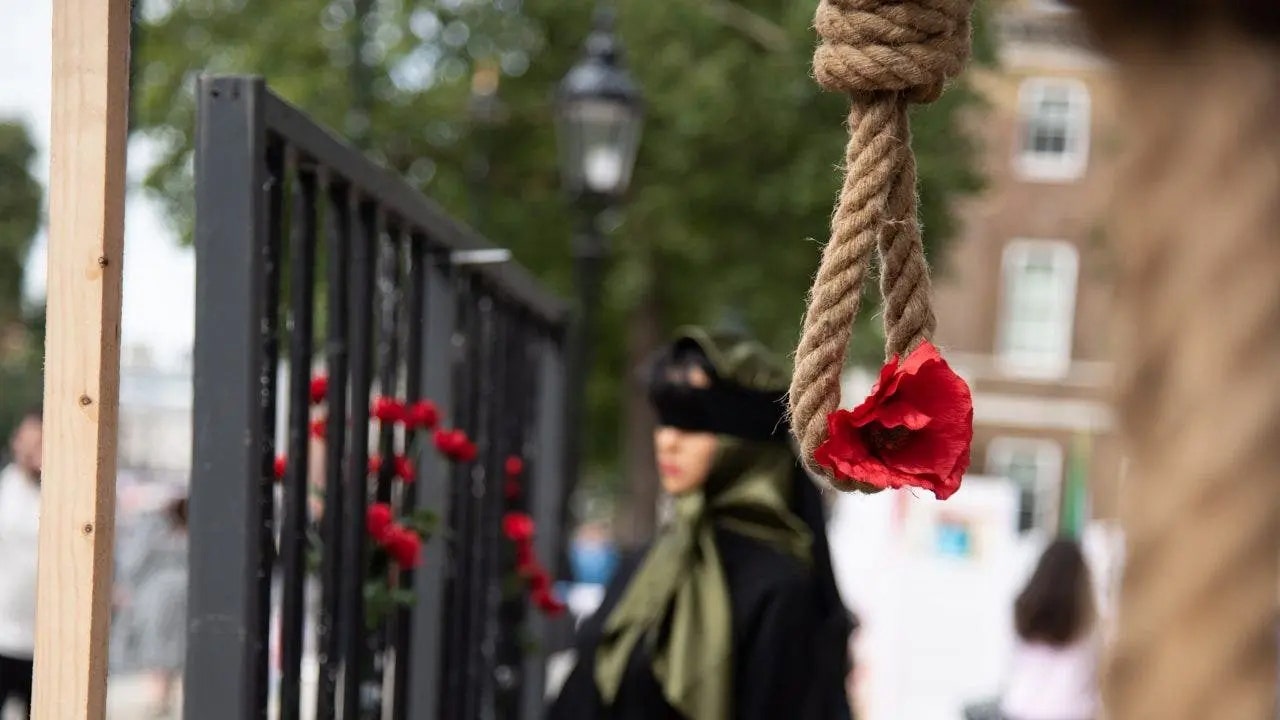
Iran Executions Surge: Over 784 Killings Documented This Year Amid Internet Blackout and War Crackdown
As of June 9, 2026, Iran has executed at least 784 prisoners this year, with a surge in political killings since March, according to the Iran Human Rights Society. The Islamic Republic has intensified its crackdown on dissidents—including members of the People’s Mojahedin Organization of Iran (PMOI/MEK)—amid nationwide internet throttling and blackouts. Tehran’s clampdown follows January protests, with 18 executions documented between May 31 and June 1 alone. The UN and EU have condemned the wave, but executions continue unabated in prisons like Sheiban in Ahvaz, where five inmates face imminent death sentences.
Why Iran’s Execution Surge Matters: A Regime Under Fire
The Islamic Republic’s escalation of executions is not just a human rights crisis—it is a deliberate strategy to silence dissent. Since January 2026, when nationwide protests erupted over economic hardship and regime repression, Iran’s judiciary has weaponized the death penalty against activists, protesters, and opposition figures. The Iran Human Rights Society (IHRS) reports 784 executions in 2026 alone, a figure that likely understates the true toll due to censorship and secret killings.
What makes this surge particularly alarming is its timing. The executions coincide with Iran’s military mobilization against regional conflicts, where the regime has framed dissent as a “national security threat.” Meanwhile, internet restrictions—documented by NetBlocks—have made independent verification nearly impossible. “The ruling authorities frequently carry out executions in secret,” said an IHRS representative, adding that “a significant number of deaths, particularly in remote areas, remain undocumented.”
Who Is Being Targeted?
The victims are not common criminals. Between March 19 and June 1, 2026, at least 32 executions were recorded, including:

- 8 members of the People’s Mojahedin Organization of Iran (PMOI/MEK), a group the regime brands as “terrorists.”
- 24 participants in the January 2026 protests, many of whom faced sham trials and coerced confessions.
- 1 public execution on June 1, where a prisoner was hanged “with utmost brutality” in Ahvaz, according to the National Council of Resistance of Iran (NCRI).
The NCRI’s Maryam Rajavi condemned the executions as “another horrific crime,” urging the UN Security Council and EU to intervene. “The clerical regime has committed another horrific crime in Iran,” she wrote on X, calling for “urgent action” to halt the killings.
How Internet Censorship Is Hiding the Full Scale
Alp Toker, director of NetBlocks, confirmed that while Iran’s internet has been partially restored, connectivity remains severely restricted. “International access is slow, with indications of throttling,” he told Fox News Digital. Messaging apps like Telegram—critical for organizing protests—are heavily filtered, while VPNs are blocked.

This digital blackout has two effects: it stifles dissent and obscures the true number of executions. The IHRS relies on a network of prison sources, lawyers, and families to document killings, but delays in reporting mean many deaths go unrecorded. “The actual number is almost certainly higher,” the IHRS representative warned.
What Happens Next: The Regime’s Legal and Diplomatic Gambit
The U.S. State Department has condemned the executions, calling them “a punishment for exercising basic human rights.” A State Department official emphasized that “for decades, Iranians have been subjected to torture and sham trials,” often with coerced confessions as the sole evidence. The UN Special Rapporteur on Iran, Dr. Mai Sato, did not respond to requests for comment, but her silence underscores the diplomatic challenge: sanctions and rhetoric alone have failed to stop the killings.
Locally, the crackdown is reshaping Iran’s political landscape. In Ahvaz, where five prisoners face imminent execution, legal experts say the regime is using anti-terrorism laws to justify mass killings. “The charges against these prisoners are politically motivated,” said Dr. Reza Pahlavi, a legal analyst based in Paris, referring to the PMOI/MEK cases. “The Iranian judiciary is not a court of law—it’s a tool of repression.”
“The charges against these prisoners are politically motivated. The Iranian judiciary is not a court of law—it’s a tool of repression.”
Where Does This Leave Iran’s Opposition?
The PMOI/MEK, a group long exiled in Europe, has become a primary target. Eight of its members were executed between March and June, raising fears of a broader purge. Meanwhile, the January protesters—many of whom were arrested during the crackdown—remain in limbo. “The regime is killing off the country,” said an NCRI spokesperson, referring to the dual strategy of executions and mass arrests (over 4,000 protesters detained since January).
For families of the executed, grief is compounded by uncertainty. “We don’t even know where our loved ones are buried,” said Fatemeh Mohammadi, a mother whose son was executed in Evin Prison. “The regime erases them completely.”
The Economic and Regional Fallout
Beyond human rights, the executions are destabilizing Iran’s regional standing. The EU and UN have condemned the killings, but economic sanctions—already crippling Iran’s economy—have done little to deter the regime. Meanwhile, the crackdown is driving more Iranians into exile, exacerbating brain drain and labor shortages in key sectors like technology and healthcare.

Locally, cities like Ahvaz and Tehran are feeling the strain. In Ahvaz, where ethnic Arab minorities have long faced discrimination, the executions of PMOI/MEK members are seen as a deliberate attempt to suppress dissent in a volatile region. “This is not just about politics—it’s about survival,” said Ali Karimi, a human rights lawyer in Tehran. “The regime is terrified of losing control.”
“This is not just about politics—it’s about survival. The regime is terrified of losing control.”
How the World Can Respond: A Call to Action
The international community’s response has been fragmented. The UN has called for investigations, but without enforcement mechanisms, its appeals carry little weight. The EU has imposed targeted sanctions on Iranian officials, but these have had minimal impact on the judiciary’s operations.
For those seeking to support Iranian activists and families, the path forward is complex. Legal avenues are limited, but organizations like Amnesty International and Human Rights Watch are documenting abuses and pressuring governments to act. Meanwhile, [Human Rights Law Firms] are assisting families in pursuing legal recourse, though progress is slow.
For businesses and investors, the risk is clear: Iran’s repression is pushing the country further into isolation. Companies operating in or with ties to Iran now face heightened scrutiny over human rights compliance. [Corporate Compliance Consultants] are advising firms to conduct due diligence on Iranian partners, given the legal and reputational risks.
The Long-Term Consequences
Iran’s execution campaign is not just a crisis of the moment—it is a warning of what lies ahead if unchecked. The regime’s strategy of silencing dissent through state violence has worked before: it crushed the 2009 Green Movement and the 2019 protests. But each time, the backlash grows stronger.
For Iranians, the question is no longer whether the regime will fall—but how long it will take. For the world, the question is whether the international community will finally act before the country is wiped clean of its opposition.
The clock is ticking. For those seeking verified professionals to navigate this crisis—whether in legal advocacy, human rights documentation, or corporate compliance—the World Today News Directory offers a trusted resource. The time to act is now.