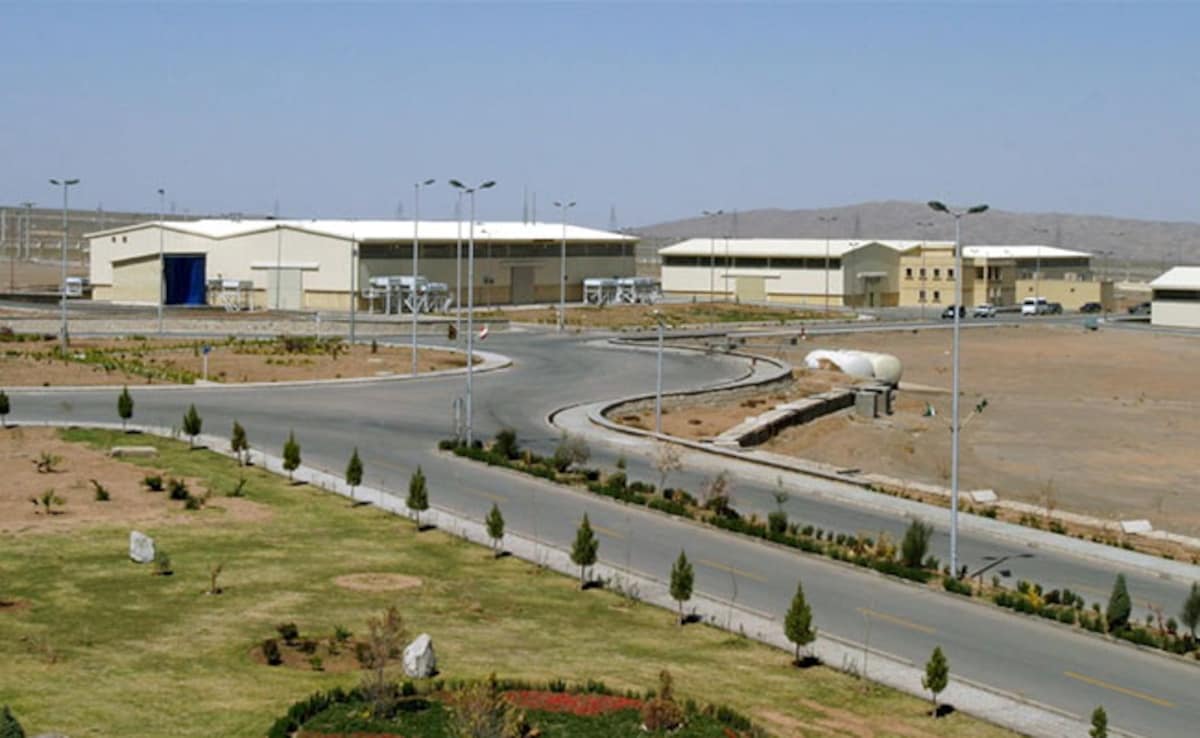
Iran Denies Trump Claim on Enriched Uranium Transfer
On April 17, 2026, Iran’s foreign ministry declared that its stockpile of enriched uranium would not be transferred “anywhere,” directly contradicting a claim by former U.S. President Donald Trump that Tehran had agreed to relinquish the material. This statement, issued amid ongoing diplomatic strain over Iran’s nuclear program, raises immediate concerns about regional stability, non-proliferation efforts, and the potential for renewed sanctions or military posturing by international actors. The clarification comes as the International Atomic Energy Agency (IAEA) continues to monitor Iran’s uranium enrichment levels, which have exceeded limits set under the 2015 Joint Comprehensive Plan of Action (JCPOA) since the U.S. Withdrawal in 2018.
The core issue is not merely diplomatic rhetoric—it is the tangible risk that unchecked uranium enrichment could accelerate Iran’s breakout time to weapons-grade material, currently estimated by independent analysts at under three months if further enriched to 90% U-235. Such a development would trigger cascading consequences: heightened alert levels among Gulf Cooperation Council states, potential preemptive strikes by regional adversaries, and a collapse of confidence in diplomatic channels designed to prevent nuclear proliferation. For businesses operating in energy, logistics, or finance across the Middle East, this uncertainty translates into volatile insurance premiums, disrupted supply chains, and heightened exposure to secondary sanctions.
To understand the gravity of Iran’s position, one must look beyond the headline. In 2023, Iran’s enriched uranium stockpile reached 4.3 tonnes—over 20 times the JCPOA limit of 202.8 kilograms—according to the IAEA’s quarterly report. Much of this is enriched to 60%, a technical stepping stone toward weapons-grade material. The country has too expanded enrichment capacity at Fordow and Natanz facilities, deploying advanced IR-6 centrifuges despite international objections. These developments are not occurring in a vacuum; they follow a pattern of incremental escalation since 2019, when Iran began gradually reducing its JCPOA commitments in response to U.S. Sanctions and the failure of European signatories to provide promised economic relief.
“Iran’s refusal to transfer or limit its uranium stockpile isn’t just a technical violation—it’s a strategic signal. They are leveraging nuclear latency as deterrence against regime change, and the world is misreading the cost of inaction.”
— Dr. Layla Karim, Senior Fellow at the Middle East Institute, speaking from Doha, Qatar, April 16, 2026
The regional impact is already measurable. In the United Arab Emirates, port authorities at Jebel Ali have reported a 15% increase in demand for private maritime security services since January, driven by fears of Gulf transit disruptions. Similarly, Turkish energy firms have begun rerouting natural gas shipments away from Iranian borders, increasing reliance on Azerbaijani and Turkmen supplies at a 12% premium. These shifts are not speculative; they reflect real-time risk assessments by multinational corporations operating in proximity to Iran’s sphere of influence.
Meanwhile, in Europe, German industrial groups have lobbied Berlin to activate the EU’s Blocking Statute to shield companies from U.S. Secondary sanctions—a legal mechanism designed to counteract extraterritorial enforcement. Yet, as of April 2026, no major German corporation has invoked the statute in relation to Iran, citing uncertainty over its enforceability and fear of reputational damage. This hesitation underscores a broader challenge: the absence of clear, enforceable frameworks for multinational compliance when geopolitical tensions outpace diplomatic resolution.
“Companies don’t need more sanctions guidance—they need actionable legal clarity. When the rules shift weekly based on presidential rhetoric or intelligence leaks, even the most diligent compliance teams are flying blind.”
— Markus Vogel, Head of International Trade Compliance at Siemens Energy, Frankfurt, April 15, 2026
This environment creates a pressing need for specialized expertise. Firms navigating export controls, sanctions compliance, or geopolitical risk require counsel that understands both the technical nuances of nuclear proliferation and the labyrinthine enforcement of OFAC, UN, and EU regulations. Similarly, energy and logistics providers must assess route vulnerabilities, insurance exposure, and asset protection strategies in real time. These are not theoretical concerns—they are operational imperatives for any entity with exposure to Middle Eastern markets.
For organizations seeking to mitigate these risks, engaging qualified professionals is no longer optional. Legal teams specializing in international trade sanctions can help structure transactions to avoid inadvertent violations, while geopolitical risk analysts provide early-warning modeling based on IAEA reports, satellite imagery, and diplomatic backchannels. In the maritime sector, consultants with expertise in Gulf transit security are increasingly vital for rerouting decisions and crew safety protocols.
As Iran maintains its stance on uranium retention, the international community faces a choice: continue relying on fragile diplomatic engagements that have repeatedly failed, or invest in robust verification mechanisms and enforceable consequences. The longer the status quo persists, the more embedded Iran’s nuclear latency becomes—not as a bargaining chip, but as a fixed variable in regional power calculations. History shows that when proliferation thresholds are crossed silently, the cost of reversal grows exponentially.
The path forward demands vigilance, not panic. But it also requires access to trusted, verified expertise capable of interpreting complex signals in real time. For those tasked with safeguarding operations, investments, or reputations in an era of nuclear ambiguity, the right counsel isn’t just advantageous—it’s essential.
Explore verified professionals in international trade law, geopolitical risk analysis, and maritime security through the international trade attorneys, geopolitical risk consultants, and maritime security advisors in the World Today News Directory to ensure your organization is prepared for the evolving landscape.
Worth a look