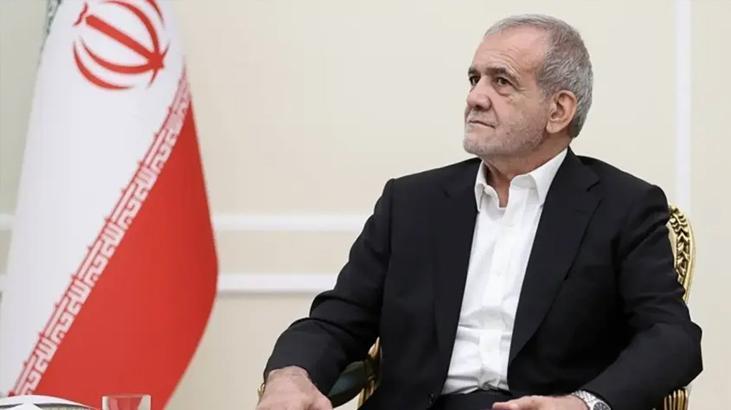
Iran Denies Rumors of President Pezeshkian’s Resignation
As of May 31, 2026, the Iranian Presidential Office has formally denied persistent rumors of President Masoud Pezeshkian’s resignation. The speculation, which triggered regional market volatility and intensified domestic political anxiety, highlights the underlying fragility of the Tehran power structure as it navigates deepening international isolation and mounting internal economic pressure.
In the high-stakes theater of Middle Eastern politics, a rumor of resignation is rarely just a rumor; it is a signal of tectonic shifts within the elite. While the official apparatus in Tehran is working overtime to project stability, the very fact that such a narrative gained enough traction to force a public rebuttal speaks volumes about the current volatility of the Islamic Republic’s executive branch.
The Fragility of the Executive Mandate
Pezeshkian’s administration has been defined by a precarious balancing act—attempting to signal moderate reform to a weary domestic populace while remaining tethered to the hardline security establishment that dictates the country’s regional posture. This dynamic creates a “credibility vacuum.” When the state’s internal communications become opaque, the vacuum is invariably filled by capital flight and speculative hedging.
.jpg "Masoud Pezeshkian portrait")
For multinational firms operating in or near the Persian Gulf, the instability is not merely political—it is operational. When the leadership’s status is in question, the predictability of trade regulations, tax enforcement, and sanction compliance vanishes. Companies with exposure to the region are currently re-evaluating their risk profiles. To mitigate these threats, prudent executives are engaging political risk consultants to map out scenario-based contingencies should a genuine leadership transition occur.
The institutionalization of doubt in Tehran is the most dangerous export the regime produces. When the market cannot discern if a President is in power or merely a placeholder, the cost of doing business—even in the periphery—spikes exponentially.
The Macro-Economic Ripple Effect
The Iranian economy is currently trapped in a cycle of stagflation exacerbated by restricted access to the SWIFT financial messaging system. Any perceived instability at the top level of government serves as a catalyst for currency devaluation. For international entities attempting to navigate the complexities of secondary sanctions and regional trade, the current climate is treacherous.

The following table illustrates the key volatility indicators currently impacting regional market sentiment:
| Indicator | Impact of Political Instability | Corporate Risk Level |
|---|---|---|
| Currency Valuation | Rapid depreciation of the Rial | Critical |
| Supply Chain Logistics | Disruption at key maritime choke points | High |
| Foreign Direct Investment | Stagnation due to compliance uncertainty | Extreme |
| Regulatory Enforcement | Increased unpredictability in tax/labor laws | Moderate |
As these pressures mount, firms involved in cross-border energy or logistics are increasingly reliant on expert legal counsel. Navigating the intersection of US Treasury mandates and local Iranian corporate law requires specialized expertise. Many firms are now turning to international trade law specialists to ensure their compliance frameworks remain bulletproof against shifting geopolitical winds.
Geopolitical Entrenchment and Global Alliances
Tehran’s current posture is deeply linked to its strategic deepening of ties with the BRICS+ bloc, particularly its reliance on non-Western financial pathways. However, as noted by the World Bank’s regional outlook, the lack of domestic institutional transparency remains the primary barrier to sustainable economic integration. The “resignation” rumor is not just a domestic blip; it is a symptom of the regime’s inability to reconcile its revolutionary ideology with the pragmatic requirements of a functioning global economy.
If the executive branch continues to face these internal challenges, we can expect a hardening of the security apparatus, further complicating the efforts of foreign firms attempting to maintain operational continuity. The “Information Gap” here is clear: the regime is struggling to manage the narrative of its own survival.
Strategic Implications for Multinational Entities
- Supply Chain Hardening: Diversification away from single-point-of-failure regional hubs is now a boardroom priority.
- Compliance Audits: Frequent, mid-year reviews of sanctions compliance are becoming the standard for any firm with indirect exposure to the Iranian market.
- Digital Sovereignty: As cyber-threats rise in tandem with political instability, firms are upgrading their defensive posture through global cybersecurity consultants to protect intellectual property from state-sponsored digital espionage.
The resilience of the current administration will be tested in the coming months by inflation, youth unemployment, and the persistent, unavoidable friction of sanctions. For the global observer, the lesson is clear: in an era of geopolitical fragmentation, stability is a currency in short supply. As the power dynamics in Tehran continue to shift, the ability to anticipate—rather than react to—these disruptions will distinguish the market leaders from the casualties.

Navigating these volatile waters requires more than just high-level analysis; it requires a robust network of professional partners capable of translating geopolitical tremors into actionable corporate strategy. Whether you are managing complex supply chain risks or seeking clarity on the evolving regulatory landscape, the World Today News Directory provides access to the elite consultants and legal advisors necessary to secure your firm’s interests in an increasingly unpredictable world order.
The chessboard is moving. Ensure your organization is positioned accordingly.