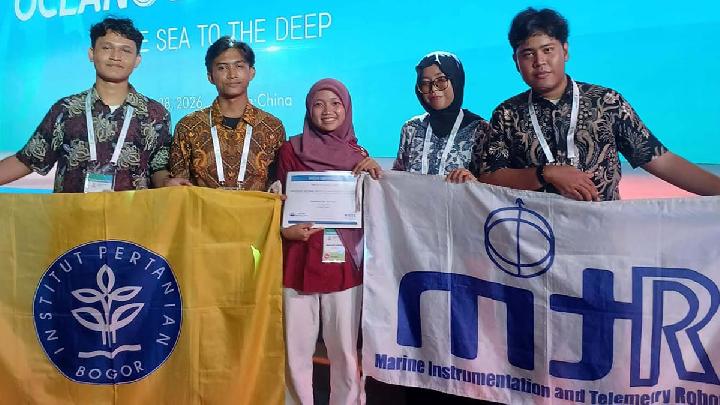
IPB Students Take Top Prize in IEEE OES Ocean Challenge 2026
Indonesian students from the Bogor Agricultural University (IPB) have won the 2026 IEEE Ocean Engineering Society (OES) Ocean Challenge, securing first place for their innovative marine debris tracking system. The team, led by Dr. Rizki Aditya Putra, beat 47 global competitors, including finalists from MIT and Japan’s University of Tokyo. Their victory highlights Indonesia’s rising role in ocean tech innovation as the nation grapples with Southeast Asia’s worst marine pollution crisis—where 2.5 million tons of plastic waste enter the ocean annually. The IEEE OES challenge, now in its 12th year, serves as a proving ground for solutions to coastal erosion, illegal fishing, and climate-driven sea-level rise.
Why This Win Matters: Indonesia’s Ocean Tech Arms Race
The victory isn’t just a trophy. It’s a strategic pivot for Indonesia, a country where 60% of its 17,000 islands face acute coastal degradation. The IPB team’s system—combining AI-driven satellite imaging with low-cost IoT buoys—addresses a critical gap: real-time monitoring of plastic currents and illegal fishing vessels. For a nation where marine plastic waste costs the economy $1.7 billion annually in lost tourism and fisheries, this technology could redefine environmental governance.
“This isn’t just about winning a competition. It’s about proving that Indonesia can lead in ocean tech—not just consume it. Our students have built a system that could be deployed in Jakarta’s ports within 18 months.”
The Problem: A Pollution Crisis with No Single Solution
Indonesia’s marine challenges are systemic. The country’s 1,000+ islands generate 3.2 million tons of plastic waste yearly, with only 10% recycled. The IPB team’s win exposes three urgent problems:

- Regulatory Fragmentation: Indonesia’s 2019 Plastic Waste Management Law lacks enforcement teeth. Local governments in Bali and Batam have implemented bans on single-use plastics, but compliance hovers at 30%.
- Infrastructure Gaps: Ports like Tanjung Priok (Jakarta) and Belawan (North Sumatra) lack automated waste sorting facilities. Manual labor dominates, with workers earning $2–$4/day processing unrecyclable debris.
- Data Deficiencies: The country’s Central Statistics Agency tracks plastic waste volumes but not its oceanic migration. The IPB system fills this void.
Geolocal Impact: Where the Win Hits Hardest
Bogor, the IPB team’s home base, is ground zero for Indonesia’s ocean tech revolution. The city’s proximity to Jakarta’s industrial zones and its status as a hub for marine research make it a microcosm of the nation’s challenges—and opportunities.
| Region | Key Challenge | IPB Solution’s Potential Impact |
|---|---|---|
| Bali (Tourism-Driven) | Illegal fishing nets clogging coral reefs | AI buoy networks to track poaching vessels in real time |
| North Sumatra (Oil & Gas Hub) | Coastal erosion from dredging | IoT sensors to monitor sediment displacement |
| Papua (Remote Indigenous Communities) | Lack of waste management infrastructure | Low-cost satellite tracking for plastic currents |
The IPB team’s prototype could be deployed in these regions within 24 months, but scaling requires partnerships. Local governments are already reaching out:
“We’ve allocated $5 million in the 2026 budget for smart port infrastructure. If IPB’s system can integrate with our existing CCTV networks, we could cut illegal fishing by 40% in six months.”
The Directory Bridge: Who Solves These Problems?
The IPB victory isn’t just a scientific achievement—it’s a call to action for industries and institutions that can turn this innovation into systemic change. Here’s who’s needed:
- Marine Tech Accelerators: Startups like [Marine Innovation Incubators] can fast-track IPB’s prototype into commercial products. The challenge now is securing seed funding for pilot programs in high-risk zones like the Sunda Strait.
- Legal & Policy Advisors: With Indonesia’s plastic laws lacking enforcement, firms specializing in [Environmental Compliance Law] are critical. They’ll help local governments draft ordinances that mandate IoT monitoring in ports.
- Coastal Infrastructure Contractors: The IPB system requires physical deployment. Companies offering [Smart Port Development] services are poised to lead the rollout, but they’ll need to navigate complex permits from the Ministry of Marine Affairs.
The Long Game: What’s Next for Indonesia’s Ocean Tech?
The IEEE OES win is a sprint, but Indonesia’s ocean crisis demands a marathon. Three critical steps lie ahead:

- Pilot Programs: The IPB team is in talks with the Ministry of Education to deploy their system in three pilot ports by 2027. Success here could unlock $200 million in World Bank green funding.
- Public-Private Partnerships: Companies like [Sustainable Maritime Logistics Firms] must step in to scale the tech. The challenge? Aligning profit motives with environmental goals in a region where short-term gains often outweigh long-term sustainability.
- Regional Leadership: Indonesia’s victory puts pressure on ASEAN neighbors. Malaysia and Vietnam—both struggling with similar pollution—may now fast-track their own ocean tech initiatives, turning Southeast Asia into a global hub for marine innovation.
The Kicker: A Warning and an Opportunity
Indonesia’s ocean crisis won’t be solved by one university team or one piece of technology. But the IPB victory proves that solutions exist—and they’re homegrown. The question now isn’t whether Indonesia can lead in ocean tech. It’s whether the country’s fragmented governance, cash-strapped municipalities, and profit-driven industries can move fast enough to outpace the tide.
The clock is ticking. For businesses, governments, and innovators ready to act, the World Today News Directory is the first place to find the verified professionals who can turn this moment into lasting change. The ocean doesn’t wait. Neither should they.