
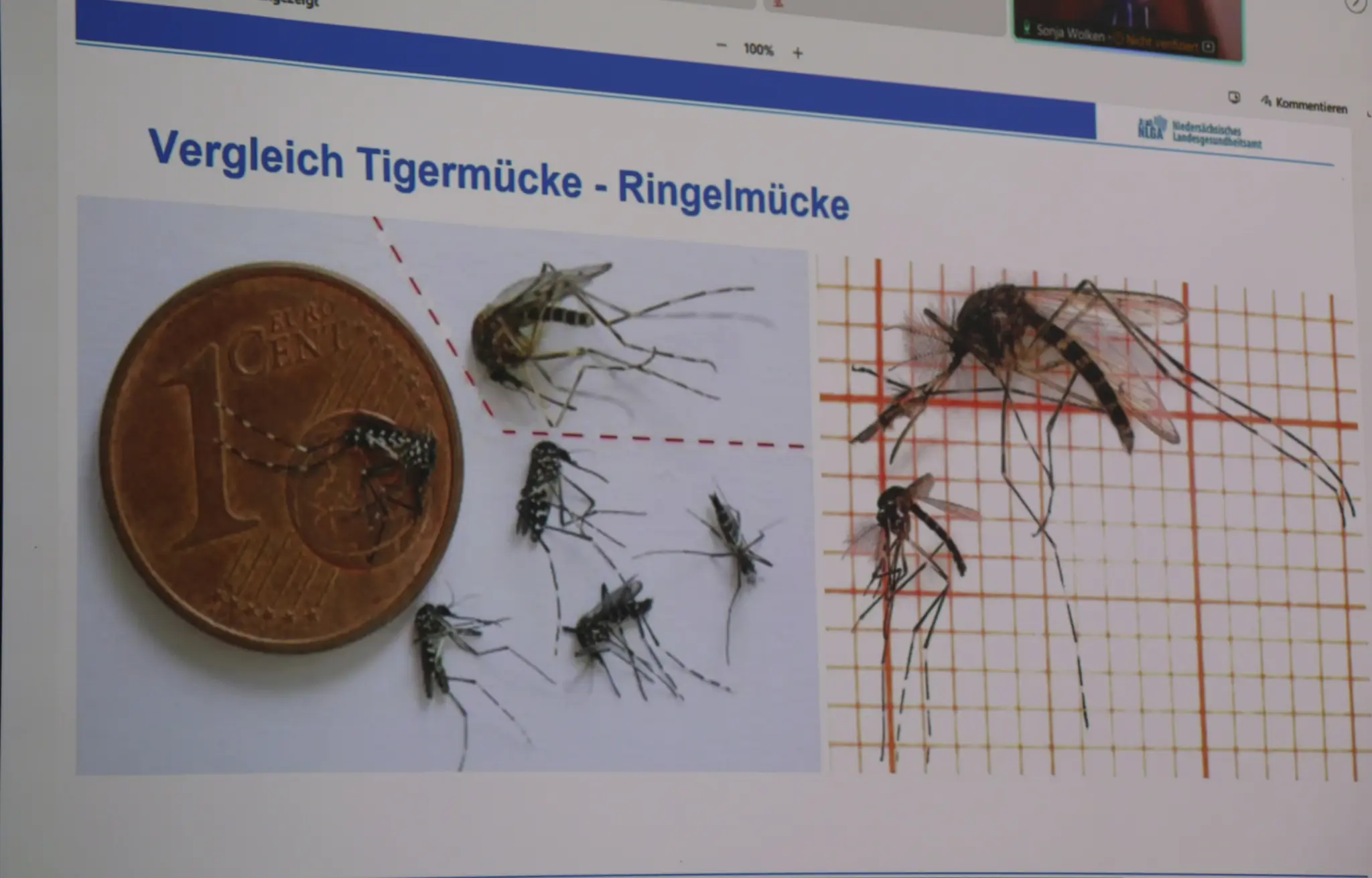
A veterinarian with the Lower Saxony Regional Health Office warned residents of Buchholz in der Nordheide about the increasing presence of invasive mosquito species in Germany during an online lecture hosted by the local Klimaforum on Thursday.
Dr. Sonja Wolken detailed that, since 2004, six invasive mosquito species have been establishing themselves across the country, carrying the potential to transmit dangerous viruses such as dengue fever, chikungunya, and West Nile virus. Her presentation, titled “More Mosquitoes Due to Climate Change?”, focused particularly on the Asian tiger mosquito (Aedes albopictus), urging caution due to its aggressive behavior and daytime activity.
The Asian tiger mosquito, measuring between five and eight millimeters, is identifiable by the five stripes on its legs and is often confused with the larger ring mosquito (Culiseta annulata). According to Wolken, the species thrives in areas with standing water, including rain barrels, flower pots, pet feeding bowls, children’s toys, garden decorations, plastic waste, clogged gutters, hollow fence posts, parasol stands, and even water collected in tree forks and tires.
Wolken advised residents to eliminate potential breeding grounds and secure water storage containers, such as rain barrels, with mosquito netting. She similarly recommended regularly cleaning containers holding standing water, like bird baths and paddling pools, at least once a week, and maintaining clear drainage in gutters and downspouts. A naturally designed garden pond, she suggested, can also help control mosquito populations as dragonfly larvae and water beetles prey on mosquito larvae.
The Klimaforum Buchholz event highlighted the role of climate change in facilitating the spread of these invasive species, with rising temperatures and increased heavy rainfall creating more favorable conditions for their proliferation. The Kreiszeitung Wochenblatt reported that residents who suspect they have found an Asian tiger mosquito are encouraged to submit a photograph to the Lower Saxony Regional Health Office at vektormonitoring@nlga.niedersachsen.de.
The Lower Saxony Regional Health Office currently operates an active mosquito monitoring program at nine locations throughout the state, utilizing mosquito traps to track the spread of these invasive species.
