
## Interstellar Comet 3I/ATLAS Displays Unexpected Brightening, Puzzling Scientists
An interstellar comet, designated 3I/ATLAS, is continuing to surprise astronomers with an unexpectedly rapid increase in brightness, as detailed in a recent paper published on the research repository arXiv (
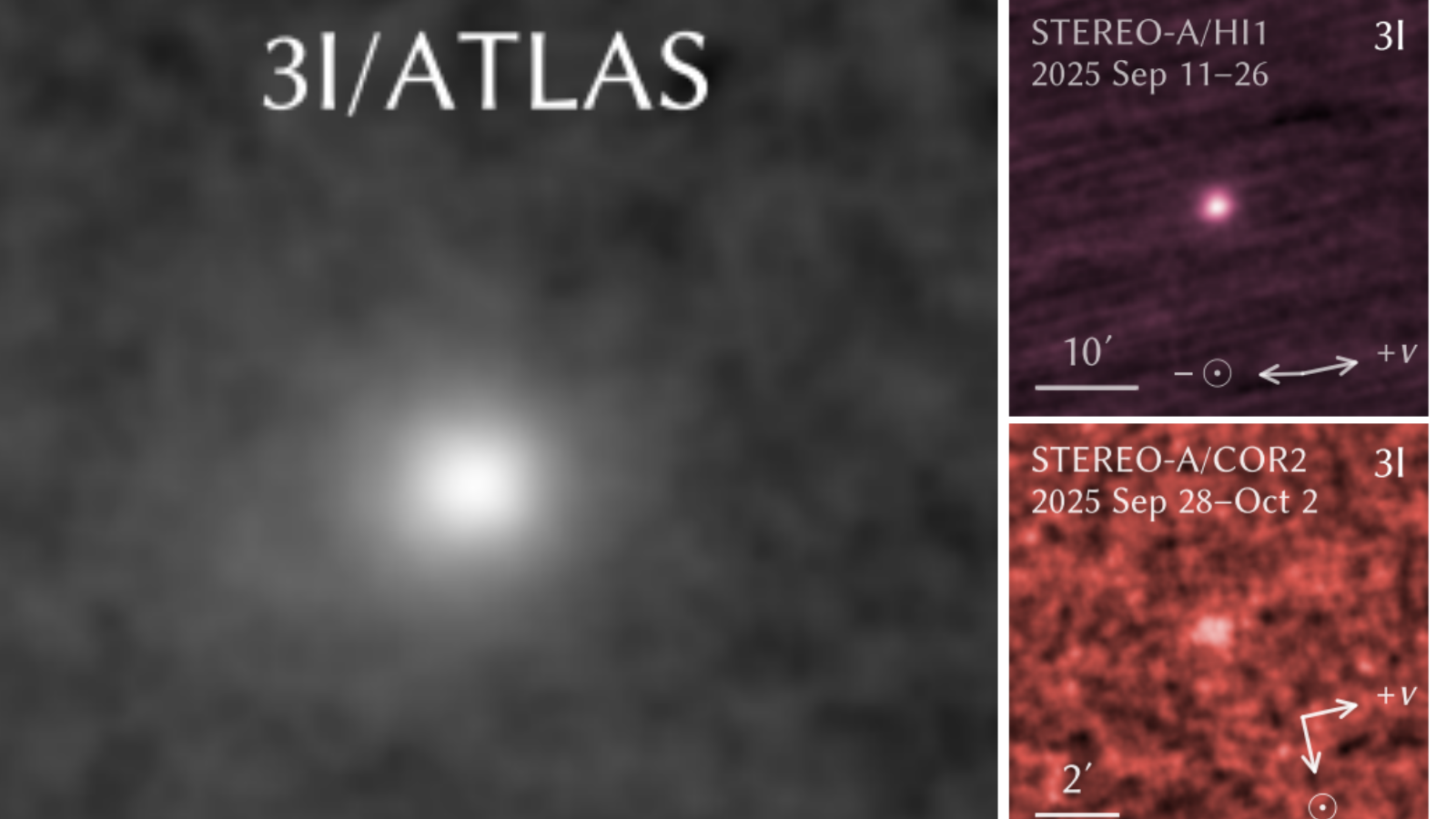
The brightening was observed by multiple space-based observatories including STEREO-A and STEREO-B (the twin spacecraft of the solar Terrestrial Relations Observatory), the Solar and Heliospheric Observatory (SOHO), and the GOES-19 weather satellite. These observations were crucial, as ground-based instruments will be unable to view the comet again until it moves beyond the sun’s glare during its “postperihelion” phase, anticipated in mid- to late-november 2025.
researchers are currently exploring several potential explanations for the unusual brightening. One possibility relates to the comet’s velocity as it approaches the sun. Another centers on the comet’s internal composition itself. According to the paper, if 3I/ATLAS’s nucleus differs from those of Oort cloud comets, it could indicate a distinct chemical makeup in the planetary system from which it originated.
“Oddities in nucleus properties like composition, shape, or structure - which might have been acquired from its host system or over its long interstellar journey – may likewise contribute [to the rapid brightening],” wrote astrophysicist at the Naval Research laboratory (NRL) in Washington DC, zhan and Battams in their paper. They further noted, “Without an established physical clarification, the outlook for 3I’s postperihelion behavior remains uncertain, and a plateau in brightness – or even a brief continuation of its preperihelion brightening – appears as plausible as rapid fading past perihelion.”
The researchers also propose that the sublimation process of 3I/ATLAS may be occurring differently than expected.They suggest that carbon dioxide sublimation is currently dominating at a relatively close distance from the sun – approximately three times the Earth-sun distance – potentially leading to cooling that has suppressed the sublimation of water ice.
The authors conclude that continued observations are necessary to unravel the mysteries surrounding this interstellar visitor. “Continued observations may help provide a more definitive explanation for the comet’s behavior,” they stated. The full paper is available as a pre-print on the arXiv repository (
