Interstellar comet 3I/ATLAS carried massive quantities of organic molecules
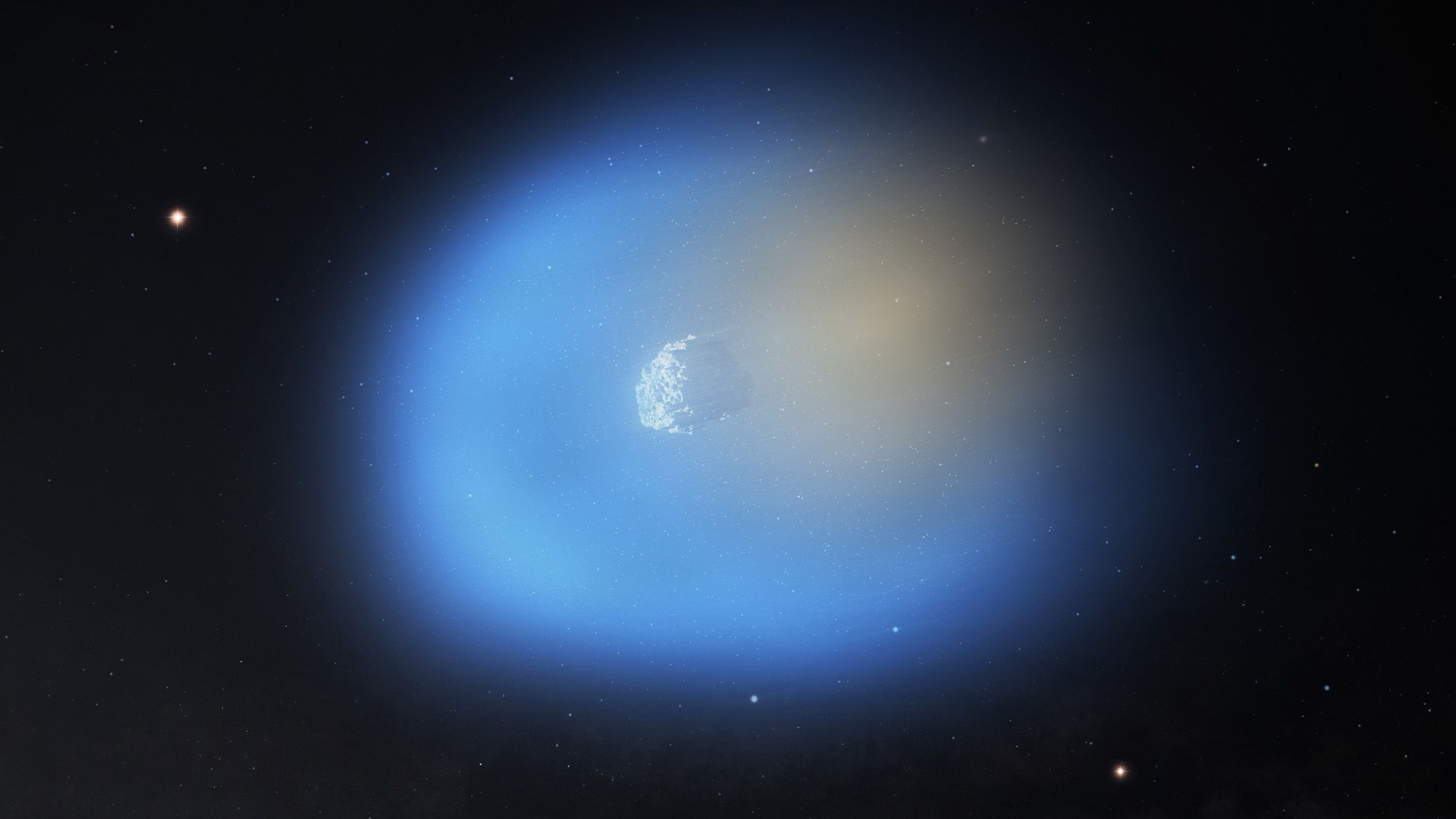
Interstellar object 3I/ATLAS visited the inner solar system for roughly four months following its discovery in July 2025, offering researchers a rare window into the chemical composition of distant planetary systems. While sensational claims briefly linked the comet to intelligent alien technology, astronomers established that 3I/ATLAS is a natural comet and a preserved fragment of a planetesimal from a distant system. Data collected by dozens of telescopes and spacecraft reveal that the ancient object carried massive quantities of organic molecules, informing contemporary scientific understanding of how prebiotic chemistry might operate across the galaxy.
Key Clinical Takeaways:
- Interstellar comet 3I/ATLAS spent four months in the inner solar system starting in July 2025, providing an extended observation window compared to previous interstellar visitors.
- Telescopic observations detected high concentrations of prebiotic feedstocks, including hydrogen cyanide, formaldehyde, methanol, and methane.
- Researchers note that while these compounds serve as foundational building blocks for biomolecules, their presence does not confirm the existence of extraterrestrial life.
Organic Inventories of Interstellar Objects
Comets function as chemical time capsules because they originate from the same swirling disks of gas and dust that form planets, preserving their original composition over billions of years. According to Darryl Seligman, an assistant professor of astronomy at Michigan State University, comets are hypothesized to seed planets with carbon-containing chemicals that form the basis for proteins and nucleic acids. Studies of local space rocks, such as the fragments from asteroid Bennu obtained during NASA’s OSIRIS-REx mission, confirm the presence of all five nucleotide bases and 14 of the 20 amino acids common on Earth. Analyzing objects like 3I/ATLAS allows astrochemists to test whether these building blocks are common in exoplanetary systems.
Prior interstellar visitors offered far more limited observation windows. The first detected interstellar object, 1I/’Oumuamua, remained visible for only a few weeks, while the second, 2I/Borisov, was discovered immediately prior to the COVID-19 pandemic, disrupting observational schedules. In contrast, researchers tracked 3I/ATLAS for nearly a year using ground- and space-based instruments, yielding a uniquely detailed chemical inventory.
Spectroscopic Analysis and Prebiotic Feedstocks
As the sun warmed 3I/ATLAS, the object spewed gas and dust to form a bright halo known as a coma. Astronomers recorded light intensity across multiple frequencies to identify the specific chemical constituents within this material. Observations using the Atacama Large Millimeter/submillimeter Array (ALMA) detected hydrogen cyanide (HCN). Although widely recognized as a toxic gas, HCN participates in laboratory synthesis models that produce amino acids, echoing foundational simulations like the Miller-Urley experiment.
ALMA data also showed that 3I/ATLAS released large amounts of formaldehyde and methanol. Data from the James Webb Space Telescope further identified significant quantities of methane. Martin Cordiner, a researcher in astrochemistry and planetary science at NASA’s Goddard Space Flight Center, noted that these compounds act as critical carbon and nitrogen feedstocks capable of supporting molecular precursors to life. If similar methane concentrations existed on planets within the comet’s home system, the gas could have contributed to atmospheric heat retention, potentially stabilizing surface temperatures and supporting liquid water.
Radiation Exposure and Future Astronomical Surveys
Despite the abundance of organic molecules, the presence of simple carbon compounds does not prove that life developed in the comet’s home system or elsewhere. While laboratory mixtures of these molecules can transform into complex structures under specific conditions, such advanced compounds were not detected on 3I/ATLAS. A study published in January indicated that the chemicals released by the comet as it passed the sun originated primarily from its radiation-exposed upper layers rather than its pristine interior, raising questions about whether those exact proportions reflect the composition of its home system.
Research into 3I/ATLAS continues as scientists look toward upcoming celestial events. Facilities such as the Vera C. Rubin Observatory in Chile are expected to identify numerous future interstellar visitors, enabling astronomers to map the distribution of bio-precursors across the history of the galaxy.
Disclaimer: The information provided in this article is for educational and scientific communication purposes only and does not constitute medical advice. Always consult with a qualified healthcare provider regarding any medical condition, diagnosis, or treatment plan.