
UCSF Study: Wernicke’s Area Also Launches Speech Production
Neuroscientists at the University of California, San Francisco have shown that Wernicke’s area, a brain region long known for understanding speech, also launches the words people say, in findings published November 19 in Science.
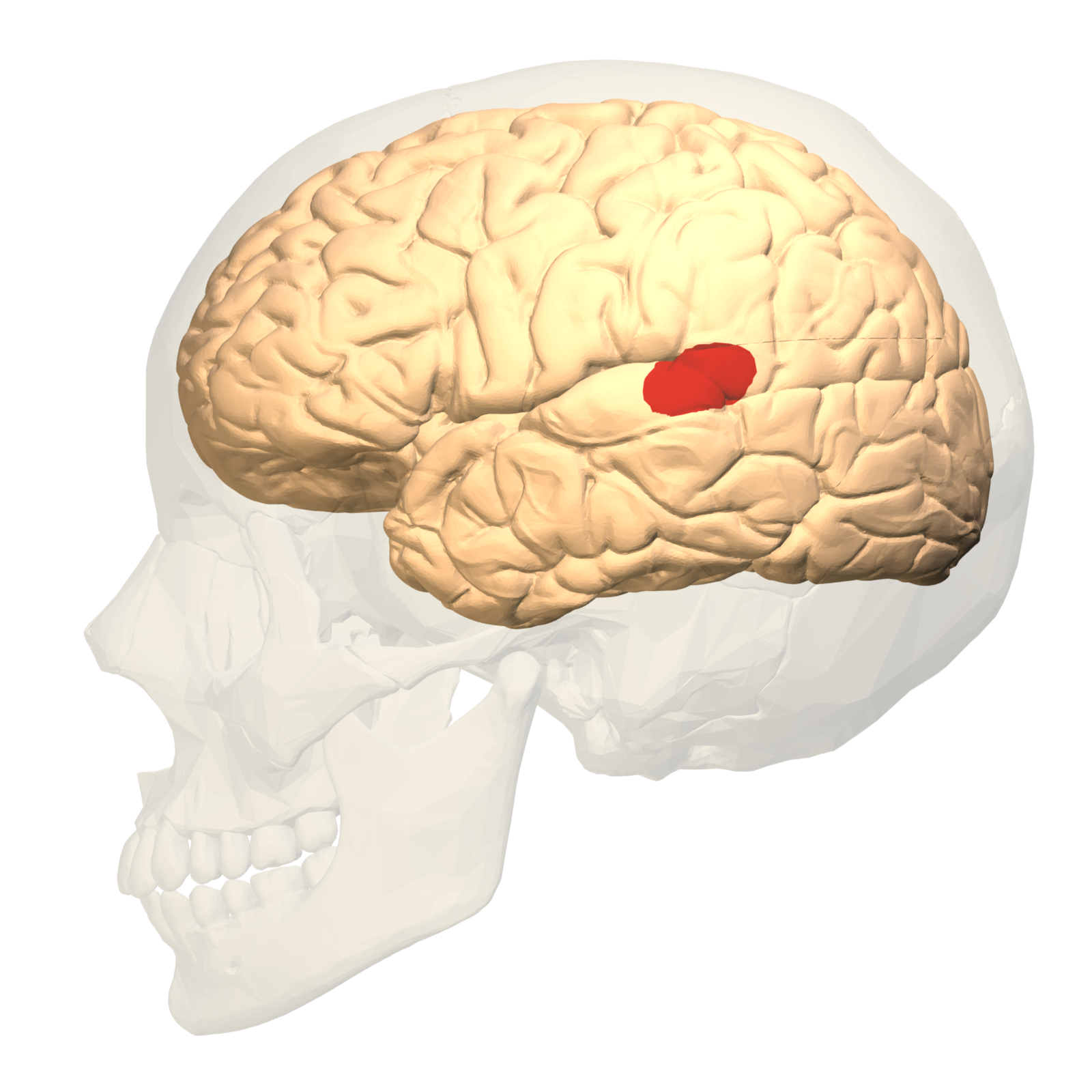
- A small patch inside Wernicke’s area, the left posterior superior temporal gyrus, activates about a quarter of a second before a spoken word.
- The same patch carries information about both listening and speaking, challenging the textbook split between comprehension and production.
- The signals may guide speech-restoring brain implants, offering a target beyond the motor cortex.
A 150-year-old question answered
Carl Wernicke described the region above the left ear in 1874 as necessary for making sense of speech. People with damage there struggled to comprehend words, but some also struggled to produce them.
“Sounds were swapped, words were replaced with near misses,” Edward Chang of the University of California, San Francisco, said in a news briefing. “The basic question has been, ‘Why would damage to a hearing area of the brain break the ability to speak?’ That question has been open for 150 years.”
The answer, per the study published November 19 in Science, is that a small part of Wernicke’s area — the left posterior superior temporal gyrus, or lpSTG — becomes active just before a word is spoken. Chang said the region fires about a quarter of a second before speech.
“Every word that you have said today began in that small part above your left ear about a quarter of a second before you said it,” Chang said.
What the electrodes recorded
Scientists measured brain activity in 28 people before surgery for epilepsy or tumors. The recordings showed the patch responding when a person listened to words and again just before they tried to speak. Individual cells showed preferences — some were more active before long words than short ones.
“It’s more active when you’re about to say the word caterpillar than when you’re about to say the word cat,” Matthew Leonard, a cognitive neuroscientist at UCSF, said.
Electrical stimulation added a second line of evidence. “What we found was that stimulation, really only in this lpSTG area, disrupted this speech production when it was delivered just prior to speaking,” UCSF bioengineer Alexander Silva said. Participants could struggle to start a word or mix up its sounds, then say it correctly once stimulation stopped.
A separate analysis of 313 people who underwent brain surgery linked damage in this region to speech errors. The patch’s exact position varied among individuals, and the recordings came from people already receiving clinical brain procedures.
How the outlets frame the finding
Science News presents the finding that a brain region famous for listening is important for talking, too, adding outside reaction.
Chang’s own framing spans both readings. “Instead of being separate systems, the processes of hearing speech and actually speaking are very intertwined,” he said in a university news release cited by intouchwithscience.com.
What the experts said
Neurologist Jeffrey Binder of the Medical College of Wisconsin in Milwaukee, who was not involved in the work, said the study provides convincing evidence that the spot is critical for speech production.
“My hope is that this study will help scientists and clinicians accept a more accurate interpretation of this focal area” as an early stop on the pathway to saying a word.
Neuroscientist Leigh Hochberg of Brown University in Providence, R.I., said the finding adds to growing evidence that brain areas do more than their labels suggest.
“I believe that one of the things we are going to learn over the next five, 10 years of this research, is that each part of the brain that, we were taught as a med student or a grad student, does this, probably does that and a whole lot more.”
From lab signal to restored voice
Most experimental speech-restoring implants draw on the motor cortex, the region controlling the movements of the mouth and throat. The lpSTG offers an additional route when those movement-related regions are damaged, Silva said. “What if you could target a single brain region and gain access to the full spectrum of speech, from listening all the way up to speech production?” he said.
Evidence from the study itself points that way: experimental brain implants in two volunteers with paralysis detected both what the participants heard and what they were trying to say, the researchers reported. Because the same small area carries information about listening and speaking, it could eventually help an interface follow the give-and-take of a conversation.
Chang said the discovery may also illuminate conditions involving both hearing and speaking, such as speech or comprehension differences in people with autism, and how children first learn to talk.
For people living with aphasia or speech loss after stroke or brain injury, the finding does not change treatment today, but it sharpens the map clinicians work from. Patients weighing options after speech-affecting brain surgery or injury can ask a board-certified neurologist or a licensed speech-language pathologist whether current speech-restoring technologies or rehabilitation programs fit their case.
Chang put the shift plainly: brain regions are more complex than researchers have appreciated. The next test is whether a signal recorded above the left ear can carry a full conversation for someone who cannot speak.
The work comes from the University of California, San Francisco, a public research university devoted entirely to health and life sciences. Founded as Toland Medical College in 1864, it joined the University of California as its medical department in 1873 and gained its current name in 1970.
In 2021 it spent $1.71 billion on research and development, the second most among U.S. institutions of higher education, and in 2023 it received the second-highest research funding from the National Institutes of Health. With 25,398 employees, it is the second-largest public agency employer in the San Francisco Bay Area.
Disclaimer: The information provided in this article is for educational and scientific communication purposes only and does not constitute medical advice. Always consult with a qualified healthcare provider regarding any medical condition, diagnosis, or treatment plan.