Intel Returns to Its Roots as CPU Demand Surges Amid AI Growth
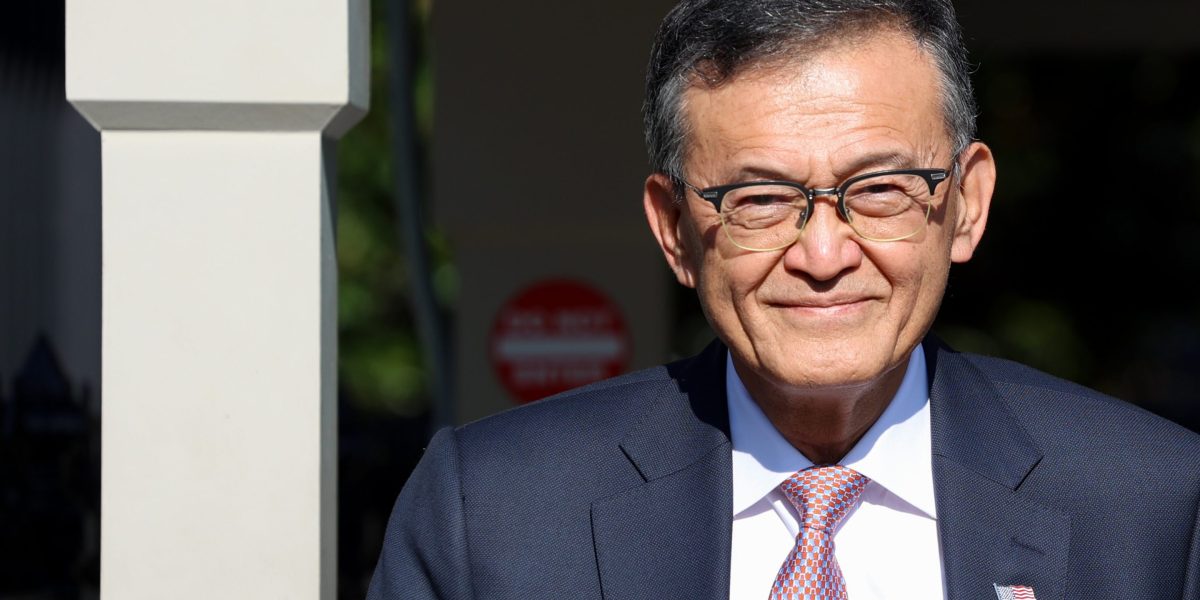
Intel CEO Lip Bu Tan crushed Wall Street targets on his one-year anniversary, reporting Q1 revenue of $13.6 billion versus the expected $13.06 billion, as the company embraces its ‘paranoid’ roots to capitalize on surging CPU demand in AI inference workloads, signaling a strategic pivot amid intensifying competition from Nvidia, AMD, and ARM-based server chipmakers.
Financial Outperformance Amid Strategic Realignment
Intel’s Q1 2026 results exceeded consensus estimates across key metrics, with revenue growing 7% year-over-year to $13.6 billion, driven by stronger-than-anticipated demand for its x86-based CPUs in data center and enterprise markets. According to Intel’s Q1 2026 earnings release, gross margin expanded to 48.2% from 45.1% in the prior-year quarter, while operating income reached $2.1 billion, up 34% year-over-year. The company raised its Q2 revenue guidance to $13.8–$14.8 billion, well above the $13.06 billion analysts had modeled, citing supply constraints as the primary limiter on further upside. EBITDA margins improved to 29.7%, reflecting operational leverage from higher fab utilization and cost discipline under Tan’s cadence-based operating model.
Despite the beat, Intel faces structural headwinds. Its foundry business continues to operate at a deficit, with Q1 revenue of $1.2 billion and an operating loss of $300 million, underscoring the gap between internal manufacturing ambitions and external foundry competitiveness versus TSMC. As noted in the company’s 10-Q filing, capital expenditures remained elevated at $4.2 billion for the quarter, reflecting ongoing investment in next-generation nodes, though Tan reiterated that 14A (1.4nm) factory commitments will hinge on secured customer demand.
CPU Resurgence in the AI Era: Inference as the Recent Battleground
The core of Intel’s rebound lies in a shifting AI workload balance. While GPUs remain dominant for training large models, Intel CFO Dave Zinsner highlighted on the earnings call that the GPU-to-CPU ratio in AI data centers is evolving: from approximately 8:1 for training to 3:1 or lower for inference, with agentic AI architectures potentially driving parity or CPU advantage. “CPUs are indispensable for running AI services at scale — low latency, high throughput, and compatibility with existing enterprise stacks,” Zinsner stated, a view echoed by Intel’s internal AI inference whitepaper, which notes that over 60% of deployed AI inference workloads in cloud environments now run on x86 architecture.

“The pendulum is swinging back to CPUs not because they’re better at training models, but because the real value of AI is in deployment — and that’s where Intel’s architecture still owns the enterprise.”
This dynamic is creating new demand for infrastructure optimization services. Enterprises seeking to recalibrate their AI stack for inference efficiency are increasingly turning to AI workload optimization consultants to analyze hardware utilization, retrain models for CPU compatibility, and redesign data center power and cooling profiles — a growing niche as firms look to reduce GPU dependency without sacrificing performance.
Competitive Pressures and Strategic Uncertainties
Intel’s resurgence occurs amid escalating competition. Nvidia’s recent launch of its first standalone CPU, Grace, targets the same AI inference market Intel is courting, while AMD continues to gain share in server CPUs with its Turin-based EPYC line, which held 23.8% of the x86 server market in Q1 2026 per Mercury Research. Simultaneously, ARM-based server chips — including AWS’s Graviton4 and upcoming proprietary designs — are capturing hyperscale workloads due to superior performance-per-watt in scale-out environments.
Foundry remains Intel’s Achilles’ heel. Despite progress in yield improvement and cycle time reduction on its Intel 4 and Intel 3 nodes, the company has yet to secure a flagship external customer for its 14A process. Tan’s reluctance to commit to 14A fab construction without guaranteed demand reflects a pragmatic shift from the “build it and they will come” era — a stance supported by SEIA’s 2026 semiconductor capacity report, which found that only 12% of announced advanced-node fabs have secured anchor tenants beyond internal use.
This hesitation creates openings for specialized semiconductor supply chain risk advisors, who help foundry clients assess geopolitical exposure, single-point failure risks, and alternative sourcing strategies — particularly relevant as Intel navigates U.S. Government involvement following the Trump administration’s 10% stake acquisition, which continues to influence governance and export control considerations under the CHIPS Act framework.
The Paranoid Survival Playbook: Execution Over Promise
Tan’s leadership philosophy — “underpromise, overdeliver” — marks a departure from the aggressive expansionism of the Gelsinger era. By tying capex to verifiable customer commitments and emphasizing operational discipline, Intel is attempting to rebuild credibility with investors wary of past overruns. The market has responded: Intel’s trailing twelve-month (TTM) price-to-earnings ratio stands at 18.3x, below the semiconductor sector median of 24.1x, suggesting upside potential if execution sustains.

Yet questions linger. Is this a cyclical rebound fueled by broad AI infrastructure spending, or a structural renaissance? The answer will depend on Intel’s ability to convert CPU momentum into foundry relevance — a challenge that will require not just technological breakthroughs, but strategic partnerships with joint venture facilitation firms experienced in structuring cross-border tech alliances, IP sharing models, and long-term offtake agreements critical for attracting foundry customers at advanced nodes.
For now, the message is clear: Intel is betting that in the AI era, the paranoid survive — not by chasing every shiny object, but by doubling down on what it does best: building reliable, compatible, and increasingly efficient compute engines for the enterprise backbone of the AI stack.
As the company navigates this inflection point, executives and investors alike are turning to the World Today News Directory to identify vetted B2B partners — from semiconductor supply chain analysts to AI infrastructure architects — capable of turning strategic uncertainty into actionable advantage.