
Intel’s Comeback: The Promise of Core Ultra Series 3 ‘Panther Lake’
After a turbulent year marked by confusing branding and performance inconsistencies, Intel appears to be regaining its footing in the CPU market. The arrival of the Core Ultra Series 3, codenamed Panther Lake, signals a possibly significant shift, promising a compelling combination of performance, efficiency, and a return to manufacturing stability. At CES 2026,intel showcased a platform that aims to directly challenge AMD and Qualcomm,and early indications suggest they may be succeeding. This article delves into the key aspects of Panther Lake, exploring its advancements in performance, graphics, manufacturing, and its strategic positioning in the evolving PC landscape.
A Rocky Road to Recovery: The Core Ultra Series 2 Struggles
Recent years haven’t been kind to Intel’s laptop CPU branding.The Core Ultra Series 2 generation was, to put it mildly, a mess. A confusing mix of architectures – Lunar Lake, Arrow Lake, and Meteor Lake – left consumers and reviewers struggling to understand the differences and relative merits of each. The branding was so convoluted that it hindered clear dialog and created uncertainty in the market.
Each architecture had its strengths and weaknesses. Lunar Lake prioritized power efficiency but suffered in multithreaded performance. Arrow Lake and Meteor Lake offered better performance but often at the expense of battery life and thermal management. This fragmented approach meant consumers rarely got the best of both worlds—strong performance *and* long battery life.
Panther Lake: A Coherent Platform Emerges
CES 2026 marked a turning point. Intel core Ultra Series 3,based on the Panther Lake architecture,presents a different picture: a coherent and competitive platform. Initial reports indicate a significant leap in performance, improved efficiency, and a more streamlined product strategy. Intel appears to be back in a position to challenge its competitors directly.
Revitalization isn’t just about performance specs. Intel’s renewed confidence is evident in strategic moves.The previous generation’s outsourcing of Lunar Lake manufacturing to TSMC was followed by a commitment to bring manufacturing back in-house. This, coupled with a significant deal with Nvidia and the US government’s investment, demonstrates a clear path towards greater control and stability. Despite past difficulties, Intel is demonstrating resilience and a renewed commitment to innovation.
Performance and Efficiency: A Winning combination
Intel claims Panther Lake delivers over 50% better multithreaded performance compared to Lunar Lake and Meteor Lake, while simultaneously reducing power consumption by 10%. Moreover, the performance is reportedly comparable to Arrow Lake. This represents a remarkable enhancement, addressing a key criticism of previous generations.
Lunar Lake, while efficient, struggled in multithreaded tasks.Its performance trailed behind Arrow Lake and Meteor Lake in benchmarks like Cinebench and Handbrake. This limitation frequently enough forced users to compromise between performance and battery life. Panther Lake aims to eliminate this trade-off, offering a compelling balance of both. The possibility of achieving both sustained performance and excellent battery life in a single platform is a significant step forward.
Integrated Graphics: A Challenge to Discrete GPUs
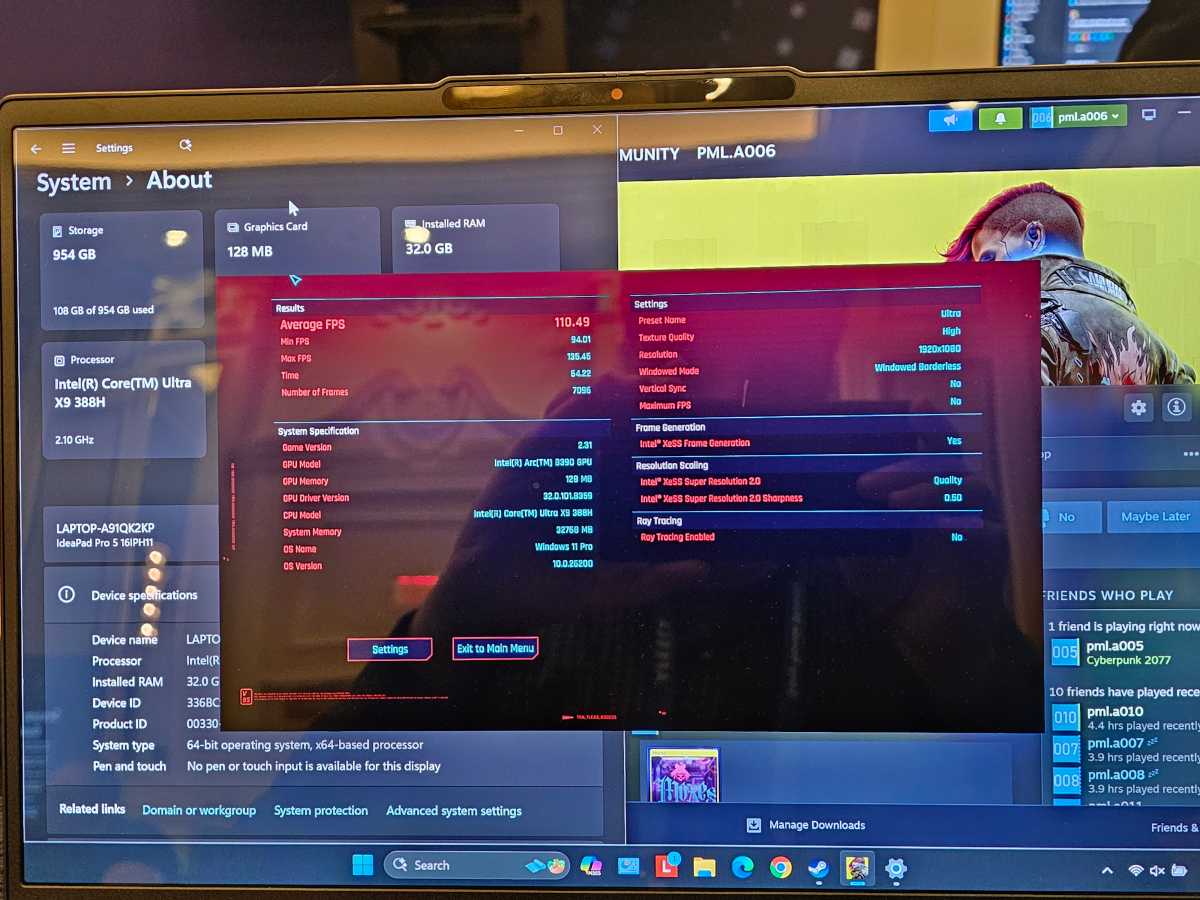
Intel’s integrated graphics have been steadily improving, and Panther Lake takes another leap forward with the new Arc B390 iGPU. Intel is marketing it as being on par with Nvidia’s RTX 4000-series discrete graphics cards—a bold claim that benchmarks at CES 2026 appear to support. This promises a significant upgrade for gamers and content creators who rely on integrated graphics.
While Lunar Lake featured capable Arc graphics, its multithreaded performance limited its overall gaming potential.With Panther Lake, Intel combines a powerful iGPU with a faster CPU, creating a platform capable of delivering a compelling gaming experience without the need for a dedicated graphics card. This growth has the potential to disrupt the laptop market, offering more affordable and power-efficient gaming solutions.
Targeting the Gaming Handheld Market
Intel is aggressively pursuing the burgeoning gaming handheld market,aiming to compete with AMD’s dominance in this space. The company is developing custom Panther Lake hardware specifically for handhelds, capitalizing on the iGPU’s remarkable performance.Intel even publicly challenged AMD, claiming its competitors were relying on outdated silicon. While AMD naturally disagreed with this assessment, the competition promises innovation and lower prices for consumers.
The Shifting Role of NPUs and AI Processing
The industry’s initial fervor surrounding Neural Processing Units (NPUs) is cooling somewhat. While Microsoft initially emphasized Copilot+ PC features requiring 40 TOPS of NPU performance, that push seems to be waning. Companies like Dell are already shifting their focus away from aggressively marketing AI features.
Previously, Intel’s NPUs lagged behind the competition, often falling short of MicrosoftS minimum specifications. though, Panther Lake processors finally meet those requirements, leveling the playing field. While the intense focus on AI-specific hardware might be diminishing, having capable NPU support remains crucial for future software compatibility and emerging AI applications.
Return to In-House Manufacturing and Process Technology
A critical turning point for Intel is the return to in-house manufacturing with the 18A process. Outsourcing to TSMC for Lunar Lake raised concerns about control and long-term strategy. Intel’s renewed commitment to its own fabs, combined with a significant investment from the US government, signals a long-term vision for semiconductor leadership. moreover, the decision to remove costly on-package memory, a feature included in Lunar Lake, is aimed at controlling PC prices in a challenging economic climate.
Looking Ahead: Will the ‘Core Ultra Series 3’ name Stick?
A lingering question remains: will the “Core Ultra Series 3” branding be consistent? The previous generation saw the name applied to a variety of architectures, creating confusion. Intel needs to maintain a clear and consistent naming scheme to build trust with consumers.
Despite this potential branding hurdle, the underlying hardware is genuinely impressive. Intel’s renewed focus on performance, efficiency, manufacturing, and strategic partnerships position it for a strong comeback. Panther Lake represents a significant step forward, and the industry will be watching closely to see if Intel can deliver on its promises.
