
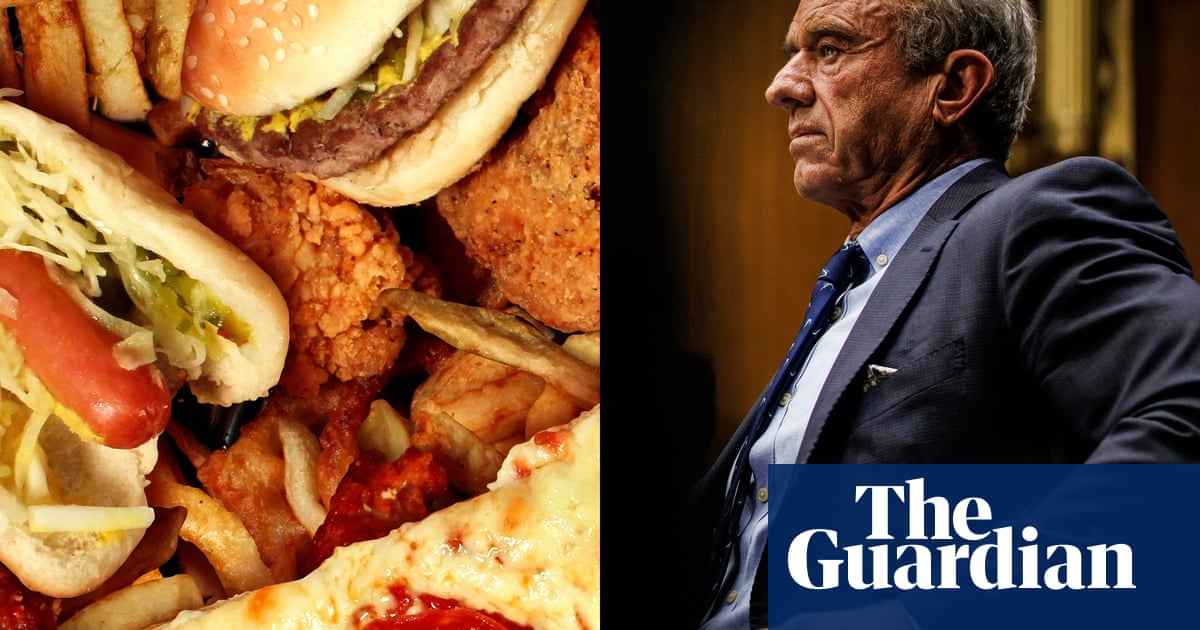
Trump’s Food Policy Faces Scrutiny Amid Mixed Messages
Despite promises to combat ultra-processed foods, the **Trump** administration’s actions are under fire. Experts claim policies undermine the stated goal of making America healthier, creating confusion and raising concerns about the true agenda.
Rise of “Make America Healthy Again”
Over the past year, **Robert F. Kennedy Jr.** has popularized the term “ultra-processed foods,” once confined to nutritionists. It is now central to the “Make America Healthy Again” movement, or “Maha,” which aims to tackle America’s health issues by scrutinizing food, pharmaceuticals, and environmental factors.
Following his endorsement of then President **Trump**, **Kennedy** was appointed to lead the Department of Health and Human Services. During confirmation hearings, he labeled ultra-processed foods as “poison”
and blamed them for the U.S.’s “chronic disease epidemic.”
Surprisingly, many food experts welcomed an ally within the **Trump** administration. Currently, ultra-processed foods comprise 73% of the U.S. food supply and are associated with conditions like diabetes and cancer.
Maha’s Report Highlights Concerns
The Maha commission’s initial report gained attention in May by addressing a “chronic disease crisis”
among children. Mirroring **Kennedy**’s rhetoric, the report highlighted the rise of ultra-processed foods in American diets, with nearly 70% of children’s calories coming from these foods.
The report also pointed out that “Government funding for nutrition research through the NIH is only 4-5% of its total budget and in some cases is subject to influence by food industry-aligned researchers.”
Proposed Regulatory Reforms
As head of the Maha commission, **Kennedy** has vowed to introduce reforms, including phasing out synthetic food dyes and ending a loophole for untested food additives. The FDA has started asking companies to voluntarily stop using certain food dyes, even banning two others altogether.
**Kennedy** has directed the FDA to reassess the “Generally Recognized as Safe” (Gras) loophole, letting food companies self-determine the safety of additives. According to **Dariush Mozaffarian**, director of the Food is Medicine Institute at Tufts University, “Ninety-nine per cent of compounds in food were added through this loophole.”
Additionally, several states, with **Kennedy**’s encouragement, are considering policies restricting the use of Supplemental Nutrition Assistance Program (Snap) funds on “junk food.” So far, the federal government has granted waivers for six states to enact such bans.
Undermining Health Goals
Despite these initiatives, some experts worry that the administration’s broader actions undermine Maha’s goals. The concerns intensified when **Trump** appointed nominees with ties to the food industry or those favoring deregulation to key positions.
Access to fresh produce is crucial in curbing ultra-processed food consumption, says **Jerold Mande**. Yet, the administration has cut programs that support this.
In March, the **Trump** administration’s agriculture department cut previously approved grants, including the Patrick Leahy Farm to School Grant and Local Food for Schools and Childcare program. This move negatively impacts both schools and farmers, according to **Marion Nestle**, professor emerita at New York University.
**Nestle** suggests the administration’s calls to end subsidies for junk food within Snap are misleading, masking an effort to cut the program overall. A new Republican budget bill, signed by **Trump**, proposes a 20% cut to the program.
A pattern has emerged where ambitious plans are announced, but the specifics are lacking or misaligned, says **Mande**. For instance, announcements regarding food dyes and additives haven’t been accompanied by specific plans or funding.
Staffing Cuts and Research Concerns
In April, the Department of Health and Human Services laid off 10,000 workers, about an eighth of its workforce. More than a third of those fired were at the Food and Drug Administration. The FDA’s staff of food safety experts has decreased 21% since 2013, potentially impacting its ability to inspect facilities (Food Safety News).
Following these layoffs, **Kevin Hall**, a leading nutrition researcher at the National Institutes of Health, chose to retire early. **Hall** cited incidents where NIH officials censored his work.
“Unfortunately, recent events have made me question whether NIH continues to be a place where I can freely conduct unbiased science.”
—Kevin Hall, Nutrition Researcher
Potential Actions
**Mozaffarian** suggests the administration could regulate ultra-processed foods, even with limited resources, by mandating public disclosure of safety data and stricter standards for foods labeled “generally recognized as safe.”
**Nestle**, however, is skeptical that incremental changes can effectively address the chemical content of the food supply.
