
Indonesia’s Finance Minister Questions High tobacco Excise Taxes, Cites Workforce Concerns
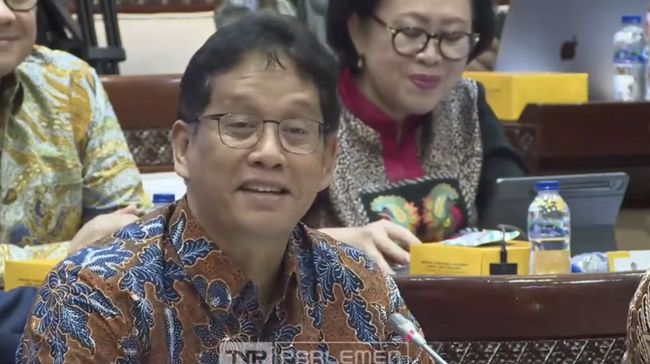
Jakarta, Indonesia – Indonesia’s Minister of Finance, Purbaya yudhi Sadewa, has expressed surprise and concern over the consistently high excise taxes levied on tobacco products, questioning whether the policy is ultimately beneficial for the nation’s economy. In a candid discussion with his staff, Minister Sadewa revealed his shock at the cumulative 57% increase in excise tariffs, and raised doubts about its impact on state revenue.
The Minister’s concerns center around a seeming contradiction: while the intention of the high taxes is to curb smoking, data suggests that increasing the tariffs decreases state income. “I asked, how about cigarette excise? Now what is the average? 57%, very high,” Sadewa stated, adding that lowering the tariffs, hypothetically, could increase revenue.”If you go down, the more income. Why is it raised if so?”
However, Sadewa acknowledged the government’s broader policy goal of reducing cigarette consumption. He understands the logic of shrinking the industry to discourage smoking, but voiced a critical oversight in the current approach.
The Human Cost of Policy
The core of Sadewa’s concern lies with the potential impact on the Indonesian workforce. He sharply questioned the lack of accompanying programs to mitigate job losses within the tobacco industry.
“Have we made a program to mitigate the workforce that becomes unemployed? What is the program from the government? Nothing,” he stated, criticizing the policy as potentially harmful to those who rely on the industry for their livelihoods. “If so, we will see later. as long as we can’t have a program that can absorb unemployed labor, the industry should not be killed, it only causes challenging people, but it must be limited to the smoking.”
Revenue Trends & Production Decline
Data from the Directorate General of Customs and Excise supports the Minister’s observations. while excise tax revenue initially rose with tariff increases – reaching Rp 218.3 trillion in 2022 with a 12% tax hike – production volume has steadily declined.
* 2022: Production: 323.9 billion stems,Revenue: Rp 218.3 trillion (12% excise increase)
* 2023: Production: 318.1 billion stems, Revenue: Rp 213.5 trillion (10% excise increase)
* 2024: Production: 317.4 billion cigarettes, Revenue: Rp 216.9 trillion (10% excise increase)
Despite the continued tariff increases in 2023 and 2024, production continued to fall, with revenue only marginally increasing in 2024. Notably, 2025 saw no increase in tariffs.
A Call for Balanced Policy
Minister Sadewa’s comments signal a potential shift in the conversation surrounding tobacco excise policy in Indonesia. While acknowledging the importance of public health initiatives, he emphasizes the need for a more holistic approach that considers the economic consequences and provides support for affected workers. The Minister’s remarks suggest a future review of the current policy, potentially seeking a balance between curbing consumption and protecting livelihoods.
Keywords: Indonesia, Tobacco Excise, Cigarette tax, Purbaya Yudhi Sadewa, Finance Minister, Economy, Workforce, Revenue, Consumption, Public Health, Policy, Directorate General of Customs and Excise.
