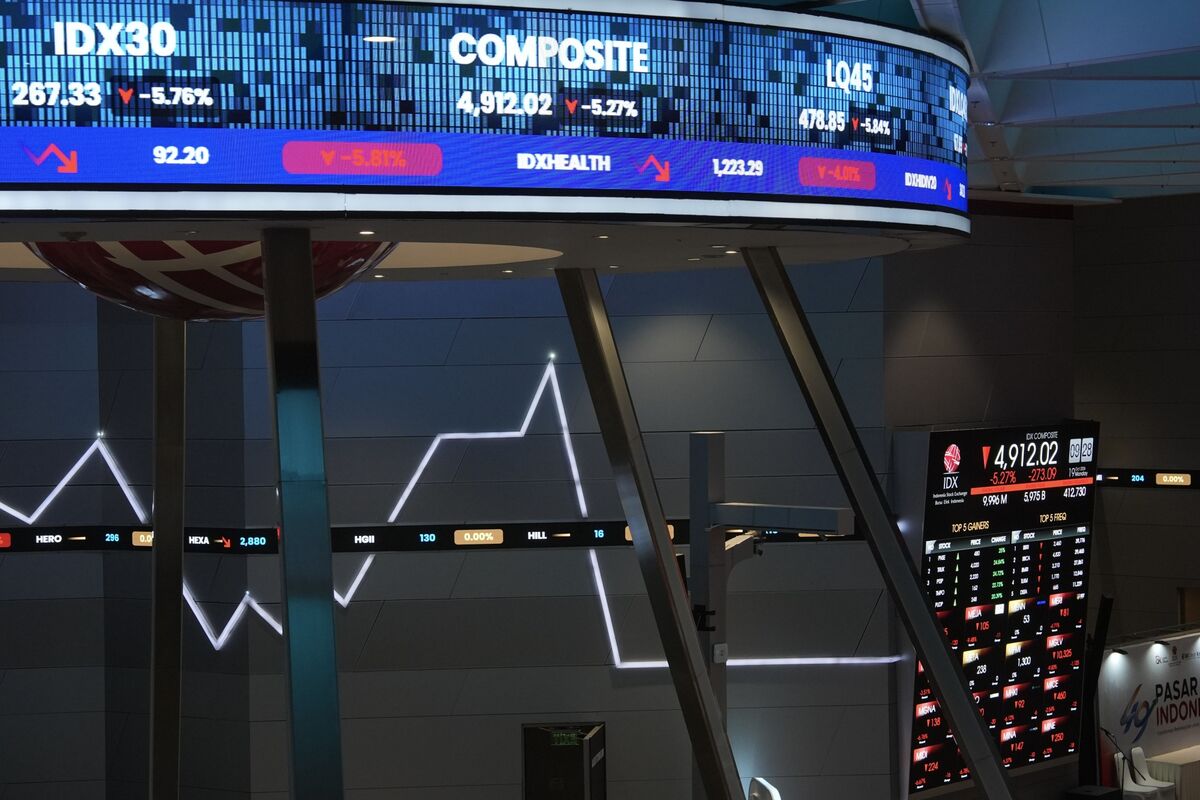
Indonesian markets plunge as MSCI warns of potential downgrade
Indonesia faces a potential multi-billion dollar capital flight and a rare relegation to standalone market status as its benchmark stock index deepens a historic selloff, bloomberg.com reported. The Jakarta Composite Index fell 3.6% on Monday, extending a 12% plunge from Friday after MSCI Inc. warned the nation could face a two-step downgrade from emerging market status.
Market Selloff Deepens Across Equities and Bonds
The market turmoil pushed Indonesian stocks to their lowest level since early October 2020. The benchmark index plummeted 5.1% on Monday, following a bruising rout that saw equities fall over 11% in a single session—the steepest one-day drop since the 1998 Asian financial crisis, as The New York Times noted.
Losses quickly spread beyond equities. The 10-year Indonesian government bond yield jumped seven basis points to reach a four-month high, while the rupiah weakened 0.2% against the dollar. The MSCI Indonesia Index has fallen 47% this year, with foreign investors withdrawing a net $5.1 billion from the market, per bank data.
The Threat of MSCI Reclassification
MSCI proposed reclassifying Indonesia directly from an emerging market to a standalone market, a drastic step that would remove the country from major global equity benchmarks. A cut of this magnitude is exceedingly rare. Argentina was dropped in 2021 for imposing capital controls, and Russia in 2022 after Western sanctions, placing Indonesia in a small group of standalone markets that includes Lebanon and Zimbabwe.
Goldman Sachs warned in a note that a full removal from emerging-market indexes could trigger approximately $5.6 billion in passive fund outflows. An additional $2.7 billion could exit if FTSE Russell takes similar action. Active funds benchmarked to MSCI and FTSE indexes hold more than $8 billion in Indonesian equities, creating discretionary risks for institutional portfolios.
“The proposal goes well beyond what we had considered our worst-case scenario,” said Rully Arya Wisnubroto, head of research at Mirae Asset Sekuritas in Jakarta, as cited by NST Online.

MSCI is expected to deliver a final decision by June. The potential reclassification depends on whether Indonesian authorities can demonstrate meaningful improvements in market governance, transparency, and securities trading practices.
Youth Unemployment Rises as Tech Sector Booms Fade
The financial market stress coincides with mounting pressures in the domestic economy. Novri Putra, a 28-year-old IT graduate in Jakarta, entered college in 2018 when the tech sector was booming, but now works as a motorcycle taxi driver earning about $220 a month, The New York Times reported. Youth unemployment in the country hovers around 17%, ranking among the highest rates in Asia.
Ferry Latuhihin, former chief economist at Bank International Indonesia, described the situation as a ticking time bomb. Investors have also grown unsettled by recent policy shifts, including the departure of former Finance Minister Sri Mulyani in September 2025 and the sudden resignation of the central bank governor in July.
Despite the mounting pressures, Dradjad Hari Wibowo, deputy coordinating minister for economic affairs, urged perspective. “It’s true that MSCI has a strong reputation, and it’s also true that we need to pay attention to what they say,” he said, according to NST Online. “But there’s one thing I want to emphasise — they aren’t always right.”