
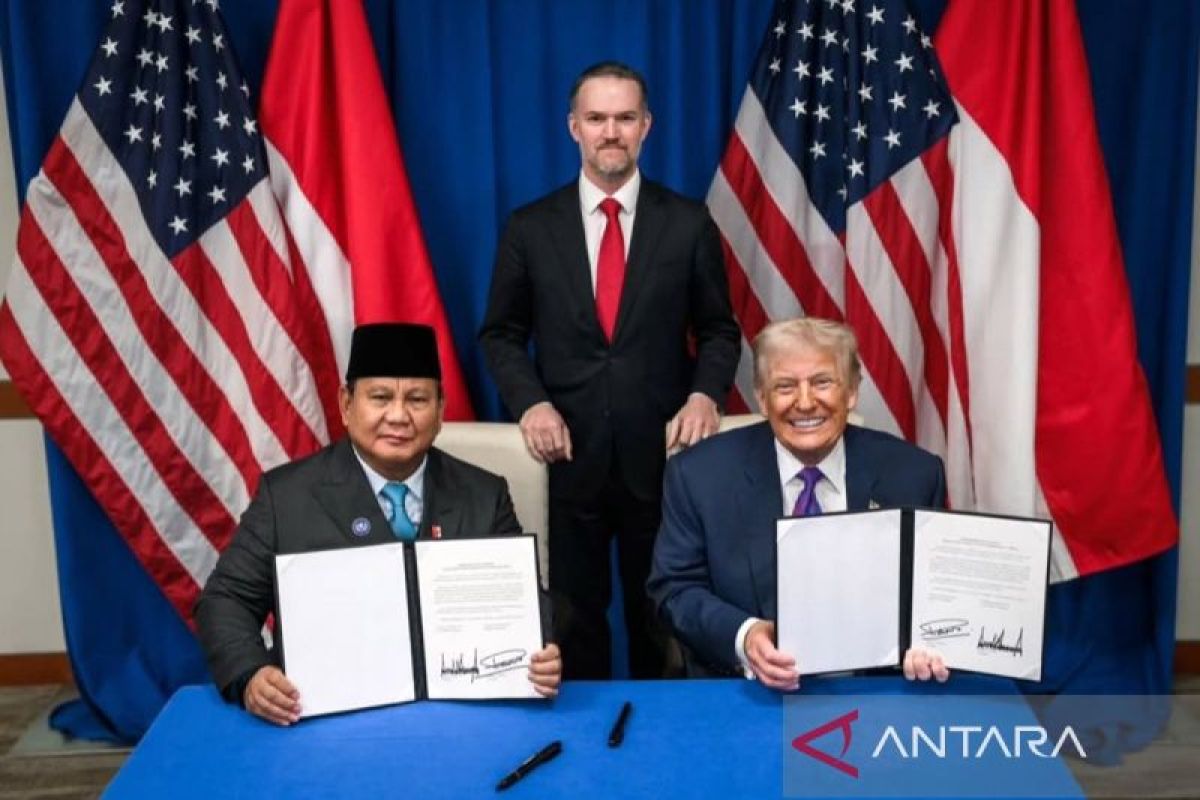
Indonesia will facilitate, but not directly finance, $4.5 billion in agricultural imports from the United States, a government spokesperson confirmed Sunday. The commitment, stemming from the Agreement on Reciprocal Trade (ART) between the two nations, will be driven by private sector transactions, according to Haryo Limanseto, spokesperson for the Coordinating Ministry for Economic Affairs.
Limanseto emphasized that the Indonesian government’s role is limited to regulation and quality control, dismissing earlier speculation that state funds would be used to secure the imports. “The government will only serve as regulator and supervisor of quality standards, while transaction decisions and financing will rest entirely with private parties,” he stated.
The agreement builds on memorandums of understanding signed by companies from both countries on July 7, 2025 and again during the Indonesia–US Business Summit in Washington, D.C., on February 19, 2026. Both the Indonesian Chamber of Commerce and Industry (Kadin) and the Indonesian Employers Association (Apindo) have voiced their support for the trade arrangement.
The $4.5 billion in imports, equivalent to approximately Rp 75.39 trillion based on current exchange rates, will include commodities such as rice, wheat, soybeans, corn, and fresh fruit, according to officials. Despite President Prabowo Subianto’s stated commitment to national food self-sufficiency, Indonesia has agreed to import at least 1,000 tons of US rice under the agreement. Limanseto argued that the relatively small volume of rice imports – approximately 0.00003% of Indonesia’s 2025 total rice production of 34.69 million tons – will not undermine domestic production.
The deal is intended to ensure a stable supply of raw materials for Indonesian industries, particularly those involved in food processing and exports. Limanseto highlighted the importance of wheat as a key input for Indonesia’s export-oriented food industry, suggesting that diversified sourcing will enhance competitiveness. He similarly noted that US agricultural products currently account for only 9.2 percent of Indonesia’s total agricultural imports.
The reciprocal trade agreement also grants zero-tariff access to the US market for 172 Indonesian food products, including tropical fruits, coffee, tea, spices, crude palm oil, and cocoa. In 2025, the United States was Indonesia’s second-largest export destination, receiving $31 billion in Indonesian shipments, representing roughly 11 percent of Indonesia’s total exports of $282.9 billion.
Limanseto stated that maintaining a balanced trade relationship with the US is crucial for protecting the competitiveness of Indonesian products and securing continued access to the American market. The government views the agreement as a means to strengthen the domestic industrial value chain and expand market access for Indonesian businesses.
