Indonesia Urges UN Action Following Peacekeeper Deaths in Lebanon
Three Indonesian UN peacekeepers were killed in southern Lebanon during late March 2026 amid escalating hostilities between Israel and Hezbollah. A United Nations probe identifies Israeli tank fire and a Hezbollah improvised explosive device (IED) as the causes, prompting urgent international calls for criminal accountability and peacekeeper protection.
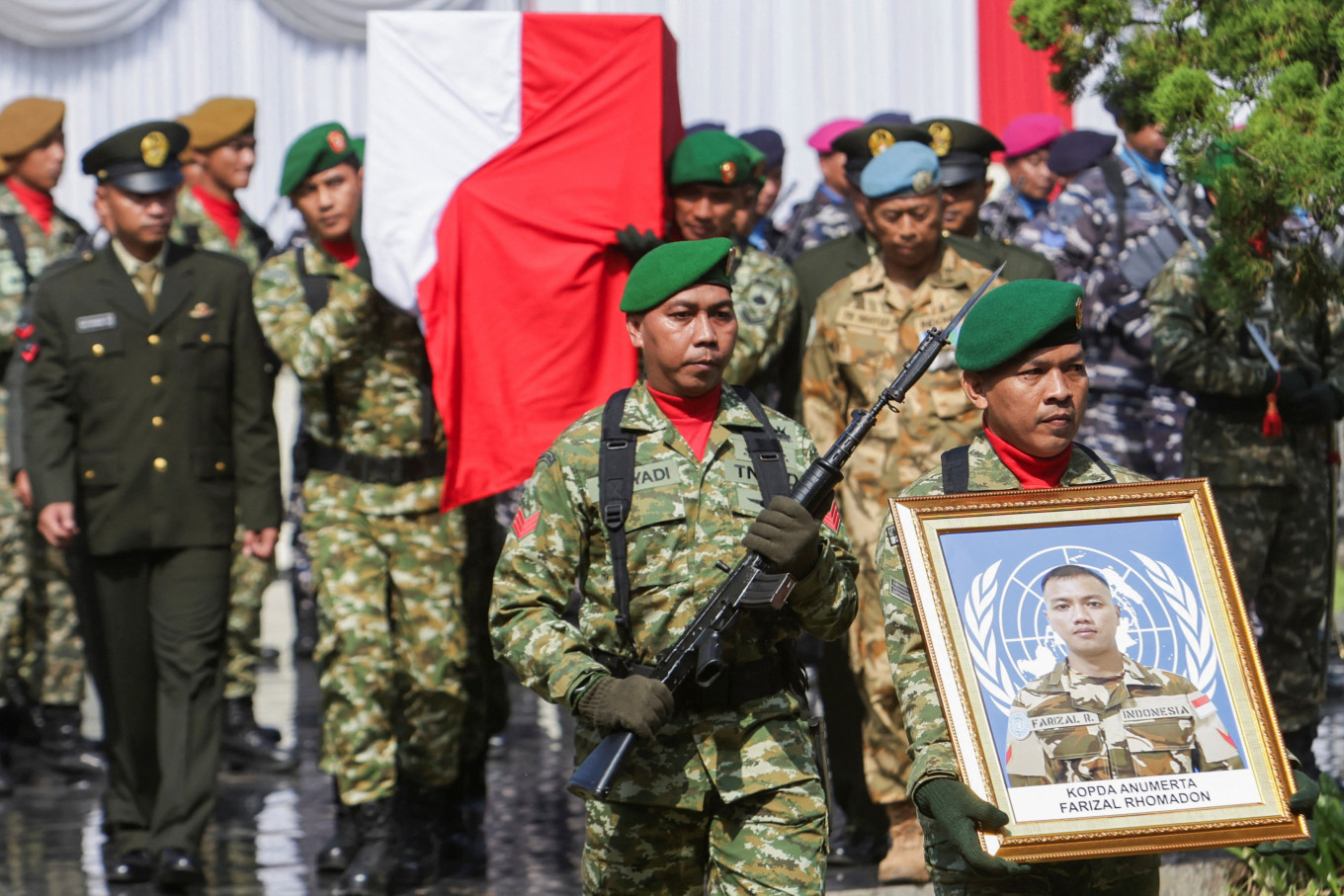
The silence at the Giripeni Heroes’ Cemetery in Kulon Progo, Yogyakarta, was heavy on April 5, 2026. It was here that Farizal Rhomadhon, a 28-year-old soldier, was laid to rest. He was one of three Indonesian compatriots who vanished from the world in a span of less than 24 hours, serving under the blue helmet of the United Nations Interim Force in Lebanon (UNIFIL). His death was not an isolated tragedy but a symptom of a region sliding deeper into a systemic collapse of international norms.
When peacekeepers are targeted, the very concept of “neutrality” becomes a liability.
The 24-Hour Window of Violence
The devastation unfolded in two distinct, brutal phases. On March 29, 2026, a projectile exploded near a UNIFIL position in the southern Lebanese village of Adchit Al Qusayr. The blast killed Farizal Rhomadhon and left another peacekeeper seriously injured. At the time, the origin of the projectile was unknown, leaving the mission in a state of precarious uncertainty.
The violence did not pause for breath. Just hours later, on March 30, a second incident occurred near the Bani Haiyyan municipality. An explosion destroyed a UNIFIL vehicle, killing two more Indonesian peacekeepers and wounding two others, one of whom suffered severe injuries. The rapid succession of these attacks highlighted a terrifying reality: the “blue zone” was no longer a sanctuary.
This volatility is the direct result of a month-long war between Israel and Hezbollah, a conflict that has been further complicated by a broader US-Israel war on Iran. In such an environment, the distinction between combatant and peacekeeper becomes blurred in the eyes of those pulling the triggers.
The UN Probe: Unmasking the Perpetrators
For days, the world waited for clarity. On April 7, a United Nations probe finally provided the answers. The findings were stark: the Indonesian soldiers were victims of two different warring parties. One incident was attributed to Israeli tank fire, while the other was caused by a Hezbollah improvised explosive device (IED).
This duality of blame complicates the diplomatic path forward. We see no longer a matter of a single rogue actor but a systemic failure by both primary belligerents to respect the sanctity of UN personnel. Stephane Dujarric, spokesman for the UN secretary-general, has been explicit about the necessity of legal repercussions.
“We have requested with the relevant parties that the cases be investigated and prosecuted by national authorities to bring the perpetrators to justice and ensure criminal accountability for crimes against peacekeepers.”
The legal framework governing these deaths centers on UN Security Council Resolution 1701, which was designed to end hostilities between Israeli forces and Hezbollah nearly two decades ago. The violation of this resolution, coupled with attacks on UN personnel, may constitute war crimes under international humanitarian law.
A Vacuum of Accountability
The tragedy creates a profound problem: the gap between the condemnation of an act and the actual prosecution of the perpetrator. When national authorities are the ones accused—whether through their official military wings or the proxies they support—the path to justice is often blocked by political shielding.
For the families in Indonesia, the return of the bodies on April 4 provided a grim closure, but not a legal one. Navigating the complexities of international war crimes requires more than just diplomatic statements; it requires aggressive legal intervention. Families and governments facing such losses often find themselves needing international law firms specializing in human rights violations to ensure that “accountability” is more than just a buzzword in a press release.
the psychological toll on the surviving peacekeepers and the families left behind in Yogyakarta and beyond cannot be understated. The trauma of losing soldiers to “unknown projectiles” followed by the realization of targeted fire creates a specific kind of grief. Many are now turning to specialized grief counseling to process the loss of loved ones killed in a conflict where the rules of engagement were ignored.
The Strategic Cost of Peacekeeper Casualties
| Incident Date | Location | Cause of Death | Attributed Actor |
|---|---|---|---|
| March 29, 2026 | Adchit Al Qusayr | Projectile Explosion | Israeli Tank Fire |
| March 30, 2026 | Bani Haiyyan | Vehicle Explosion (IED) | Hezbollah |
This data reveals a pincer movement of violence. UNIFIL is not merely caught in the crossfire; it is being hit from both sides. This renders the mission’s primary objective—maintaining a buffer and supporting the implementation of Resolution 1701—nearly impossible.
The Geopolitical Ripple Effect
Indonesia’s position as a leader in the call for action is significant. As a major contributor to UN peacekeeping, Indonesia’s willingness to push for prosecution signals a shift in how troop-contributing countries view the risks of these missions. They are no longer willing to accept “collateral damage” as an inevitability of war.
The broader implication is that if the UN cannot protect its own, the incentive for nations to contribute personnel will vanish. This would leave a power vacuum in southern Lebanon that could accelerate the regional war. To manage these risks, governments and NGOs are increasingly relying on geopolitical risk analysts to determine the viability of peacekeeping mandates in active conflict zones.
Secretary-General António Guterres has been clear: “No one should ever lose their life serving the cause of peace.” Yet, the reality on the ground in Lebanon suggests that the blue helmet, once a shield, has become a target.
The deaths of Farizal Rhomadhon and his colleagues are not just statistics in a UN report; they are a warning. When the international community allows the killing of peacekeepers to go unpunished, it signals to every belligerent that international law is optional. The real test of the UN’s authority will not be the probe itself, but whether those who ordered the tank fire and planted the IED ever face a courtroom. Until then, the road to peace in Lebanon remains littered with the casualties of a broken system, and the world must look toward verified professionals and legal experts to bridge the gap between tragedy and justice.