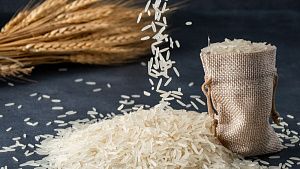
Indonesia Emerges as Leading Rice Producer in ASEAN
Indonesia’s rice production surge positions it as ASEAN’s leading rice producer, but political tensions over agricultural policy and military involvement in farming threaten to undermine its ambitions.
Indonesia’s rice output reached a significant increase in 2023, surpassing Thailand and Vietnam to become the leading rice producer in the Association of Southeast Asian Nations (ASEAN), according to data from the ASEAN Secretariat. The milestone, confirmed by the Indonesian News Agency (ANTARA), marks a significant increase from 2022 and aligns with Prabowo’s vision of Indonesia as a global food powerhouse. However, his administration’s push to expand rice production through military and police involvement in farming has drawn criticism from civil society groups and raised questions about the sustainability of the approach.
Why Indonesia’s rice dominance matters

Indonesia’s rise to ASEAN’s top rice producer reflects a decade-long strategy to reduce reliance on imports, which peaked under former President Joko Widodo’s government. The shift was driven by government-subsidized irrigation projects in key producing regions like East Java and Central Sulawesi, where yields have increased significantly since 2020, according to the Voice of Indonesia (VOI). Yet, the country’s ambition to become a net exporter—targeting greater rice exports—faces hurdles, including logistical bottlenecks in ports and competition from India and Pakistan, which have expanded production with government-backed incentives.
The Batam News Asia reports that Indonesia’s rice sector is now valued at billions of dollars annually, with productivity gains attributed to mechanized farming and high-yield seed varieties. However, observers warn that over-reliance on government-led initiatives risks stifling private sector innovation. “Productivity must be sustained through market-driven incentives, not just state intervention,” said a senior economist at the Indonesian Center for Agricultural Socio-Economic and Policy Studies (ICAS), who requested anonymity due to ongoing policy debates.
Prabowo’s agricultural gamble: military and police in the fields
Prabowo’s election victory in February 2024 has accelerated plans to involve the military (TNI) and police (Polri) in rice and fisheries production, a strategy he claims will boost output significantly. The move, announced during a press conference in March, has drawn sharp criticism from civil society groups, who argue it blurs the lines between defense and agriculture and risks corruption in land distribution.
Under Prabowo’s “Food Security Cabinet,” the TNI and Polri are being deployed to manage paddy fields in conflict-prone regions, including Papua and North Sumatra, where land disputes have stalled agricultural development. The Tempo reports that thousands of military personnel have already been trained in basic farming techniques, with plans to expand the program. However, the Batam News Asia highlights concerns that military-run farms may lack transparency in budget allocation, citing past cases where defense-linked projects were audited for mismanagement.
Prabowo’s supporters, including farmers’ unions in East Java, have praised the initiative, with one leader telling ANTARA that “the military’s discipline will ensure timely harvests.” But critics, including the Indonesian Farmers’ Front (FPI), argue that private farmers and cooperatives have been more effective in increasing yields. “We’ve seen higher productivity from smallholder groups with proper training, not through military deployment,” said FPI spokesperson Budi Santoso, who added that land redistribution under military oversight could lead to forced evictions.
What happens next: export targets, political risks, and global competition
Indonesia’s push to become a major rice exporter faces immediate challenges. The ASEAN Secretariat projects that Thailand and Vietnam will maintain their market share in Europe and the Middle East, where Indonesia’s non-tariff barriers—including phytosanitary regulations—have limited access. Meanwhile, India’s rice exports surged in 2023, capturing significant sales.

Prabowo’s administration has scheduled a high-level meeting with ASEAN agriculture ministers to discuss harmonizing export standards. However, political instability in neighboring Myanmar—a key rice transit hub—could disrupt supply chains if conflict escalates further. The Batam News Asia reports that Indonesia is exploring alternative routes through Singapore and Malaysia, but logistical costs remain a concern.
For now, Indonesia’s rice sector remains highly dependent on government support, with subsidies playing a major role in production costs, according to the World Bank’s Indonesia Economic Update (2023). Whether Prabowo’s military-led approach can sustain productivity gains without alienating private investors—or whether Indonesia can compete with India and Thailand in global markets—remains an open question.
The next critical test will come when the government is expected to unveil its revised agricultural budget. If military involvement in farming expands, transparency in land use and funding will be under scrutiny as never before.