
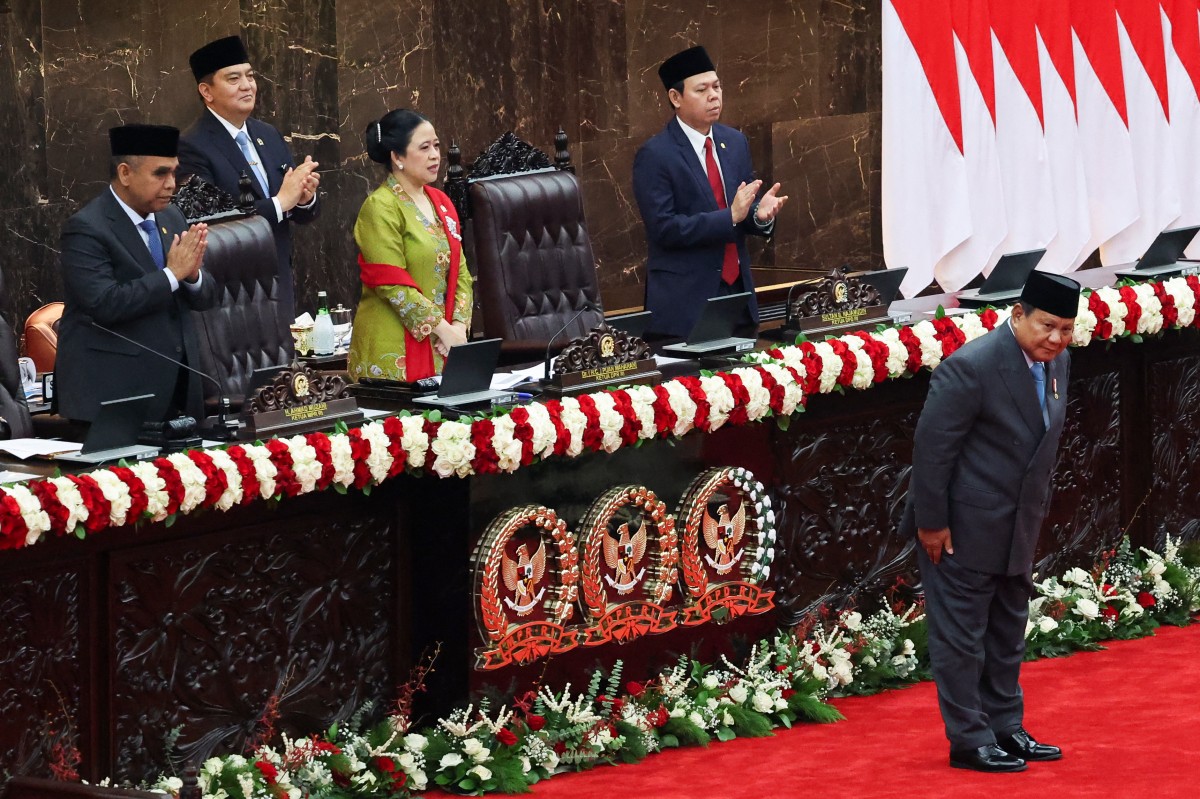
, the government is planning to slash regional transfers (TKD) by nearly 25 percent, possibly straining public services in remote regions and widening inequality.
jakarta – President Prabowo Subianto’s focus on funding costly flagship programs, such as free nutritious meals and the Red and White Cooperatives, from next year’s state budget could leave regions bearing the brunt, as the government plans to slash regional transfers (TKD) by nearly 25 percent. Experts have warned that the move could strain public services in remote regions and widen inequality.
Deni Friawan, an economic researcher at the Center for Strategic and International Studies (CSIS), argued that shrinking regional budgets would have serious consequences, as many regional governments still rely on transfers from the central government for around 70 to 80 percent of thier funds.
A smaller TKD means less money for local governments, creating gaps in funding for civil servant salaries, regular programs and local progress, according to Deni.He noted that the pressure has pushed some regional governments, such as Pati regency in Central java, to hike land and building taxes (PBB) to cover shortfalls, resulting in widespread protests.”Since major tax bases remain controlled by Jakarta, regional finances were never truly decentralized,” he saeid at a press briefing on Monday.
According to him, the draft of next year’s budget marks another shift toward recentralization, with the central government directing most spending. Deni warned that this could force local governments to either impose new levies or cut distinctive regional development programs, both of which risk weakening local growth.
While the TKD is set to plunge by 24.8 percent, central government spending is projected to rise by 17.8 percent. As a result, the share of the state budget controlled by Jakarta is expected to climb from 72 percent in 2021 to 83 percent in 2026, leaving most programs to be designed and implemented by the central government.
Simultaneously occurring, regional administrations will have to rely on the Special Allocation Fund (DAK) and the General Allocation Fund (DAU), both of which are already tightly earmarked at Rp 155.1 trillion (US$95.6 million) and Rp 373.8 trillion, respectively.
The government is also pushing for a 10 percent rise in state revenue to control the deficit and fund priority programs, with tax collection expected to surge by 13 percent, more than double the usual 5 to 6 percent growth, Deni said. the bulk is expected to come from a 16 percent jump in non-oil and gas income tax, driven by stricter enforcement under the Coretax system, suggesting intensified pressure on existing taxpayers.
Over the past five years, tax’s share of state revenue has climbed from 77 to 86 percent, while non-tax income, particularly from natural resources, has dropped from 23 percent to 14 percent amid falling commodity prices. “This stands in stark contrast to [President Prabowo’s] pledge that natural resources must benefit the people,” deni noted.
Josua Pardede, chief economist at Bank Permata, also warned that the steep drop in regional budgets threatened to widen inequality, with underdeveloped regions like Papua, Maluku and East Nusa tenggara bearing the brunt of funding cuts, while fiscally self-reliant areas such as Jakarta and East Java remain insulated. Though officials claim the 2026 budget still honors special autonomy for Aceh,Papua and Yogyakarta,the reduced transfers will hit impoverished regions hardest,according to Josua. Long-term risks may include rising social tensions in marginalized areas and widening development gaps,which contradict the state budget’s equality pledges.
“The central government is rolling out massive national programs as compensation… but whether these centralized initiatives can match the localized impact of regional budgets remains doubtful,” he told The Jakarta Post on Monday.
Bhima yudhistira, executive director of the Center for Economic and Law Studies (CELIOS), warned that the TKD cut could trigger instability. A CELIOS report found that 58 districts and cities are in a “very low” fiscal capacity category, while 152 are in a ”low” capacity category, meaning 41 percent of Indonesian administrations are financially vulnerable.He suggested that cash-strapped regional governments may resort to hiking taxes to fill budget gaps.
