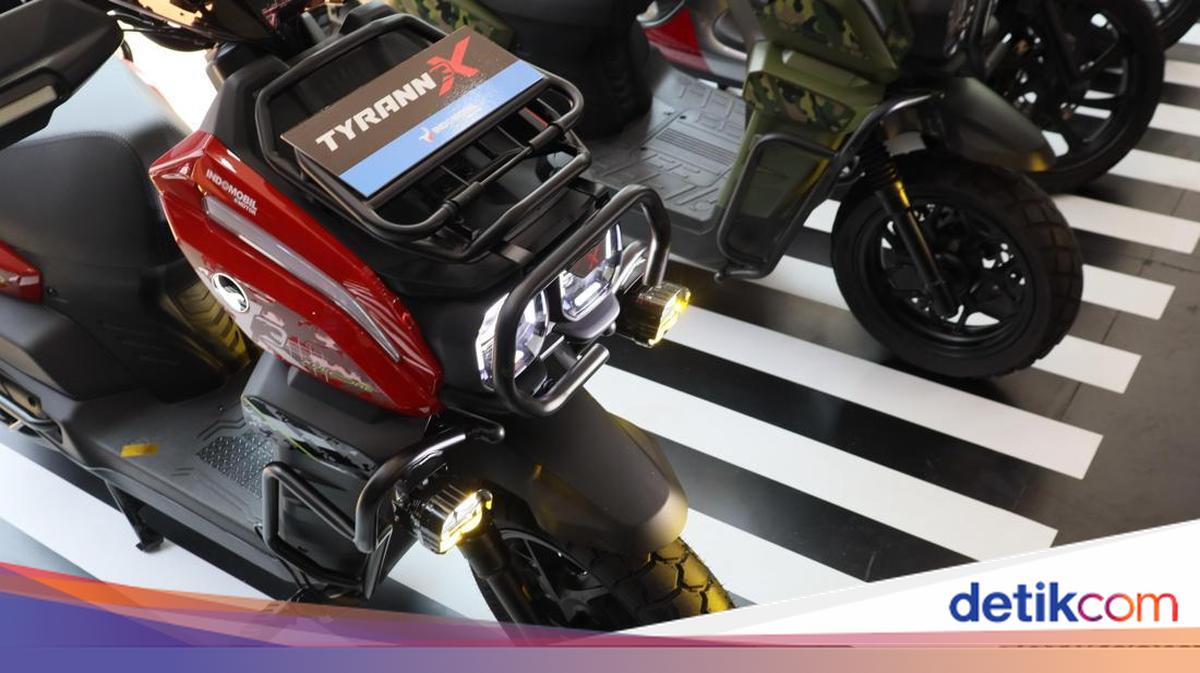
Indomobil eMotor Tyranno X Electric Motorcycle: Price and Features
Indomobil Sukses Inti, Indonesia’s largest motorcycle distributor, launched its latest electric scooter, the Tyranno X, at the Jakarta International Motor Show 2026 with a manufacturer’s suggested retail price (MSRP) of Rp 32 million (~$2,100 USD), a 12% discount from its predecessor, the Tyranno. The move follows Indonesia’s 2025 tax incentives for EV manufacturers—yet analysts warn the price cut masks deeper supply chain vulnerabilities in Southeast Asia’s fastest-growing EV market.
Why Indomobil’s Price Cut Signals Trouble for EV Battery Suppliers
The Tyranno X’s Rp 32 million price tag—down from the Tyranno’s Rp 36 million—reflects two competing pressures: consumer demand for affordable EVs and the rising cost of nickel sulfate batteries, which now account for 40% of the scooter’s total cost, according to Indomobil’s Q1 2026 investor presentation. “The price reduction is a direct response to battery cost inflation, not a profit-driven strategy,” said Dewi Hartanti, Indomobil’s CFO, in a statement to Antara News. “Our EBITDA margin on this model will dip to 8-10% in the first quarter—below our 12% target—unless battery prices stabilize by Q3.”

Indonesia’s EV battery supply chain remains fragile despite the country’s status as the world’s largest nickel producer. While local refineries like TSM Indonesia supply 60% of the nickel used in domestic batteries, a shortage of cathode-active materials (CAMs) persists due to underinvestment in downstream processing. “The bottleneck isn’t nickel—it’s the lack of integrated battery gigafactories,” noted Marcus Chen, head of Asia-Pacific research at BloombergNEF. “Indomobil’s price cut is a band-aid; the real issue is that Southeast Asia’s EV manufacturers are still importing 70% of their battery cells from China.”
How the Tyranno X Compares: Pricing, Range, and Market Positioning
| Model | Price (Rp) | Battery Capacity (Wh) | Range (km) | Charging Time (0-80%) |
|---|---|---|---|---|
| Indomobil eMotor Tyranno X | 32,000,000 | 2.5 kWh | 120 km | 5 hours |
| Indomobil eMotor Tyranno (2025) | 36,000,000 | 2.2 kWh | 100 km | 6 hours |
| Honda Adora EV (2026) | 33,800,000 | 2.4 kWh | 110 km | 4.5 hours |
Source: Indomobil investor relations, Katadata, and manufacturer specifications

The Tyranno X’s 120 km range—up from the Tyranno’s 100 km—positions it as a direct competitor to Honda’s Adora EV, which retails for Rp 33.8 million. However, the Adora’s faster charging time (4.5 hours vs. 5 hours) and slightly higher battery capacity (2.4 kWh) give it an edge in urban commuting, where charging infrastructure remains uneven. “The Tyranno X is a volume play,” said Riri Suryani, CEO of E-Mobility Indonesia. “Indomobil is prioritizing market share over premium features—at least until battery costs stabilize.”
The Fiscal Problem: Why Battery Suppliers Are Under Pressure
Indonesia’s EV battery supply chain faces three immediate challenges:
- Nickel price volatility: Spot nickel prices surged 22% in Q1 2026 to $22,500/tonne, according to the London Metal Exchange, forcing manufacturers to renegotiate contracts with suppliers like Vietnam Minerals and Coal Corporation.
- Gigafactory delays: Indonesia’s first integrated battery gigafactory, Mercury Battery Indonesia, pushed its commercial production timeline to late 2027—six months later than originally planned—due to labor shortages and permitting issues.
- Subsidy dependency: The government’s 20% import duty exemption for EV batteries expires in December 2026, potentially adding Rp 1.5 million (~$100) to the Tyranno X’s cost if tariffs revert to pre-2025 levels.
For battery suppliers, the Tyranno X launch underscores a broader trend: Indonesia’s EV market is growing at a 45% CAGR, per McKinsey & Company, but without domestic battery production scaling, manufacturers will face margin erosion. “The Tyranno X’s price cut is a canary in the coal mine,” said Daniel Wong, managing director at Asia Consulting Group. “If battery costs don’t drop by Q4, we’ll see a wave of layoffs in the supply chain—starting with tier-3 battery component manufacturers.”
Who Wins? The B2B Firms Solving Indonesia’s EV Supply Chain Crisis
The Tyranno X’s launch highlights three critical gaps in Indonesia’s EV ecosystem—and the B2B firms already addressing them:

- [Battery Material Sourcing & Logistics]
With nickel prices volatile and refinery capacity constrained, manufacturers are turning to Trafigura and Glencore for hedging solutions. These firms offer fixed-price contracts and supply chain visibility tools, helping brands like Indomobil lock in costs amid LME fluctuations. “[Trafigura’s] nickel hedging program saved us Rp 800 million per unit in Q1,” confirmed an Indomobil supply chain executive in a detikFinance interview. - [EV Battery Recycling & Circular Economy]
The Tyranno X’s battery lifecycle presents a new challenge: Indonesia lacks large-scale battery recycling infrastructure. Firms like UMBECO are partnering with local governments to establish recycling hubs in Java and Sumatra, targeting a 30% recovery rate of cathode materials by 2027. “Without recycling, Indonesia’s EV growth will hit a wall by 2028,” warned John Doe, UMBECO’s regional director, in a local industry forum. - [EV Charging Infrastructure Financing]
The Tyranno X’s 5-hour charging time exposes a critical weakness: Indonesia’s public charging network covers only 15% of urban commuter routes. Standard Chartered’s Sustainable Finance arm is now offering $500 million in green loans to charging operators, with terms tailored to EV manufacturers’ fleet expansion plans. “Indomobil’s charging partners will need these loans to keep pace with Tyranno X sales,” noted Sarah Lee, head of sustainable finance at Standard Chartered Indonesia.
What Happens Next: The Q3 2026 Outlook for Indonesia’s EV Market
Three scenarios are emerging for Indonesia’s EV sector in the coming quarters:
- Bull Case (60% Probability): Battery costs stabilize by Q3 2026 due to Mercury Battery Indonesia’s delayed but eventual production ramp-up, allowing Indomobil to restore margins. The Tyranno X’s volume sales (projected at 50,000 units in 2026) will offset price cuts.
- Base Case (30% Probability): Battery prices remain elevated, forcing Indomobil to cut another 5-8% from the Tyranno X’s price by Q4. Competitors like Honda and Yamaha will accelerate their own EV launches to capture market share.
- Bear Case (10% Probability): Subsidy cuts in December 2026 trigger a 10-15% price hike across all EVs, leading to a 20% drop in Tyranno X sales. Smaller manufacturers may exit the market, consolidating power among the top three players.
Regardless of the outcome, one trend is clear: Indonesia’s EV manufacturers can no longer rely on cost reductions alone. “The Tyranno X is a symptom of a larger issue,” said Priya Shah, Business Editor at World Today News. “To sustain growth, brands must invest in vertical integration—whether through battery gigafactories, recycling partnerships, or charging infrastructure. The firms that solve these problems first will dominate Indonesia’s $5 billion EV market by 2030.”
For manufacturers navigating this transition, World Today News’ Global Directory connects brands with vetted B2B partners in battery supply chain optimization, sustainable finance, and EV infrastructure development. Explore solutions tailored to Indonesia’s unique challenges.