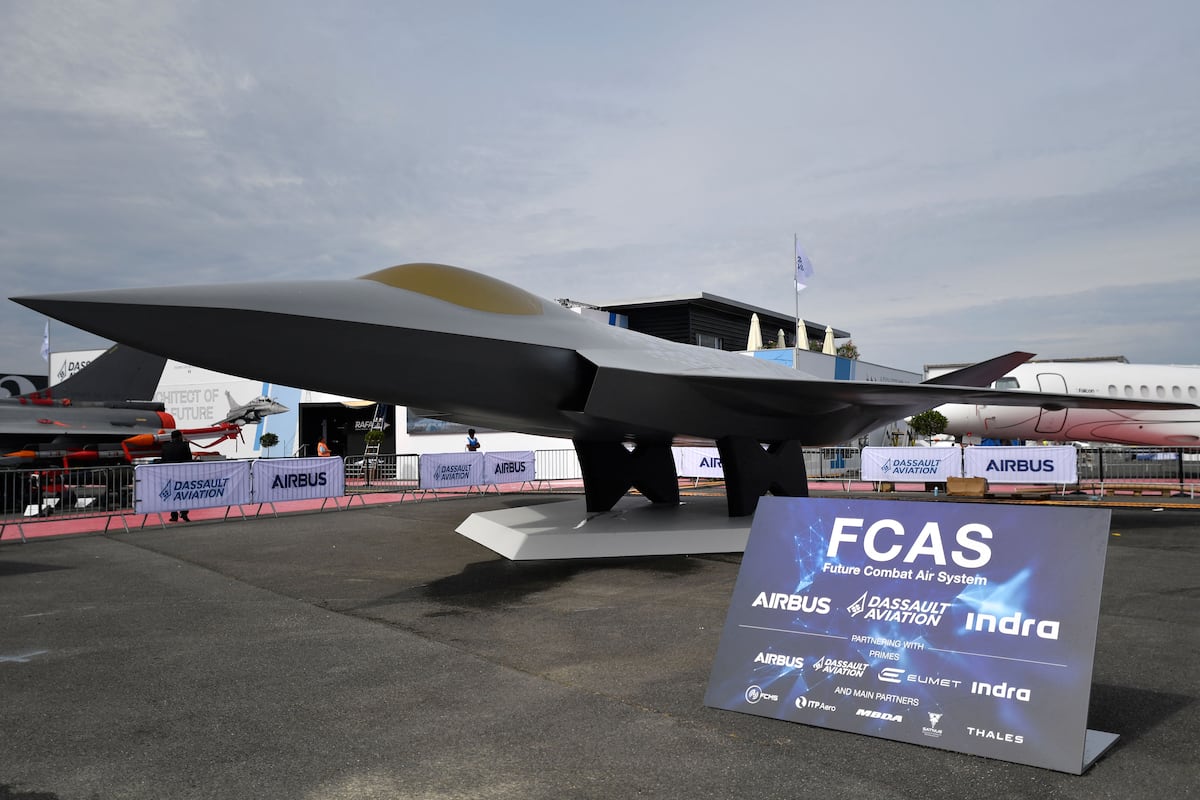
India Seeks Tech Partnership with France for 6th-Generation Fighter Jet
India has formally initiated efforts to join the French-led Future Combat Air System (FCAS) sixth-generation fighter aircraft program, seeking industrial, design, and technology participation rather than a traditional military procurement. According to a parliamentary report presented on August 7, 2026, by India’s Standing Committee on Defence, New Delhi aims to secure advanced engineering expertise in very-low-observability systems, artificial intelligence, and propulsion to bolster its domestic aerospace sector.
Strategic Realignment After the Franco-German Split
The pursuit of the FCAS framework follows a major shift in European defense manufacturing. On June 8, France and Germany formally acknowledged that their joint combat-aircraft project could no longer continue due to unresolved disputes between Dassault Aviation and Airbus regarding leadership, industrial work-sharing, and technical requirements. While France requires a carrier-capable successor to the Rafale, Germany maintains distinct strategic parameters.
This fracture dismantled the original tripartite structure linking France, Germany, and Spain. Consequently, Paris opened its aperture to new international partners capable of underwriting the immense development costs while offering a vast domestic acquisition market. New Delhi meets both criteria, positioning itself to negotiate a substantive role in the design and production pipeline.
According to the Ministry of Defence disclosure cited by the Parliamentary Standing Committee on Defence, India is exploring international sixth-generation pathways in parallel. While engaging France on FCAS, the Indian Air Force has also evaluated the British-Italian-Japanese Global Combat Air Programme. This dual-track exploration reflects a push to modernize air power assets.
Technology Transfer and the Quest for Indigenous Propulsion
For New Delhi, the primary incentive for joining FCAS lies in technology acquisition rather than finished airframes. India is targeting critical sub-systems including advanced sensors, data fusion, manned-unmanned teaming, communications architectures, and next-generation jet propulsion.

Propulsion technology remains a persistent bottleneck for India’s domestic defense ambitions. Decades of work on the Kaveri engine—originally intended for the Tejas fighter—failed to meet initial performance requirements. Addressing this vulnerability is a central pillar of national strategy. Defence Minister Rajnath Singh stated in February that India must achieve autonomous combat-aircraft engine production within the next several years. Integrating with European aerospace engineers through FCAS could provide the technical scaffolding necessary to bridge this gap.
This technology-sharing model mirrors broader bilateral defense agreements between Paris and New Delhi. In February, French President Emmanuel Macron and Indian Prime Minister Narendra Modi agreed to deepen cooperation on advanced military systems, establishing a joint coordination group. That diplomatic alignment was underpinned by a technical framework established between France’s defence procurement agency, the DGA, and India’s Defence Research and Development Organisation.
Parallel Domestic Programs and Fleet Modernization
India’s outward exploration of sixth-generation technology runs concurrently with domestic development projects. The indigenous Advanced Medium Combat Aircraft (AMCA) program has advanced past the initial design phase, with production discussions currently underway according to the parliamentary committee report. Simultaneously, the Light Combat Aircraft (LCA) Mk-II program and the Multi Role Fighter Aircraft (MRFA) procurement initiative form the backbone of near-term force multiplication.

Budgetary allocations reflect this capital-intensive modernization drive. Data from the Ministry of Defence indicates that the Indian Air Force’s share of the Defence Services Estimates increased from 8.83 percent in 2021-22 to 10.80 percent for 2026-27. Parliamentary committees have recommended further funding increases alongside dedicated capital support for near-space operations and naval modernizations, which include procurement queues for 26 Rafale-M fighter aircraft and heavyweight torpedoes.
As complex international defense partnerships take shape, institutions, contractors, and technology firms managing cross-border engineering projects must navigate intricate regulatory frameworks.
Navigating the convergence of indigenous manufacturing and foreign technology acquisition requires rigorous administrative oversight.