
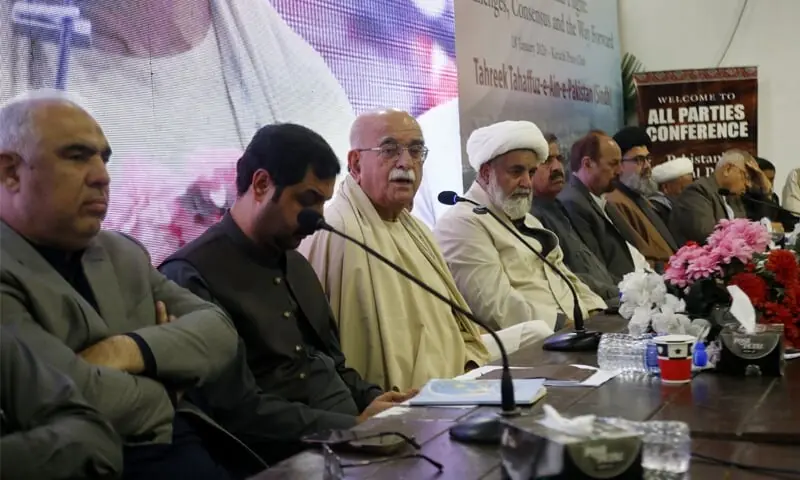
ISLAMABAD – A coalition of Pakistani opposition parties, the Tehreek Tahafuz Ayeen-i-Pakistan (TTAP), warned Thursday that any perceived negligence in the medical care of former Prime Minister Imran Khan could exacerbate the country’s ongoing political instability. The warning came during a central committee meeting of the alliance, which included an Iftar gathering hosted by TTAP leader Mustafa Nawaz Khokhar.
The TTAP statement, released via social media platform X, demanded immediate access to specialized medical treatment for Khan at Shifa International Hospital, along with examinations by his personal physicians, Dr. Faisal Sultan and Dr. Aasim Yusuf. Leaders also called for the lifting of restrictions on Khan’s access to legal counsel and family visits, asserting that his imprisonment was unjust and his release was warranted.
Attendees at the meeting included National Assembly Opposition Leader Mehmood Khan Achakzai, Senate Opposition Leader Allama Raja Nasir Abbas, PTI Secretary General Salman Akram Raja, former Prime Minister Shahid Khaqan Abbasi, former National Assembly Speaker Asad Qaiser, and Sahibzada Hassan of the Sunni Ittehad Council (SIC), among others.
The alliance voiced strong condemnation of what they termed the government’s “continued illegal secrecy” surrounding Khan’s health and treatment. They expressed “grave concern over the continued concealment of Imran’s medical reports and test results from his family,” stating that this lack of transparency fueled fears about his condition. The TTAP warned that such actions could push the country’s political crisis “onto an even more dangerous path.”
Beyond Khan’s case, the TTAP statement called for the release of other political prisoners, including SIC Chairman Sahibzada Hamid Raza, Bushra Bibi, Shah Mahmood Qureshi, Yasmin Rashid, Umar Sarfaraz Cheema, Ejaz Chaudhry, Ali Wazir, and Mahrang Baloch.
The opposition alliance also expressed alarm over a recent surge in terrorist activity, particularly in Khyber Pakhtunkhwa and Balochistan. They urged the federal government, in collaboration with provincial authorities and all political stakeholders, to develop a comprehensive national strategy to counter terrorism. The TTAP further called for renewed dialogue with Afghanistan, urging both countries to “avoid further confrontation and to initiate concrete, sincere, and meaningful negotiations” to address the issue of terrorism.
The statement advocated for outreach to neighboring countries and allies, specifically mentioning Saudi Arabia and Türkiye, to seek solutions to the regional security challenges.
TTAP leaders also addressed the deteriorating economic situation, citing figures indicating that 45% of the population lives below the poverty line and unemployment has reached 20%. They criticized the government’s economic policies, noting a decline in both foreign and domestic investment and the departure of multinational companies from the Pakistani market. The alliance pledged to present an alternative budget and a series of economic proposals in the coming months, developed with the assistance of experts.
The statement expressed concern over potential regional conflict, specifically referencing threats of a US attack on Iran and warning of devastating consequences for the region. The TTAP urged the Pakistani government to play a diplomatic role in preventing such action and emphasized the need for solidarity with Iran.
Finally, the TTAP criticized the current government’s decision to join Donald Trump’s “Board of Peace,” characterizing it as an attempt by the US to create a non-representative alternative to the United Nations and highlighting the exclusion of Palestinians from the board. They argued that Pakistan should not participate in the initiative.
