
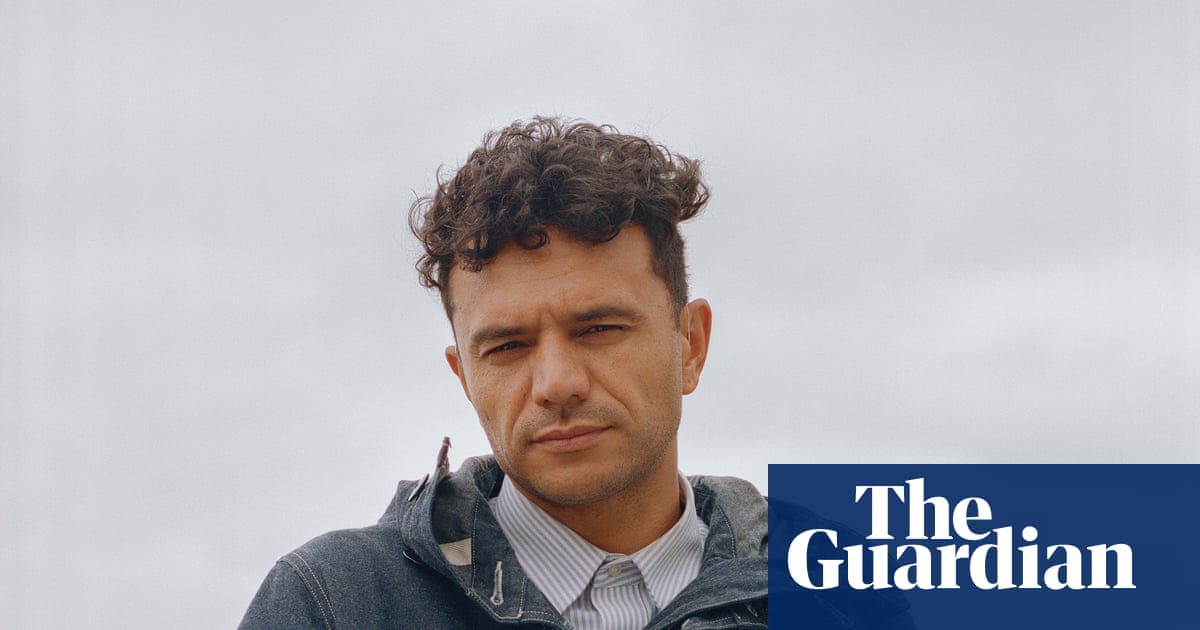
Poet **Raymond Antrobus** Charts Identity and Advocacy in New Prose
From paternal pain to pioneering prose, the award-winning writer champions deaf voices.
Poet **Raymond Antrobus** is redefining memoir with his latest work, “The Quiet Ear,” a powerful blend of personal narrative and advocacy for the deaf community. The acclaimed writer delves into his complex family history and unwavering commitment to amplifying marginalized voices.
Navigating Identity and Ancestry
Antrobus recounts a poignant childhood experience where his late father, who died in 2014, would alternately call him “white” or “black” depending on his sobriety. These labels, Antrobus explains, were manifestations of his father’s own struggles with identity and pain, a sentiment the poet has come to understand through his own journey.
At 38, Antrobus, who is deaf and uses hearing aids and lip-reading, reflects on the necessity of making sense of himself for others. “What does freedom look like for me?” he pondered, a question he answered through poetry.
His debut collection, “The Perseverance,” garnered significant acclaim, including the Rathbones Folio Prize. The collection also featured a notable response to Ted Hughes’s poem “Deaf School,” challenging its reductive portrayal of deaf children.
A Legacy of Dispossession and Resilience
Antrobus‘s paternal lineage traces back to rural Jamaica, where his father experienced what he describes as an “ugly duckling” complex due to his dark skin. Later, his father’s prolonged absence from Jamaica led locals to label him “white,” mirroring the dismissive labels he’d imposed on his son.
Adding another layer to his identity, Antrobus is connected to Sir Edmund Antrobus, an enslaver who profited from plantations in the Caribbean. The poet notes the irony that his family and descendants in England and South Africa have not benefited from this inherited wealth, which he describes as having been “extracted.”
Advocacy Through Art and Education
Creativity, for Antrobus, has been the primary avenue for processing his identity and connecting with others. He also dedicates time to teaching and editing, serving on the board of the Poetry School. Despite feeling pressure to “give back,” he acknowledges a recent guilt over not being able to engage in more such work.
“I’ve been visiting deaf schools for a decade now, and I’m still yet to see provision that matched the care I got.”
—Raymond Antrobus
Born in Hackney in 1986, Antrobus benefited from specialized support in a mix of deaf and hearing schools. He feels strongly that current provisions in deaf schools fall short of the care he received. “To get the same level of support now ‘I would have to be the child of an aristocrat’,” he states, emphasizing the disparity.
Despite this, Antrobus initially resisted aspects of his deafness to fit in, avoiding his hearing aids in photos and not using British Sign Language (BSL) around hearing peers. Participating in sports provided him social capital, shielding him from the bullying faced by other deaf children.
“The Quiet Ear” honors his teachers and advocates for improved support for deaf children, intertwining his life story with deaf history. This work arrives at a critical juncture, as discussions around healthcare and diversity initiatives face global challenges.
His experience living in Oklahoma highlighted the impact of “anti-woke” culture and the prohibitive cost of private healthcare, prompting his return to the UK. While the UK offers a more supportive environment for raising his son, Antrobus believes its approach to disability remains nascent.
Positive developments, such as deaf actor Rose Ayling-Ellis‘s win on “Strictly Come Dancing” and the BSL Act of 2022, offer hope. However, the poet expresses dismay over proposed cuts to disability benefits and the continued closure of deaf schools.
“I haven’t been able to access the deaf community here. It has dissipated – it’s the same all over the country.”
—Raymond Antrobus
Antrobus recounts the tragic story of a former classmate, Tyrone, who died by suicide after losing access to hearing aids and support. This narrative underscores the profound impact of adequate resources and community connection.
He now actively encourages others to embrace their deaf identity. He shares an instance where he offered a fellow deaf man, who was hesitant about sign language, a sense of belonging. “He started crying, and said, ‘Thank you so much. I needed permission to be a deaf person.'”
Antrobus hopes “The Quiet Ear” will similarly empower deaf individuals and educate hearing audiences about community needs. He sees a pivotal moment for deaf and disability rights, with growing public engagement against proposed benefit changes.
A follow-up book exploring language, voice, and class is planned, though it will not focus on deafness. Antrobus is also venturing into the art world, with commissions from institutions like the Guggenheim and Barbican. His current month-long residency in Italy marks his longest separation from his three-year-old son, a balance he finds challenging.
His son, who is hearing but learning sign language, is a source of joy for Antrobus. He worries about his son’s identity formation amidst social media and racial tensions but hopes for him to possess greater self-certainty than he himself had as a child. As of 2023, approximately 1.1 million children in the UK were aged 16 or under, highlighting the significant population for whom inclusive education and support systems are vital (Source: Office for National Statistics).
Antrobus communicates effectively using Sign Supported English (SSE) and advanced hearing aids, having transitioned to private audiology care. While acknowledging the “guilt” of going private, he notes the increased ease it affords him.
He remains dedicated to leveraging his opportunities to advocate for better deaf resources. “I’ve probably been given more than I’ve given back,” Antrobus reflects. “So I owe the world a lot.”
