
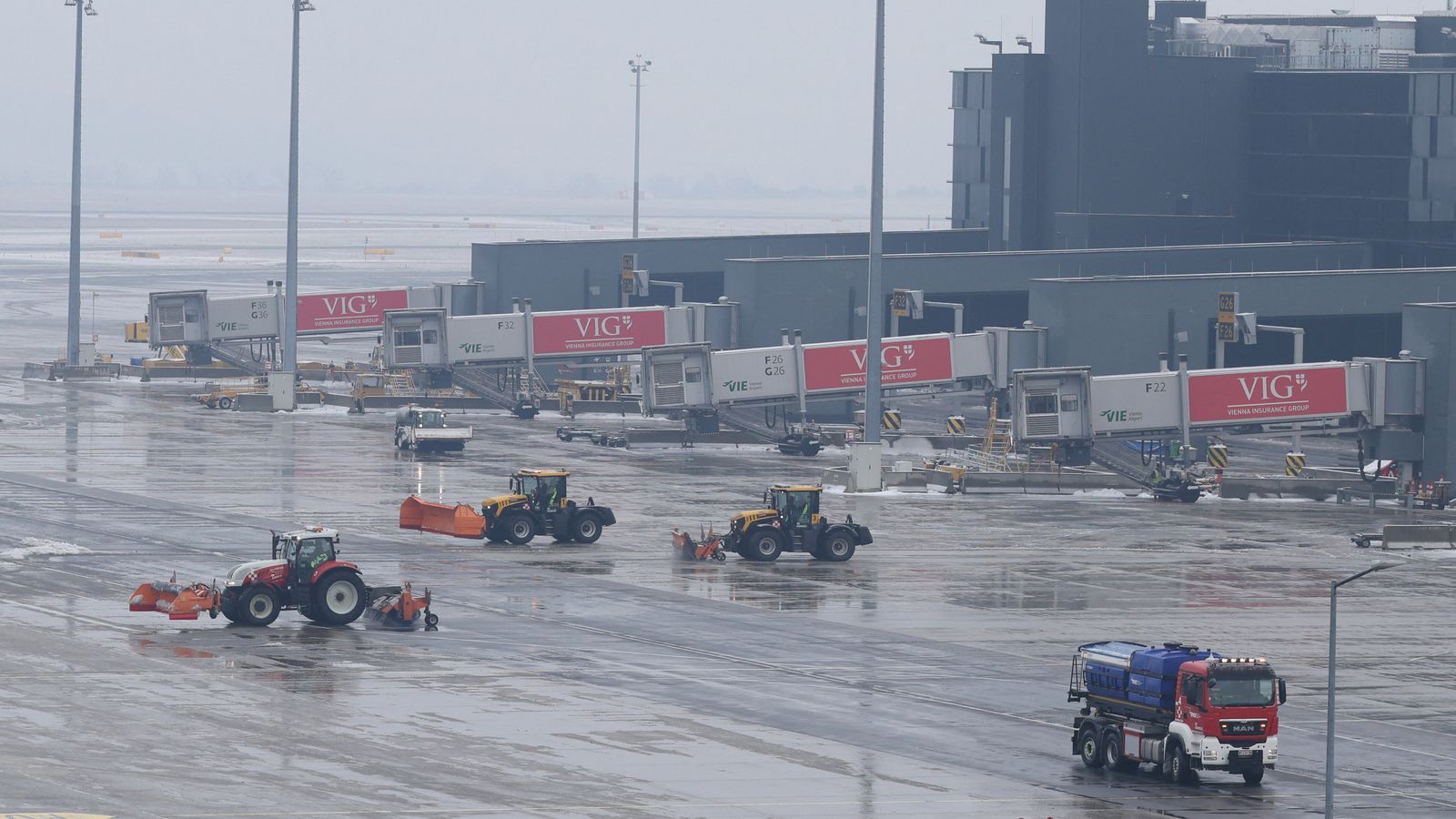
European Travel Disrupted as Icy Conditions Force Airport Closures
Severe winter weather, characterized by freezing rain and the rapid formation of ice, has caused significant disruption to air travel across Central Europe. Airports in Budapest, Hungary; Bratislava, Slovakia; and Vienna, Austria, where temporarily closed on Tuesday morning, leading to flight cancellations and diversions. The challenging conditions are expected to persist throughout the day, impacting both departures and arrivals.
The Impact of Freezing Rain
Freezing rain, a particularly hazardous weather phenomenon, occurs when rain falls through a shallow layer of sub-freezing air, coating surfaces with a glaze of ice. This ice accumulation poses a critical safety risk to aircraft, significantly reducing traction during takeoff and landing. Even a small amount of ice can dramatically increase stopping distances and compromise flight control.
Vienna International Airport was particularly affected, with a spokesperson reporting a persistent buildup of ice on the runways despite ongoing de-icing efforts. Vienna Airport’s official website provides updates on flight status and operational facts.The continuous re-formation of ice necessitated temporary closure to ensure the safety of passengers and crew.
Airport-Specific Disruptions
- Vienna International Airport (VIE): Faced significant challenges with ice accumulation on runways, leading to temporary closure and flight diversions. Check the latest updates hear.
- Bratislava Airport (BTS): Also temporarily suspended operations due to icy conditions. Authorities anticipated reopening the airport on Tuesday morning, but passengers are advised to confirm their flight status.
- Budapest Ferenc Liszt International Airport (BUD): Experienced closures,impacting both incoming and outgoing flights. Budapest Airport’s website offers real-time flight information.
- Prague Václav Havel Airport (PRG): Operating in a “vrey limited mode” as of Tuesday morning, with delays expected throughout the day. Arrivals were restricted as crews worked to de-ice the main runway. Prague Airport’s official site provides the latest details.
De-Icing procedures and Challenges
De-icing is a crucial process for maintaining flight safety in winter conditions.It involves applying heated fluids to aircraft surfaces to remove ice, snow, or frost. However, the effectiveness of de-icing fluids can be compromised by freezing rain, as the ice can re-form rapidly. Airports employ various de-icing methods, including:
- Type I Fluid: A heated glycol-water mixture used to remove existing ice and snow.
- Type II Fluid: A thicker fluid that provides longer-lasting protection against ice formation.
- Type IV Fluid: Offers even greater holdover time, particularly in heavy precipitation.
Despite these measures, the persistent freezing rain in Vienna and Prague created a challenging surroundings for de-icing crews, requiring repeated applications and ultimately leading to temporary airport closures.
Traveler Advice and Resources
Passengers traveling through affected airports are strongly advised to:
- Check with their airline: Before heading to the airport, confirm the status of their flight.
- Monitor airport websites: Stay updated on airport conditions and potential delays.
- Allow extra travel time: Anticipate potential delays and allow ample time to reach the airport.
- Consider alternative travel arrangements: If possible, explore alternative transportation options.
Useful resources for travelers include:
- flightaware: Real-time flight tracking information.
- IATA Travel Center: Travel regulations and advisories.
Looking ahead
As temperatures fluctuate and weather patterns shift, the risk of icy conditions remains. Airports are continuing to monitor the situation closely and implement measures to mitigate disruptions. Passengers are encouraged to stay informed and exercise caution when traveling during the winter months. The reopening of Vienna and Bratislava airports signals a gradual return to normal operations, but ongoing vigilance is essential to ensure the safety of air travel.
