
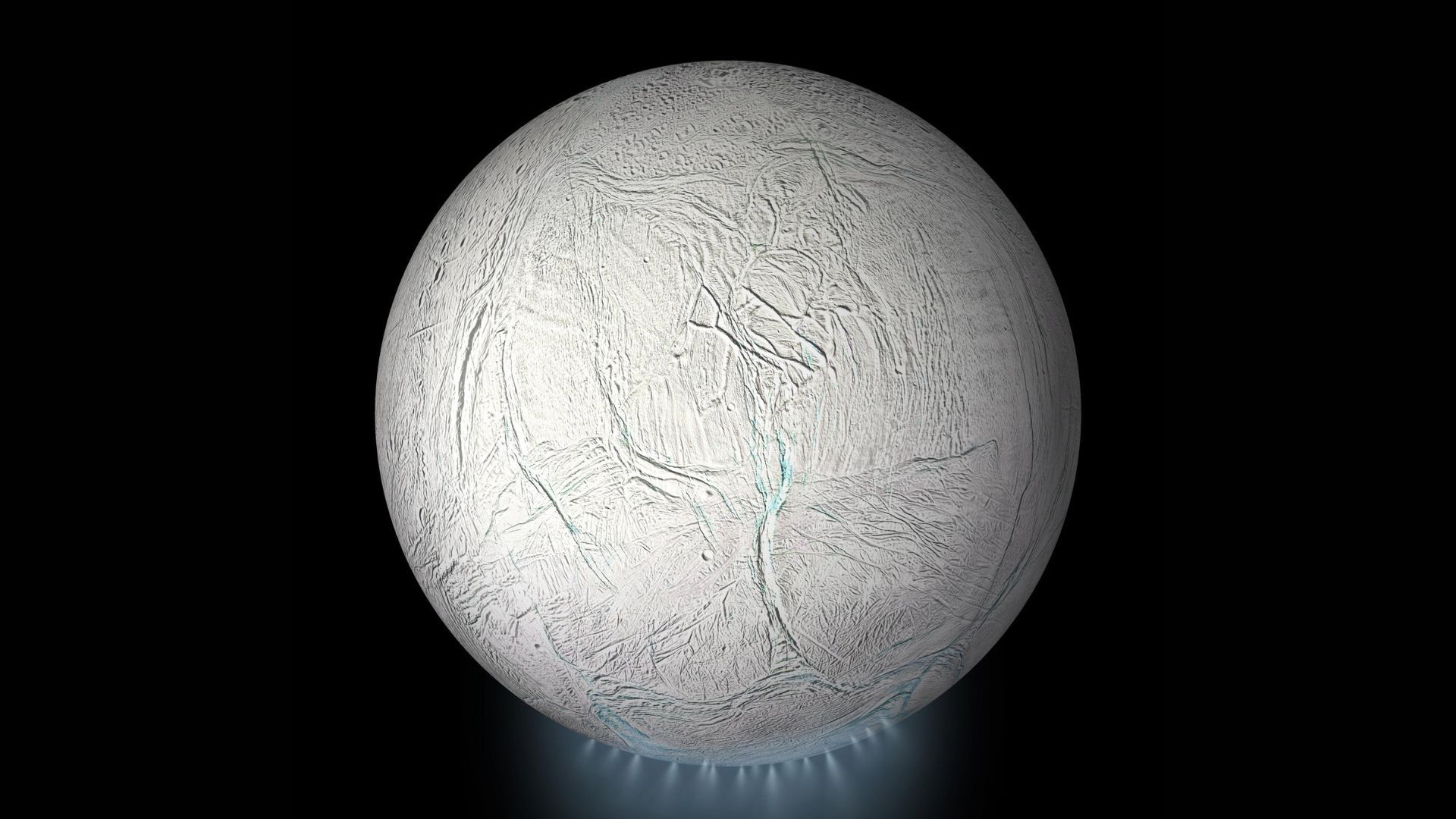
Icy Moons’ Hidden Oceans May Boil,But Could Still Harbor Life,New Research Suggests
New research published Nov.24 in Nature Astronomy reveals that the subsurface oceans of some icy moons in our solar system may experience boiling conditions as their icy shells thin, yet remain potentially habitable. A team of scientists led by Dr.Marie Rudolph at the Institute for Geophysics at the University of Texas at Austin modeled the behavior of water under pressure and temperature conditions found within these moons, uncovering a surprising possibility for ocean dynamics and the persistence of life.
The study focuses on how pressure changes affect water as ice shells around moons like Europa and Enceladus become thinner. As these shells decrease in thickness-by as little as three to nine miles (five to 15 kilometers)-the pressure on the underlying ocean decreases. This can lead to the water reaching a “triple point,” a specific temperature and pressure where ice, liquid water, and water vapor can coexist.
“This is the kind of boiling that happens at low temperatures, not the kind of boiling that occurs in kitchens when you heat water up to past 100 degrees C [212 degrees F],” Rudolph explained.”It’s instead boiling very close to zero degrees C [32 degrees F]. So for any potential life forms below that boiling area, life could go on as usual.”
The research indicates that the effect isn’t worldwide across all icy moons. Larger moons exceeding 370 miles (600 km) in diameter, such as Uranus’s moon Titania, are predicted to experience cracking in their ice shells before reaching the triple point due to the pressure drop. Researchers suggest that geological features on Titania, like wrinkle ridges, could be evidence of past ice shell thinning and subsequent re-thickening.
The released gases from boiling could form clathrates-icy structures that trap gas molecules-and further research will focus on understanding the fate of these gases and the surface features they might create. The team’s findings offer new insights into the complex interplay between ice shells, subsurface oceans, and the potential for habitability on icy worlds throughout the solar system.
