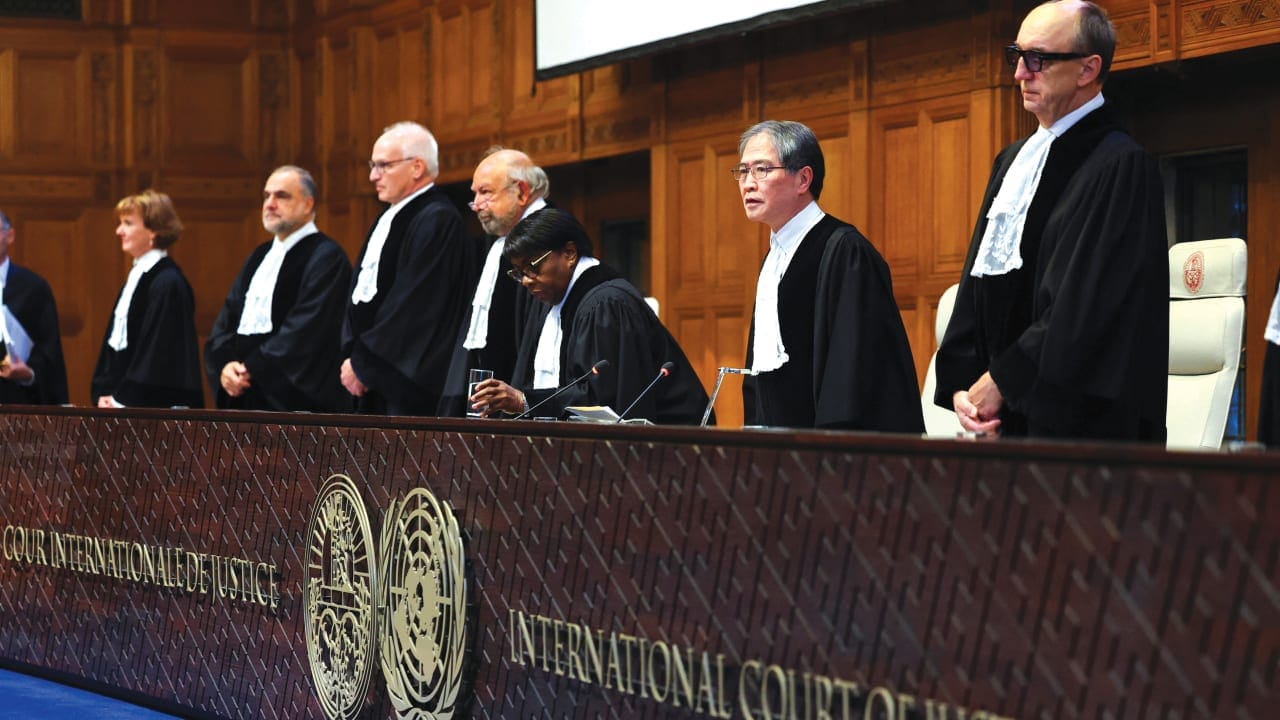
ICC Issues Secret Arrest Warrants Against 5 Israeli Officials
The International Criminal Court (ICC) has issued secret arrest warrants for five Israeli officials, including high-ranking politicians and military personnel. The warrants, which target figures such as Bezalel Smotrich and Itamar Ben-Gvir, represent a critical escalation in the court’s pursuit of accountability for alleged crimes committed during the ongoing conflict in the region.
This is far more than a bureaucratic legal maneuver. This proves a geopolitical landmine. By issuing these warrants in secret, the ICC is attempting to prevent the targets from altering their travel patterns or utilizing diplomatic shields before the warrants are formally executed or publicized. For the officials named, the map of the world has effectively shrunk. For the 124 nations that are signatories to the Rome Statute, the situation creates an immediate and agonizing binary: uphold their treaty obligations to arrest suspected war criminals or maintain strategic diplomatic alliances with Israel.
The immediate fallout is a crisis of mobility and legitimacy. When the ICC issues a warrant, it creates a legal obligation for member states to apprehend the individual if they enter their territory. This transforms routine diplomatic travel into a high-stakes gamble. Navigating these jurisdictional minefields requires an unprecedented level of legal precision, leading many affected entities to seek the counsel of international law specialists to analyze the risk of travel and the potential for challenging the warrants in the Hague.
The Mechanics of the Secret Warrant
To understand why these warrants were kept under seal, one must understand the operational strategy of the ICC. Typically, a warrant is issued after the Prosecutor presents evidence to a Pre-Trial Chamber, which then determines there are reasonable grounds to believe the person committed a crime within the court’s jurisdiction. Making these warrants “secret” is a tactical decision designed to ensure the effectiveness of the arrest.

If a target knows they are wanted, they simply avoid member states. By keeping the warrants confidential, the court increases the likelihood that a target will inadvertently enter a jurisdiction where the local police are legally bound to arrest them. This “trapdoor” diplomacy puts immense pressure on the host country, which must then decide whether to trigger a diplomatic incident by making the arrest or risk being found in breach of the Rome Statute.
The legal complexity here is staggering. Because Israel is not a member of the ICC, it does not recognize the court’s jurisdiction over its citizens. However, the court can exercise jurisdiction if the alleged crimes occurred on the territory of a member state—which includes the Palestinian territories. This jurisdictional overlap creates a permanent state of legal friction.
The Targeted Hierarchy: Smotrich and Ben-Gvir
The inclusion of Bezalel Smotrich and Itamar Ben-Gvir in the warrants is particularly significant. As key figures in the Israeli government—holding portfolios in Finance and National Security, respectively—their presence on the list signals that the ICC is targeting the political architecture of the conflict, not just the tactical execution on the ground.

Smotrich and Ben-Gvir have been vocal proponents of hardline policies in the West Bank and Gaza. By targeting them, the ICC is effectively asserting that political rhetoric and administrative policy can constitute “criminal intent” if they facilitate war crimes or crimes against humanity. This expands the scope of liability from the soldier in the field to the minister in the cabinet office.
The military officials named in the warrants, though their identities remain shielded by the secrecy of the documents, likely include those responsible for the operational planning of campaigns in densely populated urban areas. The court is focusing on the principle of “command responsibility,” where leaders are held accountable for the actions of their subordinates if they knew, or should have known, that crimes were being committed and failed to prevent them.
“The ICC’s mandate is not to act as a political tool, but as a court of last resort. When national judicial systems are deemed unwilling or unable to genuinely carry out the investigation or prosecution of crimes, the international community must step in to ensure that no one, regardless of their rank or office, is above the law.”
This tension between national sovereignty and international justice is where the most acute problems arise. Governments facing these pressures often find themselves needing diplomatic consultants to manage the fallout with allies and negotiate the precarious balance between legal obligations and national security interests.
The Rome Statute Trap and Global Implications
The real-world impact of these warrants will be felt in the airports and embassies of Europe, Africa, and South America. For a member state, ignoring an ICC warrant is a violation of international law. While many states have historically ignored warrants for political reasons, the current global climate of heightened scrutiny makes such defiance more costly.
- Legal Obligation: Member states must arrest and surrender the person to the ICC upon request.
- Diplomatic Immunity: A recurring legal battle is whether sitting ministers enjoy “head of state” or “diplomatic” immunity that overrides the ICC warrant.
- Political Cost: Failure to arrest a warranted official can lead to a “finding of non-compliance” by the ICC, damaging a nation’s standing in the international legal community.
This creates a ripple effect that extends beyond the individuals named. It affects trade delegations, security summits, and bilateral agreements. When top-tier officials cannot travel, the machinery of diplomacy grinds to a halt. Organizations dedicated to maintaining peace and stability are now relying on human rights advocacy groups to monitor the execution of these warrants and ensure that the legal process is not derailed by political expediency.
The Geopolitical Deadlock
Israel’s response to the ICC’s actions has historically been one of total rejection. The Israeli government views the ICC as a biased institution that oversteps its bounds. This deadlock is not merely a legal disagreement. it is a fundamental clash of worldviews regarding who has the authority to judge the actions of a sovereign state in the name of security.
The issuance of these secret warrants suggests that the ICC is no longer content with public warnings. The court is moving toward an enforcement phase. However, without its own police force, the ICC remains a “giant without arms,” entirely dependent on the cooperation of states to make arrests. If the United States—a non-member with significant influence—pressures its allies to ignore the warrants, the ICC’s authority could be severely undermined.
Conversely, if a major European power executes an arrest, it could trigger a catastrophic rupture in Western alliances. The stakes are no longer just about the legality of a specific military operation; they are about the viability of the international legal order itself.
As this situation evolves, the intersection of international law and global politics will only become more volatile. The secret nature of these warrants means that the next major development will likely occur not in a courtroom, but at a border crossing or during a high-level diplomatic visit. For those caught in the crossfire—whether they are government officials, legal advisors, or diplomatic staff—the need for verified, expert guidance has never been more urgent. Finding professionals who understand the nuances of the international justice system is the only way to navigate a world where a passport can suddenly become a liability.
Keep reading
- Ministry: Bangladesh Extends Offshore Bidding Deadline to March 2027
- Netflix Announces July 2025 Release Date for Madea’s Destination Wedding
- Police arrest 2 in Coastal Georgia Facebook Marketplace counterfeit cash scheme – WJCL (newsdirectory3.com)
- Police arrest three including patched gang member following Wellington operation (newsy-today.com)